
Opinion
Trade as a Catalyst for Peace and Economic Integration
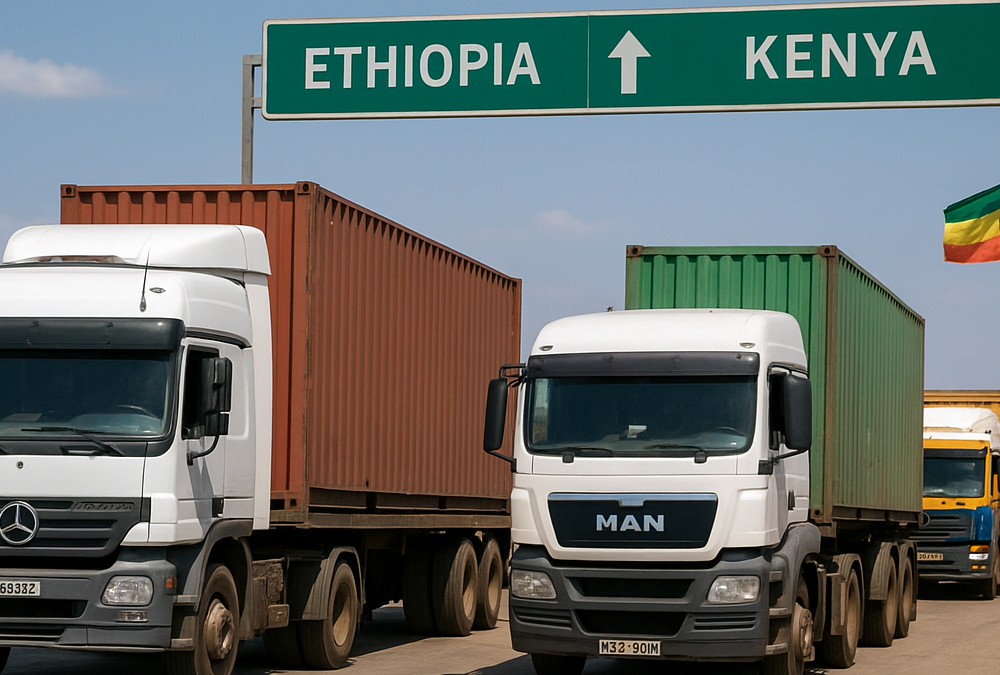

By Danilo Desiderio
In 1748, the French philosopher Montesquieu made a prescient observation in The Spirit of Laws: “Peace is the natural effect of trade.” More than two centuries later, this idea is not merely a philosophical ideal – it is becoming a strategic imperative in Africa, where trade is emerging as a powerful driver of both economic integration and lasting peace.
At a time when parts of the continent continue to grapple with political instability, cross-border tensions, and protracted conflicts, Montesquieu’s theory finds renewed relevance. Economic interdependence, as history and modern economics confirm, creates disincentives for conflict.
When nations are bound by supply chains, investment flows, and mutual market access, the cost of war becomes prohibitively high. Disruption means shortages, inflation, and economic collapse – not just for one country, but for all.
Nowhere is this dynamic more urgently needed than in the Horn of Africa – a region long scarred by civil strife, ethnic conflict, and diplomatic friction. Countries like Somalia and Kenya, Ethiopia and Eritrea, Sudan and South Sudan, and Djibouti and Eritrea have endured cycles of tension, often exacerbated by weak economic ties.
Despite being members of regional blocs such as the Common Market for Eastern and Southern Africa (COMESA), the East African Community (EAC), the Intergovernmental Authority on Development (IGAD), and the Community of Sahel-Saharan States (CEN-SAD), trade among them remains minimal. This lack of commercial integration has, in many ways, perpetuated mistrust and vulnerability to instability.
But a transformative shift may now be underway.
A Homegrown Vision for Regional Unity
On October 18, 2019, a quiet but historic moment unfolded in Washington, D.C., during the World Bank Group and International Monetary Fund Annual Meetings. Finance ministers from Djibouti, Eritrea, Ethiopia, Kenya, and Somalia gathered to chart a new course.
In the presence of representatives from the World Bank, African Development Bank, and European Union, they launched the Horn of Africa Initiative (HoAI) – a bold, minister-led cooperation framework aimed at fostering economic convergence and shared prosperity.
South Sudan and Sudan joined in 2022, broadening the initiative’s reach, while IGAD assumed the role of permanent observer. What sets the HoAI apart is its unique governance model: it is entirely homegrown, devoid of supranational oversight, and driven by a bottom-up approach.
National governments collaborate directly, with finance ministers meeting three to four times a year to align policies, set priorities, and coordinate implementation.
A lean secretariat supports this coordination, ensuring agility and accountability. At its core, the HoAI focuses on four strategic pillars – regional infrastructure, human capital development, climate resilience, and crucially, trade as a catalyst for growth and peace.
Trade as a Tool for Transformation
The HoAI recognizes that trade is not just an economic activity – it is a bridge between nations. By simplifying border procedures, harmonizing customs regulations, and integrating digital systems across border agencies, the initiative has already mobilized approximately US$11.8 billion in funding from international partners, including the World Bank, African Development Bank, European Union, Germany’s Federal Ministry for Economic Cooperation and Development (BMZ), and the UK’s Foreign, Commonwealth & Development Office (FCDO).
These investments have yielded tangible results: faster clearance times at border crossings, improved data sharing between customs authorities, and greater predictability for traders. But the vision extends far beyond logistics. The goal is to build trust through commerce – to replace suspicion with interdependence.
In February 2025, at the 23rd HoAI Ministerial Meeting in Addis Ababa, finance ministers marked the initiative’s fifth anniversary by launching a new phase of action. They called for national-level consultations to identify a slate of “quick wins” – high-impact, low-complexity reforms that can be implemented swiftly to boost trade competitiveness, reduce transaction costs, and enhance regional stability.
Guided by the World Bank, these consultations are reviewing key strategic roadmaps developed under the HoAI, including:
- A trade facilitation roadmap to streamline cross-border commerce
- A private sector engagement strategy to unlock investment
- A borderlands development plan to transform frontier regions into hubs of economic activity
- Sectoral studies to strengthen governance and promote inclusive growth
The findings will inform a pipeline of targeted financial and technical assistance projects, set to launch in early 2026. These initiatives aim to ignite a virtuous cycle: more trade → greater interdependence → stronger incentives for peace → deeper integration.
A Model for the Continent?
The Horn of Africa Initiative is still in its early stages, but its implications are continental. If successful, it could serve as a blueprint for other conflict-prone regions in Africa – from the Great Lakes to the Sahel – where economic fragmentation continues to fuel instability.
Unlike top-down integration efforts that often stall under bureaucratic inertia, the HoAI demonstrates the power of political will, ministerial leadership, and practical cooperation. It proves that even nations with complex histories can come together when economic opportunity and shared security are at stake.
Moreover, the initiative underscores a broader truth: sustainable peace in Africa will not be imposed from the outside – it must be built from within, through concrete, mutually beneficial collaboration.
The Road Ahead
As the HoAI enters its next phase, the focus must remain on delivery. “Quick wins” must translate into real improvements in the lives of traders, entrepreneurs, and communities along borders. Digital integration, regulatory harmonization, and dispute resolution mechanisms will be critical to maintaining momentum.
Donors and international institutions must continue their support – but with a light touch, respecting the initiative’s homegrown character. The real ownership lies with the region itself.
Montesquieu could not have foreseen the complexities of 21st-century geopolitics. But his insight endures: where trade flourishes, peace has a fighting chance. In the Horn of Africa, leaders are betting that commerce can do what diplomacy alone could not – forge a future of interdependence, stability, and shared prosperity.
The world should be watching. And supporting.
Danilo Desiderio serves as the CEO of Desiderio Consultants Ltd in Nairobi, Kenya, specializing in African customs, trade, and transport policies. He is a customs and trade expert at the World Bank and a senior associate to the Horn Economic and Social Policy Institute (HESPI).
