
Opinion
The Congo: Africa’s Hidden Water Powerhouse

By Dishant Shah
When most people think of the Democratic Republic of the Congo (DR Congo), they imagine sprawling rainforests, rich mineral deposits, or a complex history. Few, however, realize its crucial role in Africa’s water security.
DR Congo holds approximately 50 percent of Africa’s surface freshwater – a staggering share of rivers, lakes, and wetlands concentrated within one nation.
Let that sink in.
Out of 54 countries on the continent, just one accounts for half of all the freshwater visible on a map.
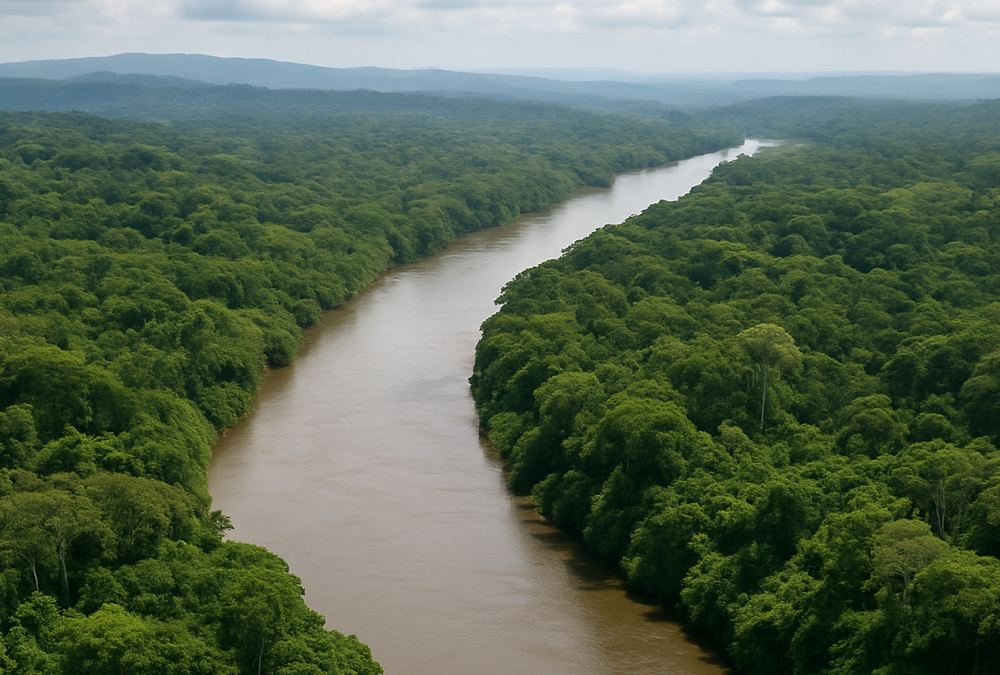
At the heart of this abundance is the mighty Congo River, which discharges about 41,000 cubic meters of water per second into the Atlantic Ocean. This makes it the second-largest river in the world by volume, surpassed only by the Amazon.
Flowing through vast equatorial forests, the Congo River directly supports over 75 million people living along its banks. It’s not just a river – it’s a lifeline.
The Paradox of Plenty
Yet, paradoxically, despite this natural wealth, nearly 51 million people in DR Congo lack access to clean drinking water.
Weak infrastructure, underdeveloped hydropower capacity, intensifying climate shocks, and ongoing political instability continue to stifle progress.
This is the striking contradiction facing the country today: immense natural resources coexist with widespread human need.
But the issue extends far beyond DR Congo’s borders.
The Congo River Basin influences rainfall patterns, ecosystems, agriculture, and energy production across Central, East, and Southern Africa. What happens in this basin doesn’t stay within one country – it affects an entire region.
A Regional Lifeline and Future Opportunity
Imagine the possibilities if this critical resource were sustainably managed.
The Congo Basin could become a cornerstone of climate resilience, food security, clean energy, and regional cooperation.
It has the potential to support trade routes via inland water transport, serve as a hub for hydropower exports and irrigation networks, and even open new frontiers in eco-tourism.
But unlocking this potential will require international collaboration, stronger institutions, and targeted investments in local water systems.
Managing Africa’s water isn’t just about addressing scarcity – it’s about governance, infrastructure, and building cross-border trust.
As climate patterns grow increasingly unpredictable, the continent’s freshwater resources – particularly those concentrated in places like the DR Congo – will play a defining role in shaping Africa’s future.
So, what else are we overlooking in Africa’s natural balance sheets?
Dishant Shah is a partner at Legion Exim, a company specializing in facilitating the export of high-quality engineering products directly sourced from manufacturers in India to Africa. His areas of expertise include new business development and business management.
