
Opinion
The Caribbean: A Clean Energy Revolution on the Front Lines of Climate Change
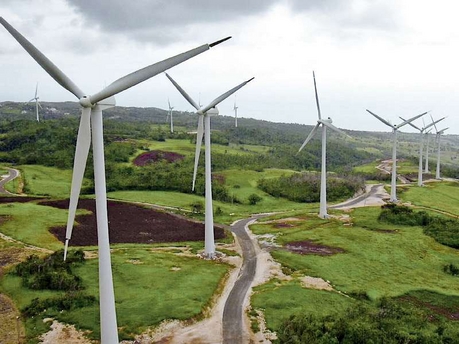
But nobody can say how long this largesse will last, given Venezuela’s current financial crisis, and still less what will happen to already stressed island-nation economies when they are forced to pay full price for crude.
The Caribbean needs to become energy-independent in order to thrive. But overhauling energy infrastructure does not come cheaply. There are knotty technical challenges related to the stability of the grid that few small nations are currently equipped to meet. And the small scale of the demand for electricity on many of the island-nations makes it hard to attract international investors.
Moreover, countries like Jamaica, St. Kitts & Nevis, Grenada, Barbados, and Antigua & Barbuda are saddled with public debts that often exceed their annual GDP. So unlike an industrial powerhouse like Germany, for example, few Caribbean nations are in a position to fully exploit their renewable energy potential.
The big industrial powers that are responsible for the problems of island-nations should be lending a helping hand to the folks suffering the most from climate change. Loans from international development banks, as well as technology transfers and training from wealthier countries, would go a long way.
International development banks also need to prime the pump with programs to encourage prudent investment. This is not charity. By helping countries that are geographically close to the United States go green, Washington will not just be cutting harmful greenhouse gases for everyone, it will also create opportunities to learn valuable lessons in overcoming technical challenges – about how, for example, to successfully integrate intermittent inputs from wind and solar into the power grid, a problem that has limited the United States’ own adoption of renewables.
The vulnerable island-nations of the Caribbean are a perfect laboratory to test solutions on a small scale that can eventually be applied to the far more complex U.S. energy infrastructure.
After World War II, the United States lent its economic muscle to help rebuild Europe’s shattered economies through the Marshall Plan. It is time to have a Marshall Plan for clean energy – not to rebuild war-torn nations, but to help protect our abused climate system from further damage. The Caribbean, blessed with a wealth of sun, wind, and geothermal energy, is a great place to start.
Richard Schiffman is an environmental writer. He attended the World Environment Day celebrations in Barbados on 5 June 2014. This article was originally published by Foreign Policy in Focus.
