
Owusu on Africa
Sovereignty and unilateralism: comparing growing trends between Africa and Europe

By Fidel Amakye Owusu
Recently, I had the chance to discuss the dynamics of the second round of legislative elections in France.
The next day, the elections in France, the EU’s second-largest economy and second-most populous country, yielded interesting and unexpected results. The left triumphed, while the right secured third place.
Expectations that the right would sweep to victory and potentially form the next government were shattered. Despite its “unstoppable” rise, the far right is not there yet.
So what does this mean?
While the discussions focused on the elections, some issues emerged that highlighted interesting ironies and convergence on certain concepts that Afro-European observers should consider.
What were these issues?
First, the idea that centrist policies are obsolete and regressive. Both the two French citizens and a conservative American on the panel believed that Europe’s center had failed and had exploited Africa. A Pan-Africanist on the show agreed.
Next was the issue of sovereignty. The French far-right supporters on the panel argued that Europe would fare better if nations left the “burdensome” European Union (EU) and asserted their sovereignties. They also suggested that Africa would benefit from far-right control in European countries.
Interestingly, the Africans on the panel believed that Africa would be better off if trade barriers were removed, and there was more political integration and stronger continental institutions – exactly the opposite of what the European panelists advocated.
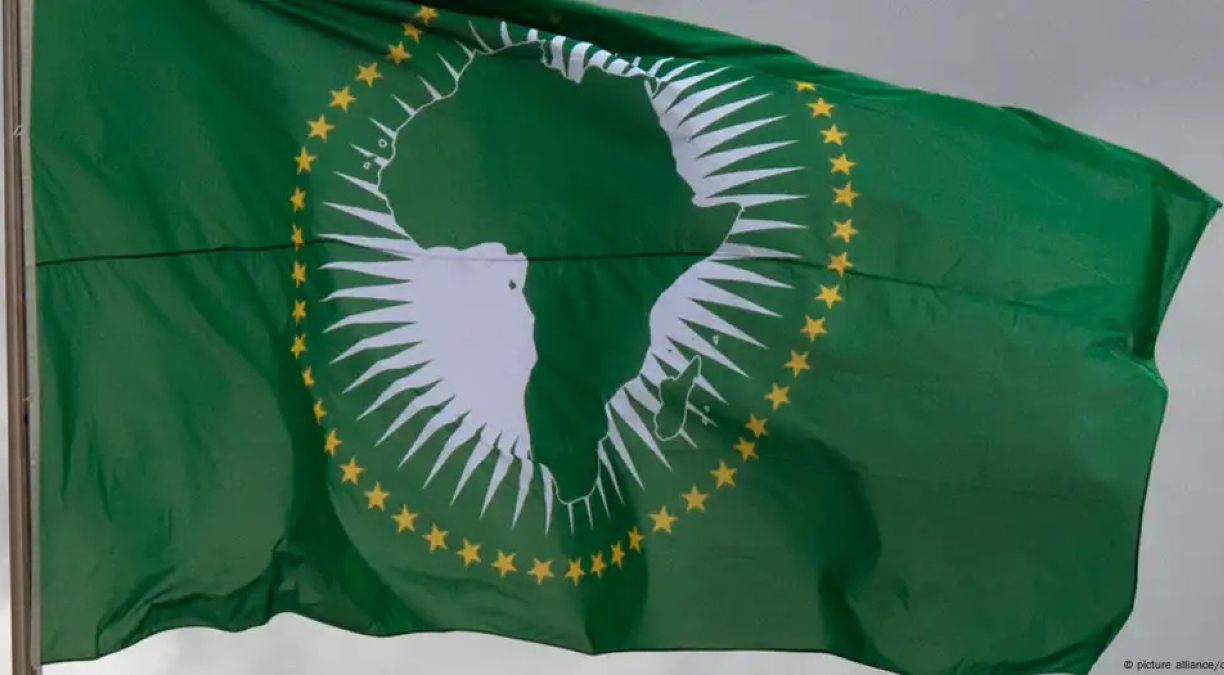
The significance of this argument is that while both the European far-right and many “pan-Africanists” believe current European politicians are not helping either continent, the latter group sees economic and political integration as the solution, advocating for a stronger African Union. The former, however, believes the EU should dissolve or that individual states should exercise more power.
I argued that the far-right leadership might be more pragmatic than they appear or might not do much about the EU while in power. I cited the example of Italian Prime Minister Giorgia Meloni. Before taking power, she had a hardline stance on closing Italy’s borders to migrants. In office, she sought coordination with the rest of Europe to tackle trans-Mediterranean migration more pragmatically.
It seems many French voters with African roots found the left more aligned with their aspirations than the far-right. They were unwilling to gamble on the undefined principles and policies of the far-right.
Fidel Amakye Owusu is an International Relations and Security Analyst. He is an Associate at the Conflict Research Consortium for Africa and has previously hosted an International Affairs program with the Ghana Broadcasting Corporation (GBC). He is passionate about Diplomacy and realizing Africa’s global potential and how the continent should be viewed as part of the global collective.
