
Owusu on Africa
Owusu on Africa: Free trade, terrorism, political instability and trafficking. Is West Africa able to handle the mix?

By Fidel Amakye Owusu
In mid-2022, leaders from West Africa convened to lift economic and diplomatic sanctions imposed on Mali and Burkina Faso. These measures were enacted due to coups that had ousted civilian governments in their respective capitals, contravening the Economic Community of West African States (ECOWAS) protocols.
The decision to lift sanctions came after the regional body acknowledged that the punitive measures were not effectively impacting the military juntas. Additionally, the looming terror threat in the Sahel region rendered these sanctions counterproductive.
However, while this move may alleviate certain tensions, member states still grapple with pressing issues.
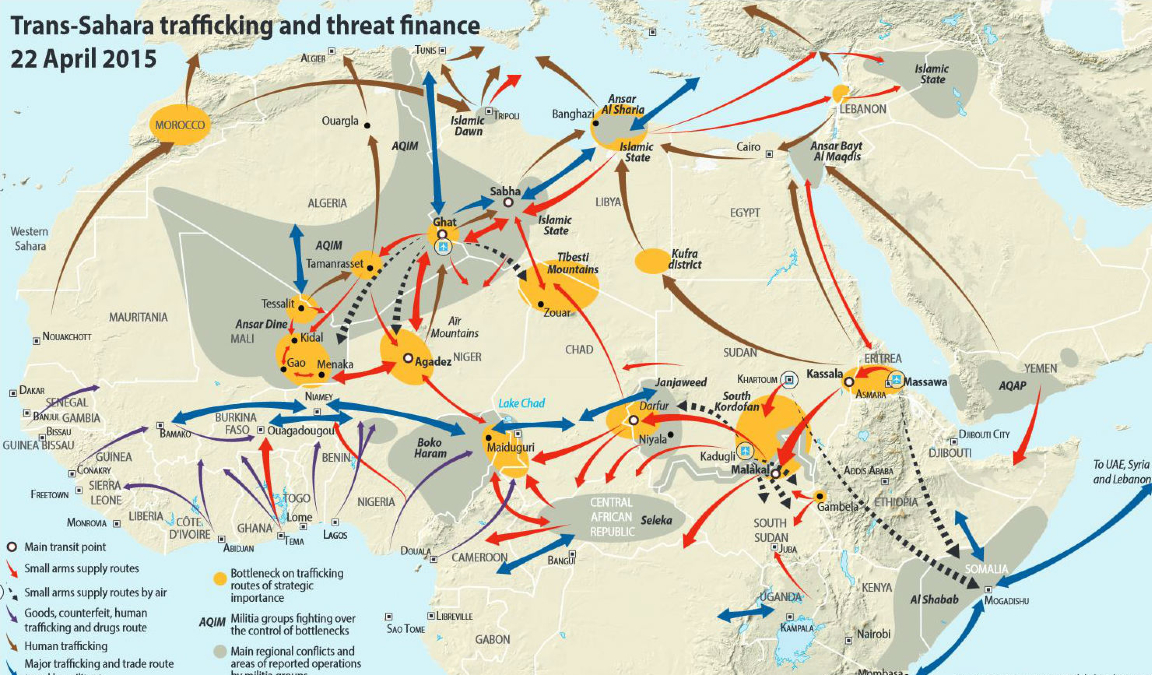
Instances of arms trafficking and other terror-related activities persist amidst the institutionalization of free trade across the continent, raising concerns. Reports detailing terror financing, illicit arms movement, and transnational crimes in the region highlight porous borders and compromised entry points as significant challenges.
Given that the states most affected by insecurity are landlocked, the burden of controlling the flow of arms and financing falls largely on coastal states.
Is there an easy solution?
The introduction of the African Continental Free Trade Area (AfCFTA) in 2019 aimed to facilitate border openness for the unhindered movement of goods and services—an area where Africa had faced criticism for its perceived inadequacies.
However, the necessity for tighter border security could inadvertently undermine the principles of free trade. This could particularly impact the economies of landlocked countries, which rely heavily on coastal states for their sustenance.
Already, trade between landlocked and littoral states heavily favors the latter. For instance, in 2021, Ghana’s exports to Burkina Faso amounted to US$276 million, while Burkina Faso’s exports in the opposite direction totaled only US$50 million. A similar disparity exists between Cote d’Ivoire (Ivory Coast) and Burkina Faso.
Senegal recorded exports worth over US$1 billion to landlocked Mali in 2021, far outweighing Mali’s exports to Senegal.
The implementation of stricter border controls to combat jihadist activities and illicit arms transfers is likely to exacerbate the trade gap between terror-afflicted landlocked countries and littoral states, further crippling their economies.
Regional governments must collaborate with partners to adopt technological solutions and novel monitoring mechanisms to combat illicit trade while simultaneously facilitating border openness to realize the full potential of free trade, especially for landlocked member states.
Fidel Amakye Owusu is an International Relations and Security Analyst. He is an Associate at the Conflict Research Consortium for Africa and has previously hosted an International Affairs program with the Ghana Broadcasting Corporation (GBC). He is passionate about Diplomacy and realizing Africa’s global potential and how the continent should be viewed as part of the global collective.
