
Opinion
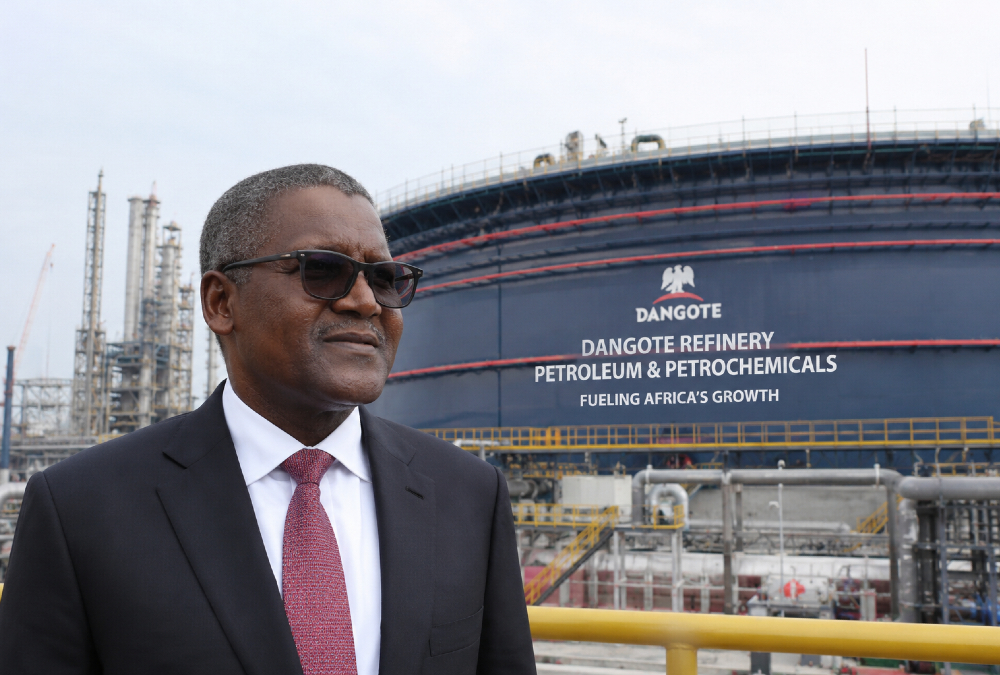
Dangote’s Refinery and the Rise of Africa’s Most Influential Energy Leader
Africa’s energy future is being built not in boardrooms in London or Houston, but in Lagos – and one man’s relentless ambition is proving the doubters spectacularly wrong.

By NJ Ayuk
Aliko Dangote, founder and chairman of the Dangote Group, has been named the African Energy Chamber’s African Energy Person of the Year for 2026. The recognition is richly deserved.
At a moment when the global energy order is being reshuffled by geopolitical upheaval, currency crises, and the accelerating demands of a developing continent, Dangote has done what many considered impossible: he built Africa’s largest oil refinery from the ground up, and he is already reshaping fuel markets well beyond Nigeria’s borders.
That is not a minor achievement. It is a generational one.
A Refinery Built Against the Odds
The Dangote Petroleum & Petrochemicals refinery was, for years, an easy target for skepticism. International observers questioned whether it would ever be completed. Financing was precarious, infrastructure bottlenecks were severe, technical complexity was daunting, and Nigeria’s chronic currency volatility made long-term cost projections little more than educated guesses.
Political uncertainty did the rest. For more than a decade, the project seemed perpetually on the horizon – visible, but never quite arriving.
It arrived.
Today, the refinery stands as one of the most consequential pieces of industrial infrastructure on the African continent – a monument not merely to capital and engineering, but to the kind of patient, conviction-driven leadership that development economists have long argued Africa needs more of. Dangote’s willingness to absorb years of risk, setback, and public doubt, and to keep building regardless, is precisely what gave the project its significance beyond its balance sheet.
Strategic Stability in an Unstable World
The refinery’s timing could scarcely have been more fortuitous. With geopolitical tensions involving Iran casting a long shadow over the Strait of Hormuz – one of the world’s most critical shipping chokepoints – and global fuel supply chains growing increasingly fragile, the Dangote refinery has emerged as a stabilizing force for regional and international energy markets alike.
Refined products from the facility are already reaching Ghana, Cameroon, and Côte d’Ivoire (Ivory Coast), filling supply gaps that would otherwise leave millions of consumers exposed to the volatility of international spot markets. Shipments are flowing to the United Kingdom, Europe, and the United States.
By June 2026, the refinery is expected to load its first major gasoline cargo bound for Asia – a milestone that would have seemed fanciful just five years ago.
This is not a regional story anymore. It is a global one.
The Macroeconomic Dividend
The domestic impact on Nigeria has been equally striking. According to S&P Global Ratings, the refinery has played a pivotal role in dramatically expanding Nigeria’s domestic refining capacity – reducing the nation’s costly dependence on imported refined fuels in the process.
The downstream effect on Nigeria’s foreign exchange position has been substantial: gross foreign exchange reserves climbed from US$33 billion in 2023 to US$50 billion by early March 2026, a trajectory that few analysts had predicted with such speed.
For a country that has historically exported crude oil only to import refined products at significant cost – a form of value destruction that has long frustrated Nigerian economists – the refinery represents a structural break from a punishing cycle. That break is now quantifiable in tens of billions of dollars.
What Comes Next
Dangote, characteristically, is not pausing to celebrate. Feasibility studies initiated in early 2026 are examining the viability of expanding the refinery’s capacity to 1.4 million barrels per day – a figure that would position Nigeria among the world’s most consequential refining hubs, potentially rivaling established centers in India and Southeast Asia by 2027 or 2028.
Meanwhile, the Dangote Group is extending its logistics and storage footprint across the continent, with new fuel storage infrastructure planned in Namibia and preliminary work underway on a potential second refinery in East Africa. Each of these projects carries implications far beyond their individual economics: taken together, they represent the scaffolding of a genuinely integrated African energy market – one that is less dependent on external suppliers, less vulnerable to global shocks, and more capable of capturing the value of its own resources.
The Larger Lesson
The African Energy Chamber’s decision to honor Dangote reflects something more than recognition of a single individual’s accomplishments. It is an acknowledgment that indigenous, African-led industrialization is not merely aspirational – it is happening, it is scaling, and it is working.
The continent’s energy future has, for too long, been discussed primarily through the lens of what foreign capital, foreign technology, and foreign expertise might eventually provide. Dangote’s refinery – conceived, financed, built, and operated by an African entrepreneur on African soil – is a pointed rebuttal to that framing.
It demonstrates that with sufficient vision, resilience, and access to capital markets, Africa can build the infrastructure its own development requires. That is the most important energy story on the continent right now. And it is only just beginning.
NJ Ayuk is the Executive Chairman of the African Energy Chamber.
