
Owusu on Africa
Burundi: A Small Nation Shouldering the Weight of a Regional Conflict

By Fidel Amakye Owusu
Burundi, one of the world’s poorest nations, finds itself burdened with the disproportionate impact of a regional conflict. With one of the lowest per capita incomes and poor economic indicators, it faces significant challenges.
Over 40 percent of its national income is reliant on foreign aid, and its economy is heavily dominated by subsistence agriculture, with rapid population growth further complicating matters.
Historically, Burundi has experienced a tumultuous past, including a brutal ethnic massacre in the 1970s, leaving scars that continue to shape the nation’s trajectory.
The Current Crisis
As of recent reports, Burundi is grappling with an influx of approximately 60,000 refugees from the neighboring Democratic Republic of Congo (DR Congo), many of whom are children. The International Federation of Red Cross and Red Crescent Societies (IFRC) has set up a center near the Congolese border to assist those crossing a “dangerous” river to reach safety.
Some children separated from their families in the chaos have been successfully reunited, while others with urgent medical needs have been transferred to health facilities for treatment.
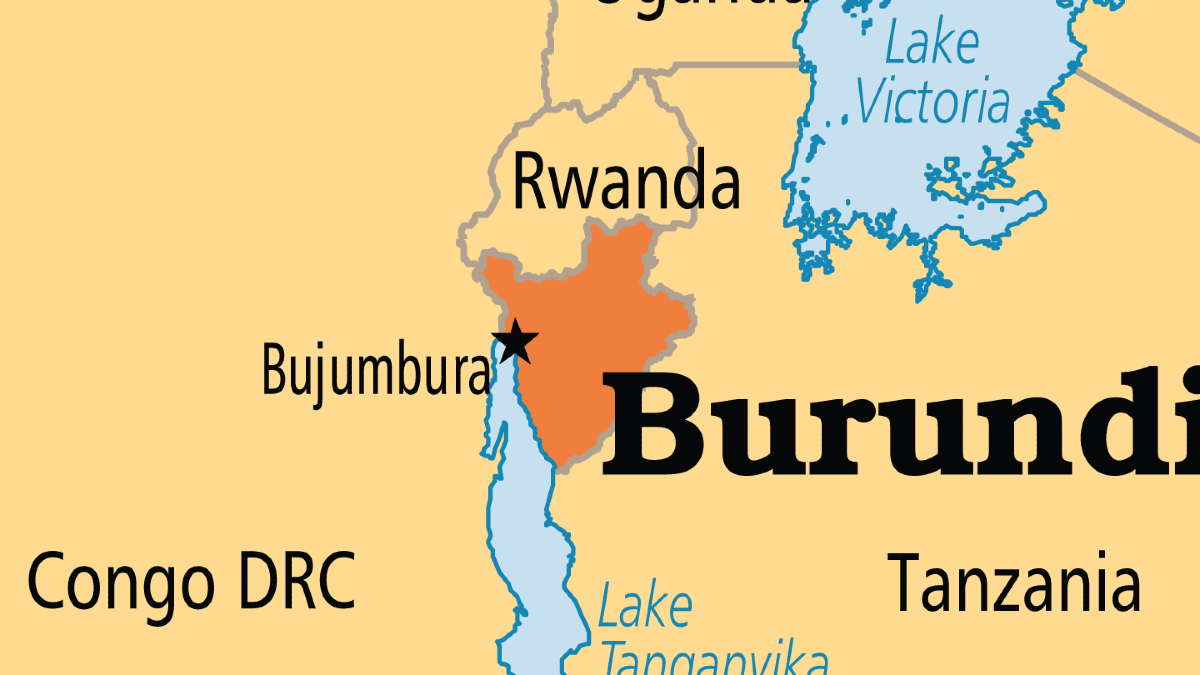
The refugees’ decision to flee to Burundi is influenced by a mix of ethnic ties and geopolitical factors. Burundi has long been an ally of the DR Congo in the fight against the AFC/M23 rebels in Eastern Congo.
Initially, Burundian forces were deployed to target their own rebel groups, but now they are supporting the Congolese government in its efforts against insurgents.
Despite this, Burundi’s military has itself become a target of the M23 rebels, particularly after advancing to Bukavu following their capture of Goma.
Ethnic and Geopolitical Complexities
Burundi shares a complex ethnic and political relationship with its neighbors. Like Rwanda, Burundi is a majority Hutu country, and this ethnic factor, along with other tensions, has strained relations with Rwanda.
The Burundian government, led by Hutus, has accused Rwanda of attempting to destabilize it, contributing to regional volatility.
Amid these tensions, Burundi finds itself navigating a difficult position. Although the current conflict in the DR Congo may not be directly aimed at Burundi, its implications are undeniable.
With widespread poverty and much of the population living below the poverty line, the country faces a monumental challenge in accommodating an increasing number of refugees.
A Call for Ceasefire and Negotiations
Given the mounting pressure, it is crucial for Burundi to secure stability during this crisis. Angola’s call for a ceasefire on March 16, 2024, ahead of negotiations scheduled for March 18, 2024, presents an opportunity for peace.
As the mediating country, Angola believes that a temporary halt in hostilities is necessary for productive discussions to take place. This move offers a glimmer of hope that the conflict, which has already affected so many, can take a turn toward resolution, benefiting not only the DR Congo and Burundi but the entire region.
Fidel Amakye Owusu is an International Relations and Security Analyst. He is an Associate at the Conflict Research Consortium for Africa and has previously hosted an International Affairs program with the Ghana Broadcasting Corporation (GBC). He is passionate about Diplomacy and realizing Africa’s global potential and how the continent should be viewed as part of the global collective.
