
Owusu on Africa
Africa’s Rising Role in a Shifting Global Order: Navigating the New Multipolar World

By Fidel Amakye Owusu
Ghana’s president recently articulated what many African leaders are thinking but few dare say aloud: “While no specific name has yet been coined for the new global system that will emerge, Africa intends to be at the table in determining what the new global order will look like.”
It’s a bold declaration, yet one shadowed by history’s harsh lessons. For even as traditional great powers realign themselves, a different class of actors – the so-called middle powers – has turned Africa into their primary arena for proxy competition.
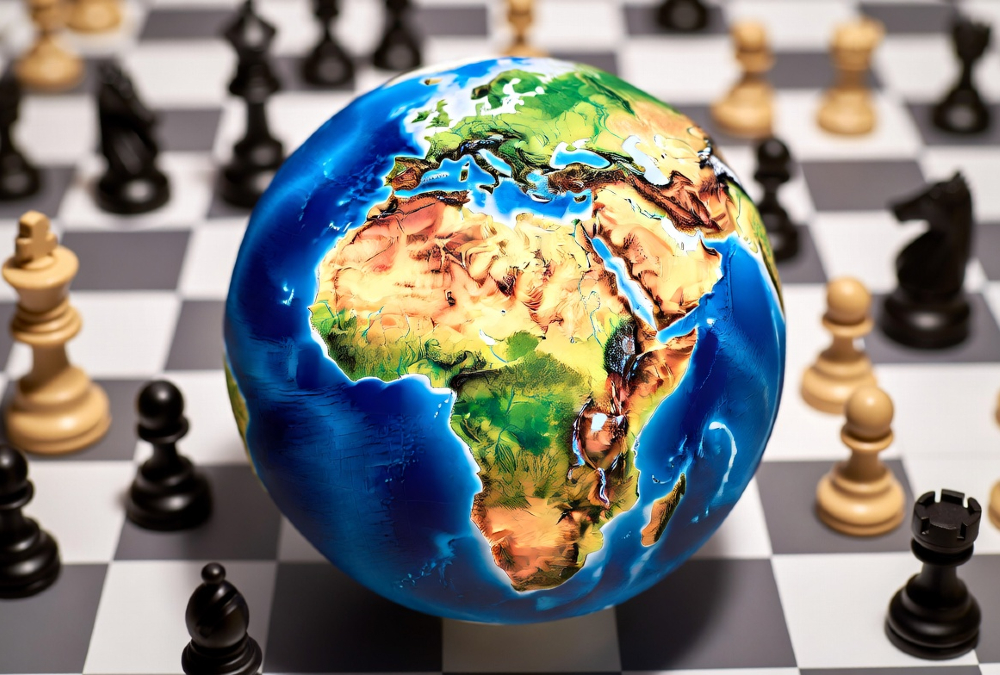
The continent risks becoming, once again, a chessboard for external rivalries it didn’t create and cannot control.
The Cold War’s Unhealed Wounds
If any region bore the brunt of 20th-century superpower rivalry, it was Africa. The timing proved catastrophic: just as most African states achieved independence in the late 1950s, 1960s, and 1970s, they found themselves trapped in one of history’s most dangerous bipolar confrontations.
Fledgling governments, barely months old, were forced to navigate ideological minefields laid by nuclear-armed superpowers. The Non-Aligned Movement, that ambitious attempt to chart a third way, offered little shelter from the storm.
Africa’s supposed neutrality became a fiction neither Washington nor Moscow would honor.
The consequences were devastating. Externally sponsored coups and counter-coups became routine. Lusophone Africa descended into bloody civil wars that consumed a generation.
Security and economic sabotage stifled development efforts before they could take root. The promise of independence was strangled in its infancy.
Only with the Cold War’s end and the emergence of a near-unipolar world in the early 1990s did many African states finally achieve political and security stability. Southern Africa witnessed the collapse of minority rule and Namibia’s long-delayed independence.
For a brief moment, the continent could breathe.
The Middle Powers Emerge
Today, as anxiety mounts over what multipolarity means for the world’s youngest continent by population, a troubling pattern has emerged. Great powers aren’t the only ones scrambling for African influence anymore.
Middle powers – India, Türkiye, Brazil, Saudi Arabia, the United Arab Emirates, Israel, Iran, and others – have become even more deliberate, even more aggressive in their engagement.
These countries occupy an ambiguous space. Many still identify as developing nations or members of the Global South, standing shoulder-to-shoulder with African states in international forums.
Yet the past few decades have delivered significant economic growth and strategic advancement, elevating them to a tier between great powers and weak states. They are emerging economies, emerging powers – and increasingly, emerging threats to African autonomy.
Consider the recent maneuvering around Sudan’s gold trade, valued at nearly US$2 billion in 2025. As relations between Saudi Arabia and the United Arab Emirates (UAE) have cooled, the Kingdom has moved decisively to dominate this lucrative sector, despite – or perhaps because of – the ongoing war.
Where the UAE once held sway over Sudanese gold exports, Saudi Arabia now plans to refine the war-torn country’s precious metals across the Red Sea.
Mineral deals between middle powers and African nations are nothing new. What’s alarming is the increasingly zero-sum nature of the competition.
When external rivals treat African resources as prizes in their bilateral disputes, the continent inevitably suffers.
Echoes of a Darker Era
In Somalia, Sudan, the Sahel, the Great Lakes region, and beyond, the involvement of middle powers has taken on an uncomfortable familiarity. The patterns evoke Cold War dynamics: arms flowing to favored factions, diplomatic pressure applied to secure basing rights, economic leverage wielded to extract political concessions.
The actors have changed, but the script remains depressingly similar. Where once it was capitalism versus communism, now it’s competing visions of regional influence, religious authority, or economic dominance.
African states find themselves, yet again, pressured to choose sides in conflicts not of their making.
The Ghana president’s aspiration – that Africa will help determine the new global order – rings hollow if the continent cannot first secure its own agency. Being “at the table” means little if African governments arrive as clients rather than peers, if their mineral wealth finances external rivalries rather than internal development, if their territory becomes a battleground for others’ ambitions.
A Path Forward
African states must remain vigilant and conscious of developments within and around their territories. This isn’t paranoia; it’s prudence borne of bitter experience.
The continent cannot afford another lost generation to external manipulation.
What’s needed is a clear-eyed recognition that today’s middle powers, whatever their rhetoric about South-South cooperation or shared development challenges, often pursue their interests with the same ruthlessness as yesterday’s superpowers. Engagement must be strategic, conditional, and always in service of African priorities rather than external agendas.
The multipolar world is here. The question is whether Africa will shape it or be shaped by it – whether this time, finally, the continent can avoid becoming someone else’s proxy battleground.
Ghana’s president is right to demand a seat at the table. But getting there requires more than aspiration. It requires a steely determination to learn from history rather than repeat it.
Fidel Amakye Owusu is an International Relations and Security Analyst. He is an Associate at the Conflict Research Consortium for Africa and has previously hosted an International Affairs program with the Ghana Broadcasting Corporation (GBC). He is passionate about Diplomacy and realizing Africa’s global potential and how the continent should be viewed as part of the global collective.
