
Opinion
A Strategic Roadmap for the Caribbean: Maximizing Opportunities in Trump’s Second Term

By Ryan Elcock
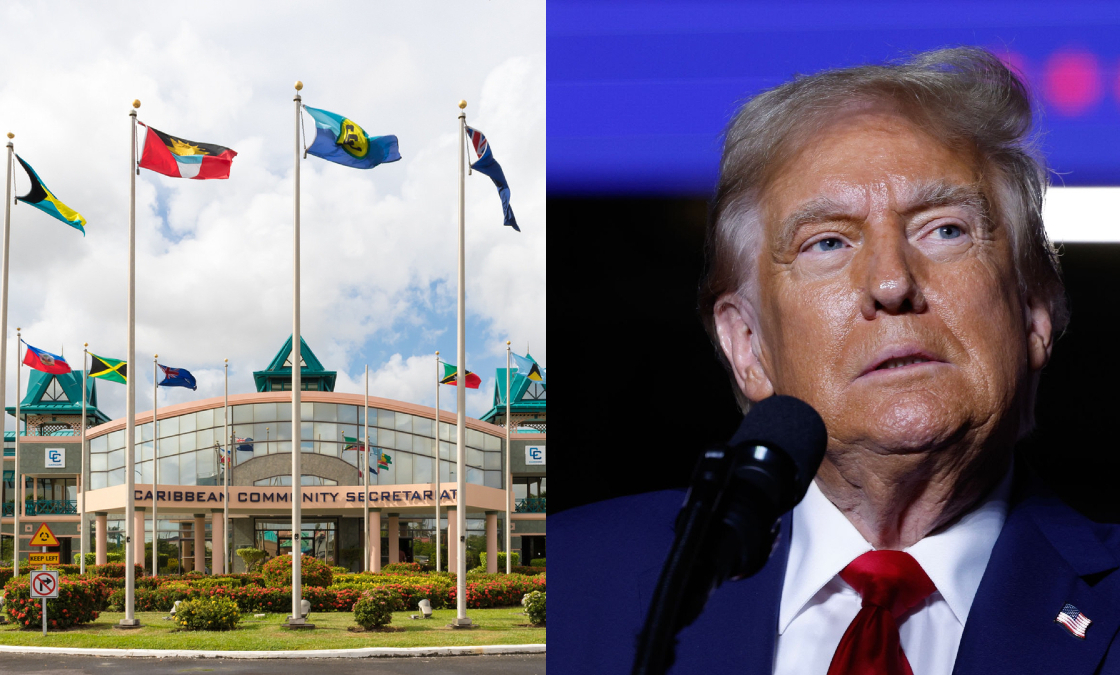
Donald Trump’s unexpected return to the White House for a second term has sent ripples across the globe. For the Caribbean, a region historically shaped by the policies and priorities of the United States, the implications are significant.
However, I was not surprised by Trump’s re-election. The fervent support he commands among a considerable segment of the American electorate, coupled with the polarized political landscape, made his return plausible.
Now, rather than dwelling on the challenges, my focus shifts to how the Caribbean can thrive despite Trump’s unpredictability, potential tariffs, and his “America First” agenda.
Strategic Realignments: Looking Beyond the U.S.
One of the first considerations is the importance of strategic realignments. The Caribbean must look beyond its traditional reliance on the United States and tighten relations with Latin America and Africa.
This is where initiatives like the AfriLAC (Africa-Latin America & the Caribbean) framework, I wrote about in a previous article, come into play. By continuing to build on and forge closer ties between these regions, the Caribbean can create new economic, cultural, and diplomatic opportunities that are strategic and mutually beneficial.
Collaborations with African nations, which are among the fastest-growing economies globally, could open doors for additional bilateral trade, investment, and knowledge-sharing. Similarly, strengthening relationships with Latin America could help the Caribbean integrate more deeply into the regional supply chain and logistics networks.
Trump’s second term is yet another storm, but it offers the Caribbean an opportunity to prove its resilience, deepen alliances, and lead with ingenuity.
Trinidad & Tobago: A Manufacturing Powerhouse
The Caribbean’s reliance on the United States has often hindered its ability to explore diverse economic partnerships. Trump’s transactional foreign policy offers no guarantees, making it clear the region must proactively carve out its own opportunities.
As an example of the Caribbean’s untapped potential, Trinidad & Tobago is uniquely positioned to lead this shift. As the manufacturing hub of the Caribbean, Trinidad & Tobago stands out due to its strategic location as a gateway to South America and a logistics hub for the region.
This positioning makes it an ideal destination for foreign investment and a natural choice for businesses seeking to manufacture goods for North America, Europe, and Africa. Highlighting this potential underscores its critical role in strengthening regional economic stability.
To capitalize on this potential, organizations like the Trinidad & Tobago Manufacturers Association (TTMA), InvesTT, and ExporTT must intensify their global outreach efforts. By actively showcasing what Trinidad & Tobago offers as a manufacturing and logistics hub, these entities can attract the attention of investors seeking alternatives in today’s volatile global marketplace.
Moreover, the government must forge closer collaborations with local businesses and manufacturers to ensure they are equipped to compete on a global scale, beyond the Caribbean. Adopting models like Invest Barbados, which effectively attracts foreign investment and regional headquarters for global businesses, can further bolster Trinidad & Tobago’s appeal.
This strategic approach is more than a national priority; it is essential for the broader economic stability of the Caribbean. A strong Trinidad & Tobago anchors the region’s economic health, making it imperative for the government and private sector to work together and position the nation as a key player in the global economy.
Barbados and St. Vincent & the Grenadines: The Role of Soft Power and Diplomacy
Meanwhile, smaller Caribbean nations like Barbados and St. Vincent & the Grenadines are demonstrating the power of diplomacy and regional leadership. Barbados, under Prime Minister Mia Mottley’s leadership, has emerged as a global advocate for climate resilience and sustainable development.
Her government’s bold initiatives have positioned Barbados as a leader in addressing some of the most pressing challenges faced by Small Island Developing States (SIDS), from advocating for equitable access to climate financing to spearheading initiatives that promote renewable energy and sustainability. These efforts not only reflect Barbados’ commitment to its own future but also amplify the Caribbean’s collective voice on the global stage, showcasing the region’s ability to drive meaningful change.
St. Vincent & the Grenadines, leveraging its position within the United Nations Security Council, has amplified the voice of SIDS. A standout example of its leadership is the Joint Argyle Declaration, a landmark initiative designed to address the longstanding Guyana-Venezuela dispute over Essequibo.
This declaration represents a decisive and unified effort by Caribbean leaders to resolve a complex geopolitical issue without relying on external intervention. By prioritizing diplomacy and regional collaboration, the Joint Argyle Declaration serves to demonstrate the Caribbean’s commitment to managing its own affairs and fostering unity within the region.
This agreement also sets an important precedent, demonstrating that smaller states can successfully work together to tackle high-stakes conflicts. It highlights a growing resolve within the Caribbean to address challenges head-on, sending a strong message to global powers.
By proactively engaging in such initiatives, the region not only strengthens its internal cohesion but also signals its readiness to act as a serious and capable partner on the global stage. This approach makes the Caribbean particularly attractive to the United States, positioning it as a stable ally whose independence and problem-solving capabilities can be leveraged in scenarios where American influence might be constrained.
The future is not about enduring challenges but shaping destiny – proving to the world that the Caribbean is a force for progress and innovation.
Such assertive action, taken by the Caribbean, sends a clear message to global powers, including the U.S., about its seriousness in managing its own affairs and positioning itself as a capable and strategic partner on the world stage. These initiatives, including efforts to address the crisis in Haiti, highlight the region’s capacity to solve its own problems without being overly reliant on external powers.
By taking such serious and proactive roles, these nations signal to the U.S., including Trump’s administration, that the Caribbean is capable of self-reliance and strategic problem-solving. This independence, paradoxically, makes the region more attractive as a partner to the U.S., again offering a stable, cooperative ally that can be leveraged in high-level situations where American influence might be diminished.
Additionally, the potential for increased South-South engagement with countries like India, China, and Brazil could redefine the region’s economic landscape, reducing dependency on traditional Western powers. By fostering these relationships, the Caribbean can strengthen its collective bargaining power on the global stage while reinforcing its position as a key geopolitical player.
Caribbean Interests Are American Interests
From a pragmatic standpoint, Trump’s administration must recognize the strategic importance of the Caribbean. The region’s proximity to the United States, its pivotal role in hemispheric stability, and its deep cultural and economic ties make it an indispensable ally.
Furthermore, the Caribbean’s potential as a logistics and manufacturing hub aligns seamlessly with Trump’s focus on reshoring and securing supply chains closer to home.
Failing to prioritize the Caribbean risks creating significant openings for global powers like China and India, both of which are actively strengthening ties with Latin America and the Caribbean through their South-South strategies. China, through its Belt and Road Initiative (BRI), has made major infrastructure investments across the region, such as ports in Jamaica and energy projects in Guyana.
These efforts are reshaping the region’s economic networks and establishing China as a dominant stakeholder in the Caribbean’s future.
India, meanwhile, has leveraged its expertise in agriculture, technology, pharmaceuticals, and renewable energy to forge deeper connections with Caribbean nations. These targeted investments not only enhance economic partnerships but also foster cultural and political goodwill, reshaping alliances in the region.
These efforts by China and India are not just symbolic – they reflect a deliberate and strategic push to embed themselves in the economic and political fabric of Latin America and the Caribbean. China’s infrastructure projects and India’s innovation-driven partnerships are positioning these nations as indispensable players in the region.
Without a proactive response, U.S. influence risks being sidelined, leaving a critical void in hemispheric stability.
For Trump’s administration, re-engaging with the Caribbean is no longer optional but a strategic imperative. The region offers not only stability but also an opportunity to counterbalance the growing influence of China and India. Prioritizing the Caribbean as a key ally ensures the U.S. remains a central force in shaping its economic and geopolitical future.
Turning Challenges into Opportunities
The challenges posed by Trump’s second term – from punitive tariffs to erratic shifts in trade policy – highlight the vulnerabilities of the Caribbean, whose economic stability remains deeply intertwined with global markets. Yet, these challenges are not unfamiliar; they reflect the external pressures the Caribbean has consistently navigated with resilience and strategic adaptation.
The Caribbean’s ability to forge alliances and leverage opportunities provides a clear pathway not only to survive but to thrive. By fostering strategic partnerships with Latin America and Africa, the region can create actionable frameworks for trade, technology sharing, and cultural exchange.
For instance, aligning with Latin American supply chain networks or African trade agreements opens access to larger markets and promotes economic diversification.
This transformation is already underway, exemplified by initiatives such as the establishment of Afreximbank’s Caribbean headquarters in Barbados, which provides critical capital to enhance development. Barbados, in particular, demonstrates how proactive engagement can attract global partnerships and investment.
To build on these successes, the Caribbean must deepen its efforts toward an integrated and self-reliant economic framework that appeals to global powers like the United States while reducing dependency on them.
Similarly, amplifying its global voice through soft-power diplomacy – as showcased by Barbados and St. Vincent & the Grenadines – strengthens the Caribbean’s standing on the international stage. Positioning nations like Trinidad & Tobago as manufacturing and logistics hubs will require both showcasing their strategic location and committing to infrastructure and workforce development that meets global standards.
These steps are essential to transforming challenges into opportunities and ensuring sustainable regional growth.
The reality is clear: Caribbean interests are aligned with American interests, and it would behoove Trump’s administration to prioritize the region not as an afterthought, but as a vital ally in its foreign policy calculus.
As a proud advocate for the Caribbean, I remain optimistic. The region has weathered countless storms – both literal and figurative – and emerged stronger each time.
Trump’s second term is yet another storm, but it offers the Caribbean an opportunity to prove its resilience, deepen alliances, and lead with ingenuity. By building regional partnerships, leveraging strategic importance, and demonstrating self-reliance, the Caribbean can solidify its position as a vital global player.
The future is not about enduring challenges but shaping destiny – proving to the world that the Caribbean is a force for progress and innovation.
