
Opinion
West Africa’s Trade Paradox: Infrastructure Gains, Resilience Losses
The continent has frameworks. What it still lacks is the resilience to survive the next shock.
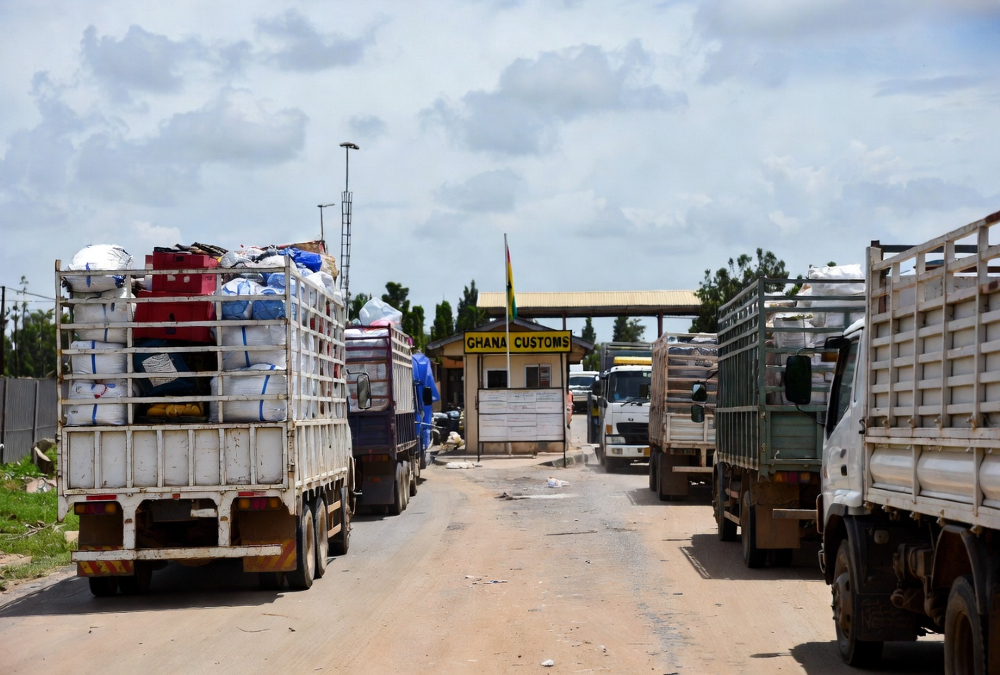

By Ziad Hamoui
Six years ago this week, COVID-19 did not merely close West Africa’s borders – it exposed them. Supply chains fractured. Regional systems buckled. What had long been assumed as functional integration revealed itself, almost overnight, as a patchwork of untested arrangements held together by favorable conditions that had abruptly vanished.
The response, in the years since, has been substantive. The African Continental Free Trade Area (AfCFTA) moved from ambition to active trading. The Pan-African Payment and Settlement System (PAPSS) came online, clearing away long-standing correspondent banking bottlenecks.
The US$15.6 billion Abidjan-Lagos Corridor won approval, promising to stitch together one of the continent’s most economically vital arteries. And for the first time, Ghana’s Informal Cross-Border Trade Survey put hard numbers to what ground-level observers had long known: 61.2 percent of trade with Togo moves through informal channels.
These are genuine achievements. But capacity is not resilience.
The Gap Between Architecture and Reality
The 2023 coup in Niger made the distinction painfully clear. Within days of the border closure that followed, onion prices in Ghana nearly doubled.
A single political rupture – entirely foreseeable in a region no stranger to instability – was sufficient to destabilize food markets hundreds of miles away. No framework, however elegantly designed, prevented that.
The structural vulnerabilities are not difficult to identify. Borders still close at political whim, with little warning and no accountability mechanism.
Informal trade remains dominant not by accident, but because formal systems have failed to offer traders a compelling alternative. Women, who account for more than 60 percent of cross-border commerce in the region, continue to operate largely outside formal recognition – exposed, unprotected, and uncounted.
Food security remains fragile, despite the sustained advocacy of coalitions like the Food Trade Coalition for Africa, which has pressed for evidence-based policy with commendable persistence.
The diagnosis, stated plainly, is this: the continent has built the frameworks but struggles with enforcement. Digital platforms exist, yet most economic actors remain outside formal structures. Policies are written; predictability is not.
What Comes Next Will Be Harder
The challenges ahead are not hypothetical. Climate extremes are already disrupting agricultural production across the Sahel.
Instability in the region shows no sign of abating. Rising protectionism – a global phenomenon, not merely an African one – threatens to harden the very borders that integration efforts have sought to soften.
Against this backdrop, good intentions and well-drafted agreements are insufficient. Three things must change.
First, the AfCFTA Secretariat must move decisively from launching agreements to ensuring they are enforced. The value of a trade framework is not in its existence, but in its application under pressure. That requires monitoring mechanisms with teeth, not celebratory communiqués.
Second, ECOWAS must adopt clear accountability standards – including tangible penalties for arbitrary border closures. The current arrangement, in which member states may disrupt regional commerce without consequence, is incompatible with any serious vision of integration.
Third, development partners must stop funding studies and start financing implementation. The evidence base for regional trade reform is not thin. What is thin is the commitment to act on it.
A Call for One Concrete Step
To colleagues across the network: the question worth asking in 2026 is not what Africa’s trade architecture should look like in a decade, but what your organization can do this year – one tangible, operational step – to keep regional trade moving through the next shock, whatever form it takes.
The Africa that this work is oriented toward – peaceful, prosperous, and genuinely integrated – will not be built through frameworks alone. It will be built through the harder, less visible work of making those frameworks function when the pressure is real.
That work is overdue. And it cannot wait for the next crisis to remind us why it matters.
Ziad Hamoui is the Co-Founder and Past President of the Borderless Alliance, a leading private-sector advocacy group promoting economic integration and removing trade and transport barriers in West Africa. With extensive experience in Ghana’s road transport, logistics, and shipping sectors, he currently serves as Executive Director of Tarzan Enterprise Ltd., a long-established family business. He is a former Co-Chair of the Africa Food Trade Coalition, Co-Founder of the Trade Facilitation Coalition for Ghana, and serves on multiple high-level advisory committees on trade, transport, agriculture, and security. A Chartered Fellow of the Chartered Institute of Logistics and Transport (CILT) Ghana, he is also a former member of its Governing Council.
