
Business
Beyond the Bus: How One Engineer Is Electrifying African Industry
Paul Isaac Musasizi didn’t wait for foreign validation. He built the factory, drove the bus across six nations, and signed a $250 million deal. Africa’s industrial decade has already begun.
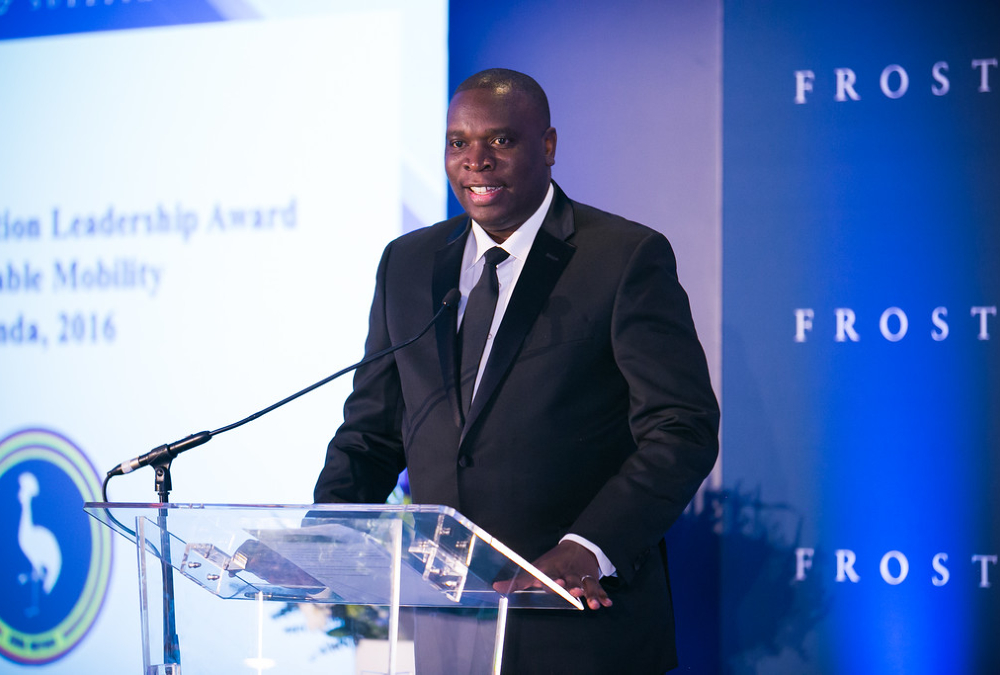

By Charles F.V. Chitekwe
Africa has no shortage of bold ideas. What it has historically lacked is the infrastructure, the capital, and – most critically – the institutional will to convert those ideas into durable, scalable industry.
Paul Isaac Musasizi is changing that calculus, one electric bus at a time.
Musasizi is the Founding CEO of Kiira Motors Corporation, and what he is executing in Jinja, Uganda, is arguably the most consequential industrial story unfolding on the African continent today. Not a concept vehicle. Not a donor-funded pilot. Not a foreign brand assembled in Africa for optics. A Ugandan-owned, Ugandan-built, Ugandan-operated vehicle manufacturing plant – commissioned, operational, and scaling.
A Decade of Firsts the World Chose to Ignore
The story begins in 2011, when a team of engineers at Makerere University completed the Kiira EV – Africa’s first electric vehicle – launched by President Yoweri Museveni on November 24 of that year. The global press corps largely looked the other way.
In 2014, the same team produced Africa’s first hybrid vehicle. In 2016, its first solar-electric bus. Still, the world offered little more than polite indifference.
Then, in late 2025, Musasizi did something that could not be ignored.
Six Nations. One Message.
Kiira Motors loaded its flagship Kayoola Electric Coach onto a Grand Trans-Africa Electric Expedition – a 13,000-kilometer (8,078-mile) odyssey spanning Uganda, Tanzania, Zambia, Botswana, Eswatini, and South Africa. The journey covered 13,700 kilometers (8,513 miles) in 39 days across mountain passes, arid plains, and congested urban corridors.
The bus didn’t merely cross the continent. It sold itself along the way.
The commercial result was historic: a US$250 million export contract for 820 electric buses destined for South Africa – the largest deal in Kiira Motors’ history. Domestic transport operators have since signaled interest in thousands of additional units.
The company’s target is ambitious but grounded: 30,000 buses for the regional market by 2030, with a goal of localizing 65 percent of parts and components within Uganda’s own supply chain.
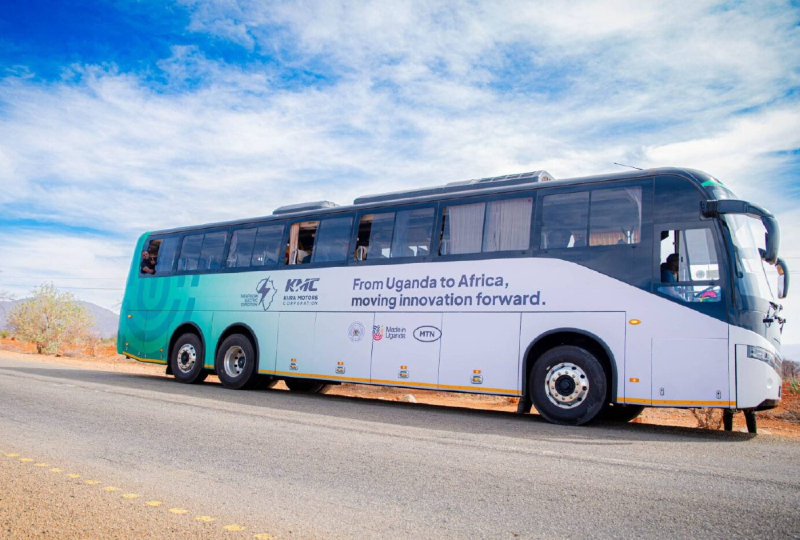
Uganda’s Kayoola Electric Coach traveling through African landscape during historic 13,000-km expedition from Uganda to South Africa. Image credit: KMC
The Economics of a Paradigm Shift
The financial case for the Kayoola EVS is not aspirational – it is arithmetical. Each bus eliminates an estimated 181 metric tons of CO₂ annually.
Operating costs run 78 percent lower than diesel equivalents. Maintenance costs fall by 46 percent.
In a region where 82 percent of passengers rely on road-based public transport, the implications extend far beyond environmental metrics.
The Kiira Vehicle Plant is projected to generate more than 14,000 direct and indirect jobs. Economists estimate it could save Uganda as much as US$450 million per year in vehicle import expenditures – capital that currently exits the economy and could instead compound within it.
What African Leadership Actually Looks Like
“This journey affirms that Africa’s solutions can be designed, built, and deployed right here at home,” said Uganda’s Minister for Works and Transport following the expedition’s conclusion. “Electric mobility is no longer a future concept. It is a present opportunity, and Uganda has shown leadership in turning vision into action.”
That language – vision into action – is precisely what distinguishes Kiira Motors from the long procession of African industrial announcements that never materialize. Musasizi did not wait for foreign investment to validate his conviction.
He did not delay production pending a Western partnership agreement. He built the factory. He drove the bus across the continent. He signed the contracts.
The AfCFTA Argument, Made in Steel and Lithium
This is what the African Continental Free Trade Area was architecturally designed to enable: intra-African manufacturing, cross-border commerce, and the kind of industrial self-sufficiency that transforms resource-rich nations into value-added economies. Kiira Motors is not a symbol of that potential – it is its proof of concept, now operational and export-ready.
Africa’s industrial decade is not approaching. It is already running. And it is running on a bus built in Uganda.
Charles F.V. Chitekwe is a diplomat and global relations specialist at the Alpha Sirius Foundation, where he advises heads of state, senior policymakers, and international delegations on Africa-focused diplomacy, trade, and development strategy. He advocates for a unified African position in global negotiations, promoting innovation-driven growth, investment, and economic self-reliance over aid dependency. He writes on African development, pan-African finance, diaspora investment, and the role of AI and technology in accelerating the continent’s economic transformation.
