
Opinion
Africa’s Special Economic Zones: Gateways to Global Investment
From Casablanca to Kigali, a continent-wide network of industrial zones is quietly becoming one of the most consequential developments in 21st-century trade.

By Naomi Mutuku
Africa’s Special Economic Zones (SEZs) are no longer peripheral experiments in industrial policy – they are becoming the structural backbone of a continent reorienting itself toward global economic leadership.
Stretching across North, West, East, and Southern Africa, these zones are integrating production, trade, and regional value chains in ways that are accelerating industrialization and powering export growth at a scale that demands serious attention from investors, policymakers, and multinational firms alike.
The timing is not incidental. The African Continental Free Trade Area (AfCFTA) – the world’s largest free trade agreement by participating nations – is providing the policy architecture that makes SEZs exponentially more powerful.
As tariff barriers fall and intra-African trade corridors deepen, these zones are transforming from isolated investment destinations into interconnected nodes of a continent-wide industrial network.
North Africa: The Mediterranean Gateway
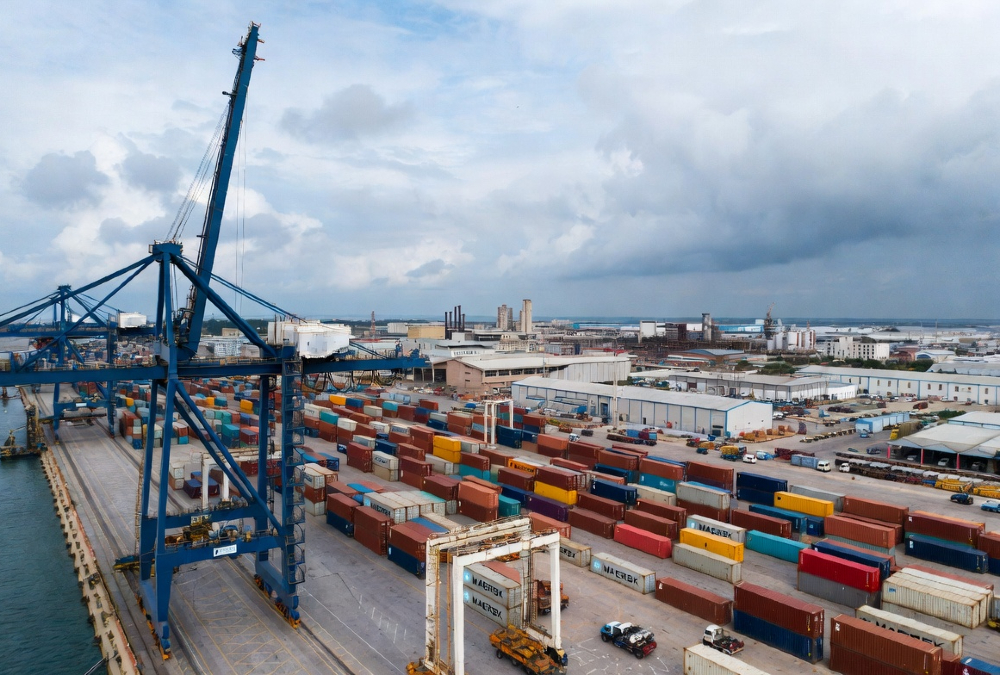
North Africa’s SEZs are among the most globally integrated on the continent, with deep ties to European and Middle Eastern supply chains. Morocco’s Tanger Med Free Zone has emerged as a world-class logistics and manufacturing hub anchoring the Strait of Gibraltar, processing millions of containers annually while attracting automotive, aerospace, and textile giants.
Egypt’s Suez Canal Economic Zone (SCZone) leverages its unrivaled geographic position to serve as a transshipment and manufacturing corridor connecting Asia, Europe, and Africa. Morocco’s Nador West Med, currently in development, promises to extend this northern arc further eastward, adding port-linked industrial capacity to one of the region’s most strategically vital coastlines.
West Africa: Industrial Ecosystems Built for Scale
West Africa is building something more ambitious than individual zones – it is constructing integrated industrial ecosystems anchored to ports and energy infrastructure. Nigeria’s Lekki Free Trade Zone and Lagos Free Zone, both positioned within Africa’s largest metropolitan economy, are drawing manufacturing, logistics, and technology investment to a market of over 200 million consumers.
Gabon’s Nkok SEZ, a joint venture with Singapore’s Olam Group, has become a model for value-added timber and agro-industrial processing, demonstrating that resource-rich economies need not export raw materials indefinitely.
East Africa: Technology, Manufacturing, and Regional Integration
East Africa’s SEZs are defined by their forward-looking sectoral focus. Kenya’s Konza Technopolis, positioned 60 kilometers (37 miles) south of Nairobi, is designed to be Africa’s answer to a purpose-built technology city – a long-term bet on the continent’s digital economy.
Ethiopia’s Hawassa Industrial Park, developed with Chinese investment and global apparel brands as anchor tenants, became a symbol of Africa’s potential as a competitive manufacturing destination before political instability tested its resilience. Rwanda’s Kigali SEZ reflects the ambitions of one of Africa’s most business-friendly environments, targeting light manufacturing, logistics, and services with characteristic Rwandan institutional discipline.
Southern Africa: Mature Zones, Industrial Depth
Southern Africa hosts some of the continent’s most established SEZs, built on decades of industrial policy and logistics infrastructure. South Africa’s Coega SEZ, adjacent to the Port of Ngqura in the Eastern Cape, anchors a diverse industrial cluster spanning automotive components, agro-processing, and business services.
The Dube TradePort SEZ in KwaZulu-Natal integrates air cargo, logistics, and manufacturing in a single precinct adjacent to King Shaka International Airport. The Atlantis GreenTech SEZ, near Cape Town, is positioning South Africa as a serious player in the global green economy – targeting renewable energy manufacturing at a moment when the energy transition is restructuring global industrial geography.
The AfCFTA Multiplier
What distinguishes this moment from previous waves of African industrial policy is the continental framework now surrounding it. AfCFTA, which entered its operational phase in 2021, is progressively dismantling the tariff and non-tariff barriers that historically fragmented African markets.
For SEZs, this creates a compounding effect: zones that once served primarily as export platforms to Europe or Asia can now anchor regional supply chains, producing for a continental market projected to reach 2.5 billion people by 2050.
The implications for global investors are significant. Firms seeking supply chain diversification – driven by the geopolitical disruptions of recent years – are looking at Africa with renewed seriousness.
SEZs offer the regulatory clarity, infrastructure, and incentive structures that reduce the friction of entry into what remains, for many, an unfamiliar market.
A Continent Building Its Own Platforms
Africa’s economic trajectory has too often been narrated through the lens of aid, debt, and dependency. The expansion of SEZs across the continent tells a different story – one of deliberate institution-building, strategic infrastructure investment, and a clear-eyed understanding that participation in global trade requires platforms, not just resources.
Africa is not waiting to be discovered. It is constructing the industrial architecture that will define its position in the global economy for decades to come.
The question for investors, trading partners, and policymakers is no longer whether Africa’s SEZs are worth watching – it is whether they can afford not to.
Naomi Mutuku is a trade and investment expert specializing in helping global companies enter Kenya and broader African markets. She focuses on reducing risk, accelerating market entry, and fostering sustainable growth. Based in Nairobi, Naomi is a regular commentator on Africa’s dynamic business landscape and is passionate about the continent’s growth potential.
