
Opinion
The Democracy Trap: When Voting Substitutes for Governing

By Wavinya Makai
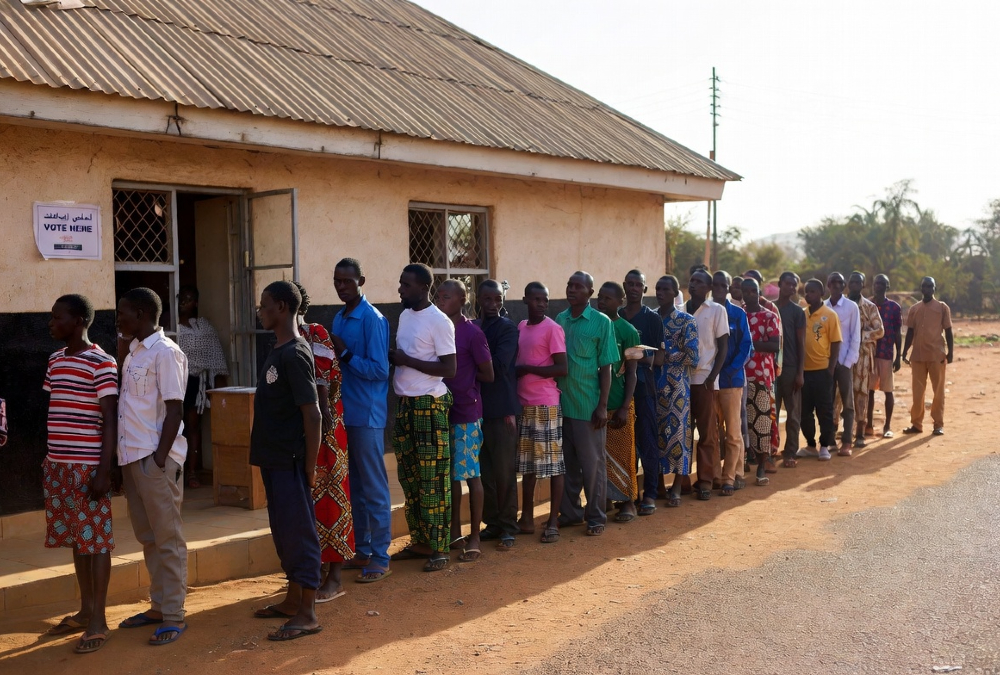
Across the African continent, elections unfold with ritual precision. Ballots are printed, campaigns are waged, international observers are deployed, and citizens queue patiently under open skies, ink-stained fingers held aloft as proof of participation.
From the outside, the scene projects democratic triumph. But beneath the choreography lies a more unsettling question: What if voting has quietly become a substitute for governing?
This is the democracy trap.
A Blueprint Designed Elsewhere
At independence, African states inherited constitutional blueprints modeled on European parliamentary systems – multi-party elections, periodic transitions, and formal constitutional frameworks, all adopted as internationally recognized markers of legitimacy. Yet Kwame Nkrumah warned, with prescient clarity, that political independence without economic sovereignty is little more than the illusion of freedom.
It rotates leaders without altering the underlying architecture of power.
This is the trap’s first layer: political choice decoupled from economic control. A citizen may cast a ballot, but cannot influence the currency that shapes their purchasing power, the sovereign debt that constrains national policy, or the trade regimes that determine what their country produces and for whom.
The ballot box is real. The leverage it confers is not.
The Egyptian-French economist Samir Amin argued that peripheral economies are structurally conditioned to remain dependent, irrespective of internal political arrangements. Elections change governments. They rarely redistribute power.
Elite Capture and the Price of a Vote
The second layer of the trap is elite capture. Electoral politics is, at its core, a high-stakes contest financed by networks of capital that expect measurable returns on their investment.
The political class enters office already entangled in obligation – to donors, to patronage networks, to the interests that bankrolled their ascent. The Nigerian political scientist Claude Ake observed that democracy in Africa risks degenerating into a competition among elites for control of the state, rather than functioning as a genuine mechanism for popular empowerment.
In this arrangement, the citizen becomes a periodic participant in outcomes that are, in large measure, already determined.
The Psychological Dimension
The deepest layer of the trap is psychological. Over decades, democracy has been reduced to its most photogenic act: voting.
The harder, more consequential questions – who owns, who decides, who benefits – are obscured by the powerful symbolism of participation. When democracy is conceived externally and practiced mechanically, it becomes an imported ritual rather than an internalized system of governance.
It satisfies the optics of freedom without delivering its substance.
A Path Out of the Trap
To transcend the democracy trap, democratic practice in Africa must evolve from procedure into substance – from form into force.
This requires, first, a decisive shift from electoral democracy to economic democracy: governance systems in which citizens exercise meaningful agency over the material conditions of their lives. It demands a movement away from elite-driven politics toward participatory governance, in which communities serve as active architects of public policy rather than passive recipients of it.
And critically, it requires a re-rooting of democratic practice within African intellectual and historical traditions. Pre-colonial systems of consensus-building, communal accountability, and collective decision-making did not emerge by accident. They were sophisticated governance technologies, refined over centuries, and discarded too hastily in the rush toward post-independence legitimacy.
The Measure of Democracy Is Not Turnout
The future of democracy in Africa will not be determined by the frequency of elections. It will be determined by the depth of sovereignty.
Turnout statistics and observer mission reports are insufficient measures of democratic health when the structural conditions governing citizens’ lives remain beyond democratic reach.
Until Africans can meaningfully shape the economic, institutional, and intellectual foundations of their own societies, democracy on the continent will remain incomplete – a process faithfully observed, but only partially lived.
The ink on the finger is real. The question is whether the power behind it is.
Wavinya Makai is a Kenyan author, development strategist, and Pan-African scholar specializing in African economic sovereignty. Her work focuses on youth development, unemployment, and education reforms that cultivate innovators. She is the author of Capital Violence: The Economic War on African Dignity and holds a Master of Philosophy in Development Studies from the University of Cambridge. Makai has been featured as a development analyst on Citizen TV Kenya and is a frequent speaker on leadership and human rights.
