
Opinion
Africa’s Greatest River, Africa’s Greatest Paradox

By Dishant Shah
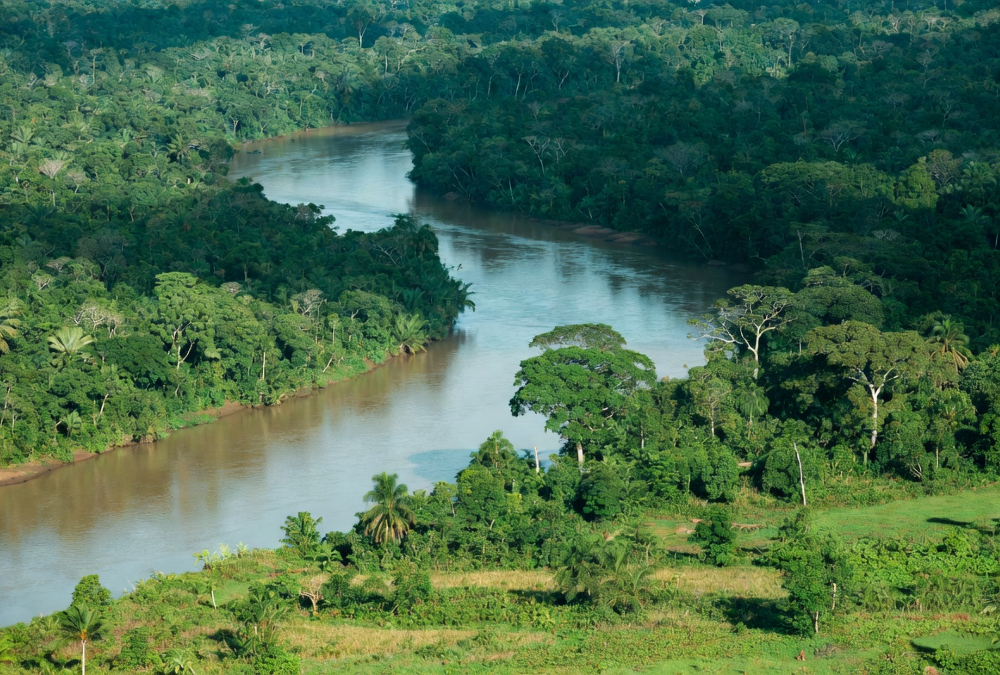
The most powerful river in Africa carves its way through one of its most troubled nations. The Congo River’s hydroelectric potential is, by any measure, extraordinary – sufficient, engineers say, to power the entire African continent.
The proposed Grand Inga Dam, if ever completed, would be the largest power plant in human history: twice the generating capacity of China’s Three Gorges Dam, itself a marvel of modern infrastructure.
And yet, fewer than 20 percent of Congolese citizens have reliable access to electricity. This is not merely irony. It is the infrastructure trap rendered in its starkest form.
The Gap Between Vision and Reality
Energy projects of this magnitude demand decades of sustained execution, billions of dollars in patient financing, and a degree of political stability that the Democratic Republic of Congo has rarely been able to provide. The financing structures that make such ambitions possible are complex, fragile, and acutely sensitive to governance risk.
When institutions falter – and in the DR Congo, they have faltered repeatedly – the capital retreats, the timelines extend, and the vision recedes further into the future.
Meanwhile, the family living three kilometers from the dam site still reads by kerosene light.
The chasm between what exists beneath the ground and what exists in daily life is, in many ways, where Africa’s real story lives. It is a story not of absent resources, but of the treacherous distance between resource and utility – between potential energy and a functioning light switch.
Who Power Actually Reaches – and Who It Doesn’t
What the Grand Inga saga reveals is not merely the limits of ambition. It exposes something more structural about how large-scale energy investment actually works.
Industrial users and export corridors tend to capture the power first. The economics of transmission favor density and scale. The last mile – the hardest mile – is invariably where the margins are thinnest and the populations are greatest.
That is the quiet violence of the infrastructure gap. It does not announce itself. It simply means that the people who live closest to one of the world’s great undeveloped energy sources are also among those least likely to benefit from it in their lifetimes.
The potential here is undeniably real. The Congo River is not a metaphor; it is a measurable, documentable force of nature.
But potential, without the institutions and incentives to translate it into delivered power, is just another way of describing a problem that hasn’t been solved yet.
The distance between what could exist and what does is not a technical failure. It is a political and economic one. And until the investment calculus shifts – until last-mile access is treated as a first-order priority rather than an afterthought – the lights will remain off for the people who, by geography alone, should be first in line to turn them on.
Dishant Shah is a partner at Legion Exim, a company specializing in facilitating the export of high-quality engineering products directly sourced from manufacturers in India to Africa. His areas of expertise include new business development and business management.
