
Opinion
The State vs. The Signal: Strive Masiyiwa’s Battle for Africa’s Future

By Dishant Shah
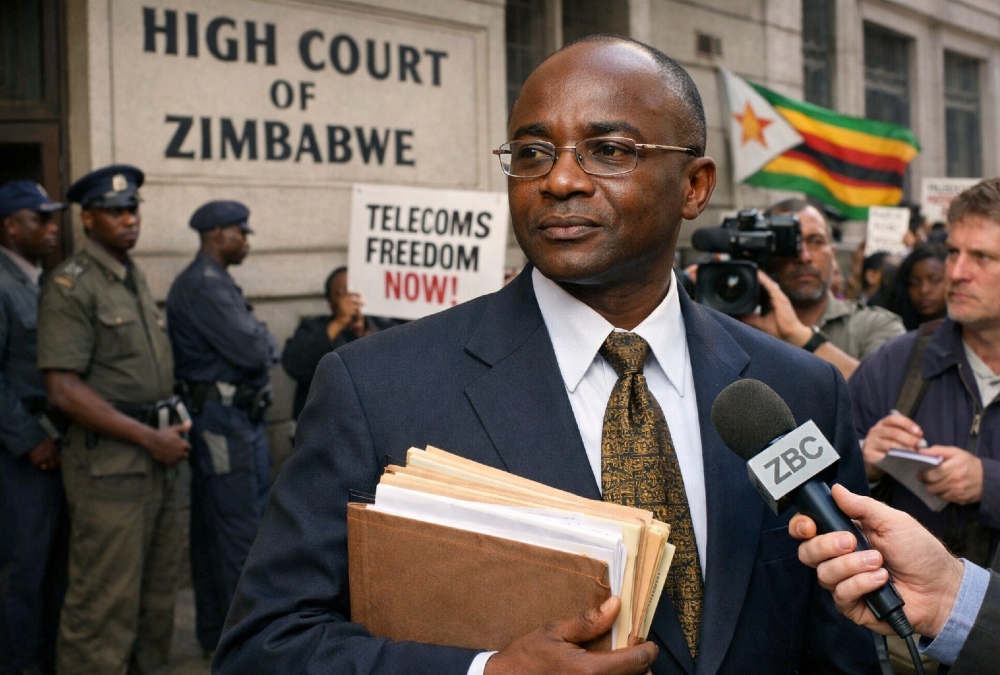
In 1993, a Zimbabwean engineer applied for a license to build a mobile phone network in his country. His own government spent the next five years trying to destroy him for it.
Strive Masiyiwa was not an activist. He was not a politician. He was a businessman who looked at Zimbabwe and saw what most people had not yet grasped: that mobile telecommunications would become the foundational infrastructure layer upon which everything else in Africa would eventually run.
He wanted to build it.
Robert Mugabe’s government disagreed. The state-owned telecoms monopoly disagreed more forcefully still.
What followed was not a regulatory delay or a bureaucratic slowdown. It was a sustained, deliberate campaign to shut him down.
His license applications were rejected, repeatedly. His business was threatened. He faced pressure that would have broken most people’s resolve within the first year.
So Masiyiwa did something that changed the outcome entirely. He took the government to court – not once, but repeatedly.
For five years, he fought Zimbabwe’s government through its own legal system, arguing that the constitutional right to free expression encompassed the right to communicate, and that a state monopoly on telecommunications was a direct violation of it. He ran out of money. He borrowed. He kept going.
In 1998, he won.
A Continent Built One Court Case at a Time
Econet Wireless launched in Zimbabwe and did not stop there. It expanded across Africa and beyond, eventually operating in more than 20 countries spanning telecommunications, renewable energy, education technology, and financial services.
The group built one of the continent’s earliest mobile money platforms, put solar infrastructure into rural communities, and connected people whom no institutional investor in 1993 had believed were worth connecting.
The Higherlife Foundation, which Masiyiwa runs alongside his wife Tsitsi, has paid school fees for more than 250,000 orphaned and vulnerable children across Africa – not as a corporate social responsibility line item, but as a personal commitment, funded from their own resources and sustained over decades.
The Barrier Nobody in Silicon Valley Talks About
What makes Masiyiwa’s story remarkable is not that he succeeded. It is what the resistance he faced reveals about the environment African entrepreneurs have always been forced to operate in.
The barriers are not limited to market competition or capital access. Sometimes the barrier is the state itself, and its structural interest in protecting what already exists over what could be built.
He built anyway – through the courts, through the years, through a government that held every institutional advantage over a single individual armed with nothing more than a business plan and a constitution.
There is a version of this story that most people in global business have never encountered. They know the unicorns emerging from Silicon Valley. They are well-acquainted with the founder mythology that gets packaged and sold at conferences, TED stages, and business school case studies.
They do not know Strive Masiyiwa. They should.
Dishant Shah is a partner at Legion Exim, a company specializing in facilitating the export of high-quality engineering products directly sourced from manufacturers in India to Africa. His areas of expertise include new business development and business management.
