
Opinion
Euro-Mediterranean Agreements and EPAs: Shaping and Straining African Markets
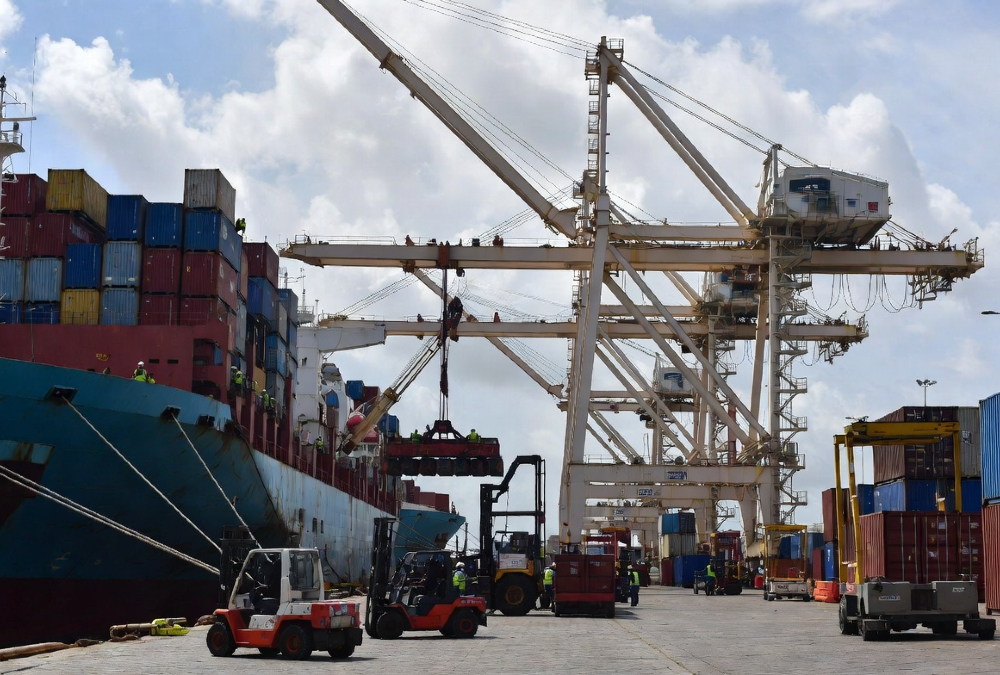
In Tunisian ports, cranes move to a rhythm set in Brussels. Ships laden with olive oil and textiles depart northward, while the young workers on the docks stare toward the same horizon as their only imaginable future. This is the central paradox of the Mediterranean: a sea that unites two worlds in commerce, yet divides them in dignity.

By Danilo Desiderio
For decades, Tunisia has anchored its economic strategy to its association agreement with the European Union. The arrangement has delivered real benefits – preferential market access, a degree of investment stability, and a framework for coordinating on migration.
With the EU absorbing roughly 70 percent of Tunisia’s exports, the partnership has been less a choice than a lifeline.
Yet a lifeline, by definition, also constrains. Tunisia’s president has recently called for a comprehensive review of the agreement, citing persistent imbalances in logistics, migration management, and investment flows.
The critique is pointed – and not without merit. At the same time, Tunisia’s difficulties cannot be attributed to Brussels alone. Political instability since 2011, chronic bureaucratic inefficiency, and sluggish structural reform have collectively narrowed the country’s ability to capitalize on the opportunities the agreement theoretically provides.
The 2025 Finance Law – a domestically driven pivot toward fiscal self-reliance, crafted in the absence of progress on EU and IMF negotiations – signals that Tunis is no longer content to wait.
Tunisia’s predicament is not unique. Across Africa, both Economic Partnership Agreements (EPAs) – such as the EU–Southern African Development Community EPA, agreements with Côte d’Ivoire (Ivory Coast), Ghana, and Kenya, and the EU–Eastern and Southern Africa EPA – and Euro-Mediterranean Association Agreements with Egypt, Morocco, Algeria, and Tunisia bind African economies tightly to European markets.
The structural consequences of this architecture deserve honest examination.
Three Fault Lines
Market fragmentation is the first. By channeling trade preferentially toward Europe, these agreements create incentives that work against intra-African commerce.
Poor cross-border infrastructure and the overlapping, often contradictory, obligations of regional trade blocs compound the problem. The result is a continent that trades more readily with partners thousands of miles away than with its immediate neighbors.
Investment constraints represent the second fault line. Preferential market access is a necessary condition for attracting foreign investment – but it is not sufficient.
In Tunisia and across much of Africa, governance weaknesses, regulatory bottlenecks, and political uncertainty intercept investment before it can be converted into productive activity. Trade agreements cannot substitute for the rule of law, judicial independence, or a streamlined business environment.
Where those foundations are absent, even the most generous access provisions deliver disappointing returns.
Industrial policy limitations complete the picture. Much of Africa, including Tunisia, remains concentrated in low-value-added assembly and primary production.
Trade agreements establish frameworks that are ostensibly designed to encourage industrial upgrading – but frameworks are not policies. Without deliberate national strategies, investment in manufacturing and processing capacity, and the institutional coherence to sustain them, countries find themselves locked into the lower rungs of global value chains, exporting raw materials and importing finished goods indefinitely.
Migration: The Talent Equation
In North Africa, migration is inseparable from the trade conversation. Tunisia has approximately 1.5 million nationals living abroad; remittances account for roughly 5 percent of GDP, providing a revenue stream that partly compensates for the economy’s structural weaknesses.
Yet those same flows conceal a quieter and costlier phenomenon: the steady departure of doctors, engineers, and information-technology specialists whose skills are precisely what domestic development requires.
The irony is sharp. Europe allocates considerable resources to deterring irregular migration from North Africa, while simultaneously – and quite deliberately – benefiting from the educated professionals those same countries train and lose.
A more coherent approach would center on what policymakers have begun calling “Talent Partnerships”: circular migration arrangements in which the EU funds vocational training and expands legal labor pathways in Tunisia, generating mutual benefit rather than one-sided extraction.
AfCFTA: Promising, Not Sufficient
The African Continental Free Trade Area has attracted considerable enthusiasm – some of it warranted, some of it premature. Poor transport infrastructure, elevated shipping costs, and competitive overlap among African producers make the vision of a seamlessly integrated continental market significantly harder to realize than the rhetoric suggests.
Regional integration is not a silver bullet.
Nevertheless, the early evidence is encouraging. By late 2025, Tunisia ranked among the top performers in the AfCFTA Guided Trade Initiative, with more than 40 companies exporting chemicals and processed foods to sub-Saharan African markets.
The lesson is not that AfCFTA will replace EU trade relationships, but that it can complement them – broadening the base of African economies rather than deepening a single dependency.
The Security-Development Trap
European policymakers have a tendency to frame the Mediterranean primarily as a security challenge. When border control dominates the agenda at the expense of economic development, the outcome is self-defeating: the economic pressures that drive irregular migration intensify, producing more of precisely the movement that the policy was designed to reduce.
The inverse is also true. Investments that promote industrialization, job creation, and regional value chains can stabilize communities, reduce the economic desperation that fuels migration, and build the kind of mutually beneficial partnership that neither security fences nor development grants alone can construct.
Treating migration as a symptom – rather than a signal – of deeper structural failure is the precondition for a more durable policy response.
The Eastern Option
As EU relations grow more complicated, Tunisia has moved with some urgency to diversify its external partnerships. Engagement with China and BRICS economies has expanded, reflecting a strategic judgment that dependence on a single dominant market carries risks that outweigh the costs of diplomatic complexity.
This is not anti-European posturing; it is elementary risk management. And it illustrates a broader truth: African nations are not passive recipients of external economic arrangements.
They are agents, navigating between dependence and opportunity with increasing sophistication.
What Must Follow
Tunisia’s experience distills into three imperatives that apply, with varying degrees of urgency, across African markets.
Domestic reform cannot be deferred. Stronger governance, genuine legal transparency, modernized labor regulation, and sustained investment in industrial research and development are prerequisites – not afterthoughts – for extracting value from any external trade framework.
Strategic diversification must accompany EU engagement. Deepening intra-African value chains through AfCFTA, while building substantive partnerships with non-European actors, is not a retreat from European integration.
It is the hedge that makes integration sustainable.
Finally, and most fundamentally: trade agreements do not determine outcomes. Institutions do. Political stability does. The quality of policymaking does. No external framework, however generously designed, can compensate for their absence.
Tunisia’s experience with Euro-Mediterranean and EPA agreements illustrates the central tension of contemporary African trade policy. These arrangements provide critical market access – access that, in the short term, many economies cannot afford to lose.
But access is not transformation. It is an input, and like all inputs, its value depends entirely on what is done with it.
The Mediterranean will continue to connect and divide in equal measure. Whether it ultimately delivers on the promise of mutual prosperity depends less on what is negotiated in Brussels than on what is decided, reformed, and built on the southern shore.
Danilo Desiderio serves as the CEO of Desiderio Consultants Ltd in Nairobi, Kenya, specializing in African customs, trade, and transport policies. He is a customs and trade expert at the World Bank and a senior associate to the Horn Economic and Social Policy Institute (HESPI).
