
Opinion
Zimbabwe: Southern Africa’s Quiet Linchpin for SADC and SACU Integration
How a landlocked economy became the connective tissue of trade, security, and integration across SACU and SADC.

By Des H Rikhotso
Zimbabwe rarely tops the list when analysts discuss Africa’s rising strategic powers. Yet peel back the headlines and a different picture emerges: a country whose geography, diplomacy, and institutional commitments have quietly made it one of the most consequential players in the Southern African Development Community (SADC) and, by extension, the Southern African Customs Union (SACU). Zimbabwe is not merely a participant in regional affairs – it is the connective tissue holding much of the region’s trade and security architecture together.
The Corridor That Carries a Region
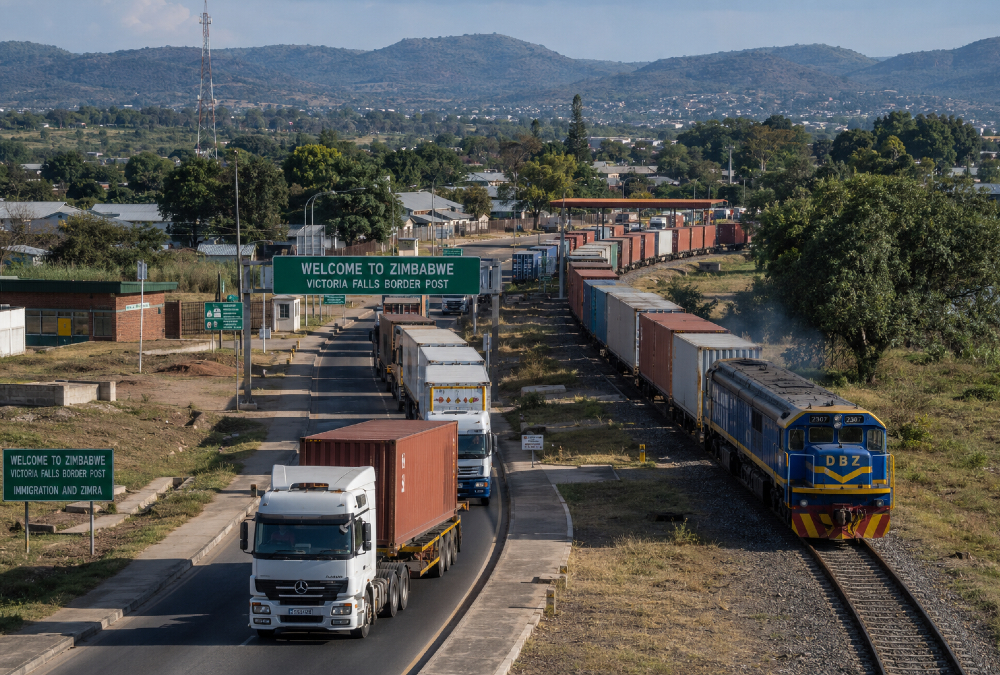
Look at a map of Southern Africa and Zimbabwe’s importance becomes self-evident. As a founding member of SADC, the country occupies the geographic hinge between the ports of South Africa and the landlocked markets to the north. Goods bound for Zambia, Malawi, and the Democratic Republic of the Congo do not simply appear at their destinations – they travel through Zimbabwe, along road and rail corridors that have become indispensable arteries of regional commerce.
This is no small distinction. South Africa accounts for the majority of Zimbabwe’s total trade, and Zimbabwe, in turn, functions as the transit bridge that allows South African goods to reach markets far beyond its own borders. Without this corridor, the logistics of Southern African trade would look dramatically different – slower, costlier, and less integrated.
Zimbabwe has also emerged as South Africa’s and SACU’s largest trading partner in the region, a fact that deserves more attention than it typically receives in discussions of African economic integration.
A SACU Partner in All but Name
Zimbabwe is not a formal member of SACU, but the distinction is increasingly one of paperwork rather than practice. Through bilateral trade agreements with South Africa, Botswana, and Namibia, Zimbabwe has woven itself into the customs union’s economic fabric. These agreements underpin the movement of manufactured goods, raw materials, and agricultural products across borders – flows that matter as much to SACU’s member states as they do to Zimbabwe itself.
Rather than waiting for formal accession, Zimbabwe has pursued integration through initiative. It has been an active promoter of the regional industrialization agenda, using platforms such as SADC Industrialization Week to court cross-border investment and champion the kind of manufacturing growth that Southern Africa has long struggled to achieve at scale. This is pragmatic regionalism – building influence through economic entanglement rather than formal membership alone.
Beyond Trade: A Security and Diplomatic Anchor
Zimbabwe’s regional weight extends well past economics. As an active member of the SADC Organ Troika, the country has taken on a mediating and peacekeeping role in some of the region’s most volatile flashpoints – including the insurgency in Mozambique’s Cabo Delgado province and the long-running instability in eastern Democratic Republic of the Congo. These are not peripheral engagements; they speak to Zimbabwe’s willingness to shoulder the diplomatic and military burdens that regional stability demands.
Zimbabwe has also positioned itself at the forefront of Southern Africa’s response to climate and disaster risk. By hosting major SADC ministerial summits on disaster risk management, and by championing pooled-resource mechanisms such as the SADC Humanitarian and Emergency Operations Centre – commonly referenced through funds like SHOCK – Zimbabwe has helped build the region’s capacity for early warning systems and coordinated emergency response. As climate volatility intensifies across Southern Africa, this kind of institutional groundwork will only grow more valuable.
The Continental Stakes
Zimbabwe’s significance does not stop at SADC’s borders. Its strategic position makes it a natural anchor point for aligning SACU and SADC trade protocols with the African Continental Free Trade Area (AfCFTA) – the ambitious project to knit the continent’s fifty-four economies into a single market. If AfCFTA is to succeed, it will need functioning regional building blocks, and few countries are as well placed as Zimbabwe to help translate continental ambition into on-the-ground logistics.
Why This Matters Now
The temptation, in coverage of African economies, is to fixate on headline growth figures or currency volatility while overlooking the structural roles that certain countries play within their regions. Zimbabwe’s case is a reminder that geographic position, institutional participation, and diplomatic engagement can matter as much as GDP figures when assessing a country’s regional relevance.
For policymakers in Pretoria, Gaborone, Windhoek, and beyond, the lesson is straightforward: Zimbabwe’s integration into SACU and SADC trade and security frameworks is not a peripheral detail – it is foundational to how the region functions. Recognizing that reality, and investing accordingly in the corridors, agreements, and institutions that sustain it, would serve Southern Africa’s collective interest far more than treating Zimbabwe as an afterthought in the region’s economic story.
Des H Rikhotso is a seasoned C-Suite Multi-Industry (Automotive – OEM + Retail, Logistics, Oil & Gas, etc) business executive with 25+ years of Business Leadership Experience across the South, East and Western Sub-Sahara Africa Region. Based in Kampala, Uganda he serves as East Africa Region Country Director and Business Executive, driving Business Strategic Growth and Operational Excellence – contributing his Business Leadership Experience to the Region. Des has held Business Leadership roles at BMW Group Africa, Volkswagen Group Africa, Peugeot Motors South Africa, Toyota/Lexus South Africa, Lexus East Rand (Unitrans/CFAO), Nissan Group of Africa, G.U.D Holdings (Africa Exports Operations Division),The HDR Group of Companies and The Ezra Group of Companies (a Leading Uganda & East Africa Conglomerate). He holds Under-Graduate and Post-Graduate business degrees from the University of the Western Cape, Wits University (Wits Business School) and the University of South Africa.
