
Opinion
Why Is Africa So Rich in Natural Resources?

By Dishant Shah
It’s a question that has sparked curiosity – and often heated debate. On the surface, Africa appears to be a geological jackpot, brimming with an astonishing array of natural treasures.
But there’s far more to this story than what meets the eye – or lies beneath the ground.
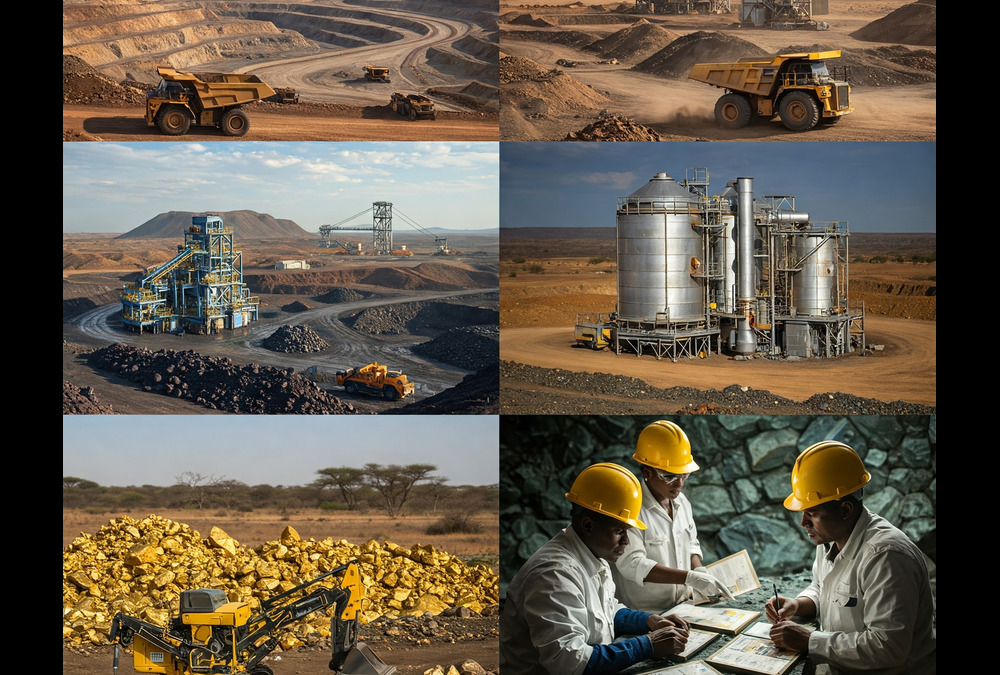
Africa is home to approximately 30 percent of the world’s known mineral reserves. To put that into perspective, the continent holds 40 percent of the planet’s gold, 90 percent of its chromium and platinum, and vast quantities of bauxite, cobalt, diamonds, and uranium.
The Democratic Republic of Congo (DR Congo), for instance, supplies over 70 percent of the world’s cobalt – a critical component in the batteries powering electric vehicles and smartphones, according to the World Economic Forum.
But it doesn’t stop there. Africa boasts significant oil and gas reserves in countries like Nigeria, Angola, and Algeria.
Its lush forests in Central Africa are vital carbon sinks and biodiversity hotspots, while its fertile agricultural lands stretch across regions primed for food production. Clearly, Africa is a treasure trove of natural wealth.
So, how did this extraordinary abundance come to be? The answer lies deep within the continent’s ancient geology – and its sheer size.
A Geological Legacy Billions of Years in the Making
One of the key reasons for Africa’s resource wealth is its age. Some of the oldest rocks on Earth are found here, formed billions of years ago.
Over eons, tectonic activity, volcanic eruptions, weathering, and sedimentation created ideal conditions for mineral deposits to form. Take the Great Rift Valley, for example – a geological marvel stretching from Mozambique to the Red Sea.
This iconic rift system was shaped by ancient seismic movements and continues to reveal new insights about Earth’s history while harboring untapped mineral wealth.
Africa’s vastness also plays a crucial role. As the second-largest continent, covering roughly 20 percent of Earth’s land area, Africa offers a diversity of ecosystems and geological formations.
More land means more opportunities for different types of deposits to form – and be discovered.
Untapped Potential
Another intriguing factor is that large portions of the continent remain underexplored. In contrast to North America or Europe, where extensive geological surveys have mapped nearly every inch of terrain, Africa still holds vast stretches of land that remain largely unstudied.
This opens up exciting possibilities for future discoveries, making the continent a frontier for exploration and innovation.
Resource Wealth vs. Economic Prosperity
However, being rich in resources doesn’t automatically translate to prosperity for the people living there. Many African nations export raw materials but import finished goods, meaning much of the value addition occurs elsewhere.
This dynamic is rooted in history – colonial economies were designed to extract resources rather than build sustainable industries. As a result, many countries face challenges in transforming their natural wealth into tangible benefits for their populations.
Yet, the potential remains immense. If managed effectively – with transparency, local beneficiation (processing raw materials locally), and strategic partnerships – Africa’s natural resources could drive long-term development, create jobs, and foster economic independence.
Imagine a future where Africa not only exports minerals but also manufactures high-value products, leveraging its own raw materials to fuel innovation and growth.
Nature Has Done Its Part – What About Us?
Nature has endowed Africa with unparalleled riches, but unlocking their full potential requires more than just geological luck. It demands visionary leadership, sound policies, and international cooperation.
Can governments, businesses, and communities work together to ensure that Africa’s natural wealth serves as a foundation for sustainable progress?
The question isn’t just about geology – it’s about governance, equity, and the collective will to turn opportunity into lasting impact. The stage is set; the tools are available.
Now, it’s up to people and policy to rise to the occasion.
Will Africa seize this moment to redefine its future? Only time will tell.
Dishant Shah is a partner at Legion Exim, a company specializing in facilitating the export of high-quality engineering products directly sourced from manufacturers in India to Africa. His areas of expertise include new business development and business management.
