
Opinion
West Africa’s Abidjan-Lagos Corridor: Roads Without Reform Are Half the Journey

By Ziad Hamoui
Building roads is the easy part. The real obstacle to regional trade lies in the invisible infrastructure that no construction crew can fix.
The numbers are striking. A US$15.6 billion investment. One thousand and twenty-eight kilometers of upgraded highway. Five nations linked in a single, modern artery stretching from Abidjan to Lagos.
The corridor – connecting Côte d’Ivoire (Ivory Coast), Ghana, Togo, Benin, and Nigeria – carries roughly 75 percent of West African trade, and the physical transformation it promises is, by any measure, unprecedented.
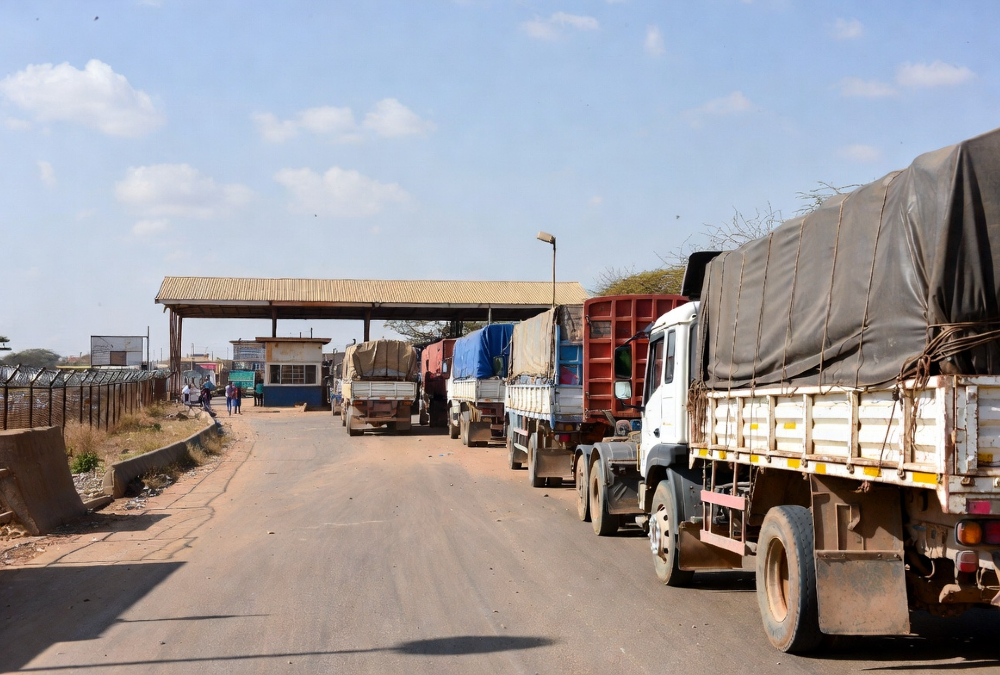
And yet, when a truck departs Abidjan today, it spends more than 48 of its 72-plus transit hours doing precisely nothing. Not moving. Not loading. Not navigating the construction zones that have become synonymous with this corridor’s promise. It is waiting – at border posts – while paperwork circles through disconnected bureaucracies that were never designed to speak to one another.
New asphalt will not fix that.
The Illusion of Progress
There is a seductive logic to infrastructure investment. Roads are visible. Ribbon-cuttings are photographable. Bridges are measurable in tonnage and span. The Abidjan-Lagos Corridor’s physical components – modernized highways, upgraded bridges, renovated border facilities – represent a genuine and welcome commitment to regional connectivity. Nobody serious disputes their value.
But physical infrastructure is only one half of the equation, and right now, it is the only half receiving serious attention. The systems that actually determine whether goods move efficiently across borders – the digital platforms, the policy frameworks, the institutional arrangements – remain chronically underfunded, fragmented, and, in several critical respects, fundamentally broken.
The result is a paradox that development economists know well and politicians prefer to avoid: you can build the finest road in the world, and it will still deposit your cargo at a border post where it sits for two days.
Five Clearances Where One Should Suffice
The most glaring inefficiency is also the most avoidable. Under the ECOWAS Transit Procedure, goods traveling the corridor should clear customs once.
In practice, they clear it five separate times – once at each national border. For context, a European truck crosses 27 countries on a single customs declaration.
West African traders crossing five countries file five separate declarations, interface with five separate bureaucracies, and absorb five separate delays.
This is not a failure of ambition. The ECOWAS Transit Procedure exists on paper. The political commitment to regional integration has been reaffirmed at summit after summit. What is missing is the technical architecture to make that commitment operational – and, critically, the willingness to fund it with the same urgency applied to concrete and steel.
The digital customs systems that each corridor country operates remain almost entirely siloed. National platforms cannot communicate across borders.
SIGMAT (Interconnected System for the Management of Goods in Transit) – the regional initiative that should enable real-time data exchange between customs administrations – has achieved only incomplete rollout across corridor countries. Customs officers at one border post cannot access trader compliance histories generated at the last.
Risk management, the practice of using data to identify which shipments warrant physical inspection and which can pass freely, does not function at the corridor level. The default, therefore, is to inspect everything, which is precisely what happens.
Credentials, Capacity, and a Missing Coordinator
The problems extend beyond customs technology. The ECOWAS mandate for biometric driver identification – designed to enable the free movement of professional drivers across member states – has been implemented unevenly enough to be nearly meaningless in practice.
Border agents frequently lack the systems needed to verify digital credentials, rendering the entire initiative decorative. Driver delays compound cargo delays.
Meanwhile, the regional integration picture has grown more complicated. The recent suspension of Burkina Faso, Mali, and Niger from ECOWAS has introduced new uncertainty into a framework that was already struggling to translate policy into practice.
The corridor’s five active countries remain committed to the project, but the broader ecosystem of regional harmonization has been visibly strained.
Perhaps the deepest structural problem, however, is one of coordination. National governments control customs policy.
The ECOWAS Commission holds the mandate for harmonization. Private technology firms provide digital solutions.
Development partners fund technical assistance programs. The African Development Bank Group finances the infrastructure itself. Each actor is consequential. None of them is responsible for coordinating the journey of a single truck from departure to final delivery. Nobody owns the whole picture.
What Proportional Investment Looks Like
None of these gaps are mysteries. They are well-documented, technically understood, and – with adequate political will and targeted funding – solvable.
The question is whether the financial architecture surrounding the Abidjan-Lagos Corridor will treat soft infrastructure as a genuine priority or as an afterthought dressed up in the language of “capacity building.”
For every dollar invested in concrete, a corresponding commitment is needed for systems integration, policy harmonization, and institutional capacity. That means fully funding the SIGMAT interconnectivity rollout.
It means operationalizing the single transit declaration that already exists in regional law. It means building a corridor-level coordination mechanism with real authority and real accountability.
It means ensuring that the biometric driver ID system works not just in the capitals where it was designed but at the actual border posts where it matters.
These investments are less photogenic than a new bridge. They do not lend themselves to ribbon-cuttings. But they are what will determine whether this corridor fulfills its potential or becomes another expensive lesson in the limits of hardware without software.
The Abidjan-Lagos Corridor will be built. On that, there is little doubt. Whether it delivers – whether it actually accelerates trade, reduces costs, and deepens regional integration – depends entirely on what gets funded alongside the asphalt.
The road is the easy part. It is time to treat the rest with equal seriousness.
Ziad Hamoui is the Co-Founder and Past President of the Borderless Alliance, a leading private-sector advocacy group promoting economic integration and removing trade and transport barriers in West Africa. With extensive experience in Ghana’s road transport, logistics, and shipping sectors, he currently serves as Executive Director of Tarzan Enterprise Ltd., a long-established family business. He is a former Co-Chair of the Africa Food Trade Coalition, Co-Founder of the Trade Facilitation Coalition for Ghana, and serves on multiple high-level advisory committees on trade, transport, agriculture, and security. A Chartered Fellow of the Chartered Institute of Logistics and Transport (CILT) Ghana, he is also a former member of its Governing Council.
