
Opinion
Understanding the economic impact of Guyana’s border dispute with Venezuela

By Ryan Elcock
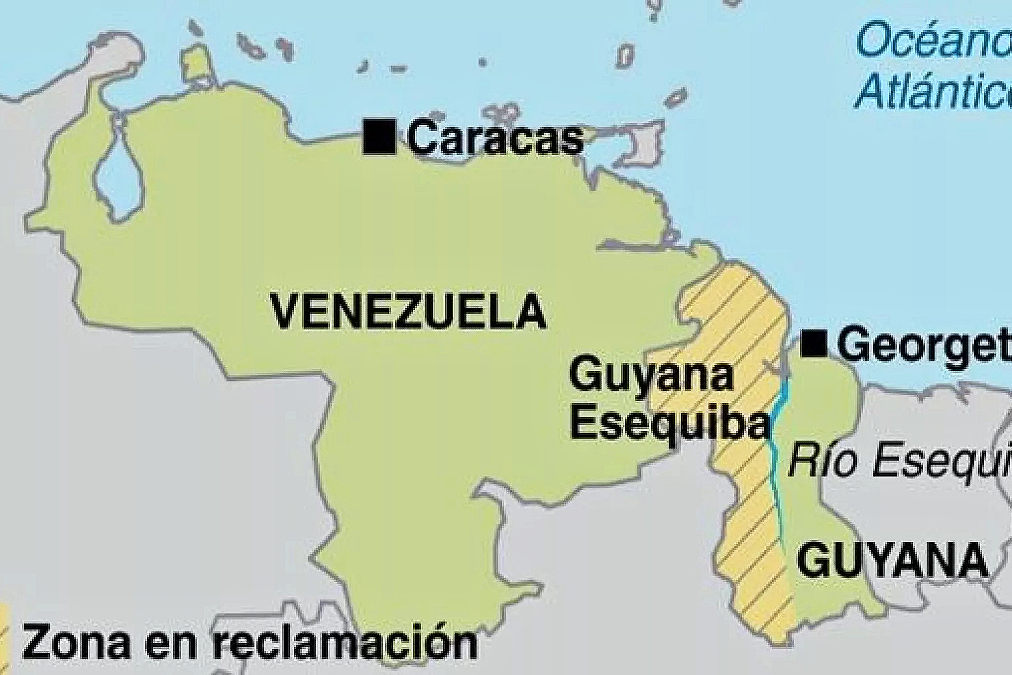
The decades-long territorial dispute between Guyana and Venezuela over the region of El Esequibo has left an indelible mark on the economic trajectories of both nations. This article endeavors to provide a comprehensive exploration of the multifaceted economic repercussions stemming from this protracted conflict. Through a meticulous analysis encompassing historical antecedents, the pivotal role of newfound oil reserves, and the potential ramifications for the economies of Guyana and Venezuela, we aim to shed light on this intricate issue.
Delving into historical context
The genesis of the border dispute between Guyana and Venezuela can be traced back to the colonial era, rooted in divergent interpretations of historical treaties and accords. Venezuela contends that its territorial claims extend eastward to the Essequibo River, whereas Guyana asserts ownership dating back to 1814 when the British gained control through a treaty with the Netherlands.
The imbroglio escalated in the late 19th century, as the region’s burgeoning potential for gold and other valuable resources came to the fore. However, the involvement of the United States and Britain further complicated matters, as these superpowers took divergent positions on the dispute. Ultimately, in 1899, a tribunal was convened to adjudicate the matter, and most of the territory was awarded to British Guiana, now known as Guyana.
The crucial role of oil discoveries
Recent years have witnessed the discovery of substantial oil reserves off the coast of Guyana, adding a new layer of complexity to the border dispute. ExxonMobil’s momentous oil discovery in 2015 has catapulted Guyana into the ranks of the world’s fastest-growing economies. However, Venezuela contends that Guyana is exploiting valuable resources within Venezuelan waters, triggering heightened tensions between the two nations.
Venezuela’s actions, including alleged harassment of vessels in disputed waters, have further exacerbated the conflict. Guyana has actively sought the intervention of international bodies, including the United Nations and the International Court of Justice, in an endeavor to resolve the dispute and safeguard its economic interests. At present, the case is pending, with Guyana advocating for the removal of maps from social media platforms that depict Venezuela annexing a portion of Guyana, citing these as sources of disinformation that could harm bilateral relations.
Read: Guyana urges Venezuela to respect Geneva Agreement in border dispute
Economic consequences for Guyana: A double-edged sword
The border dispute has engendered both favorable and adverse economic outcomes for Guyana. On the positive side, the discovery of oil reserves has ushered in substantial foreign direct investment (FDI) and economic growth. The oil sector is poised to steer Guyana’s economy for decades, offering the prospect of increased employment, infrastructural development, and government revenue.
Nonetheless, the ongoing border dispute casts a shadow of uncertainty over investors and presents potential hurdles for the oil industry’s development. The specter of maritime confrontations and standoffs poses a threat to regional stability and has the potential to dissuade foreign investment. In response, Guyana’s government has proactively sought diplomatic avenues to address these concerns. The resolution of the border issue would provide much-needed clarity and stability for Guyana’s economic trajectory.
Economic consequences for Venezuela: Challenges amidst crisis
For Venezuela, the economic implications of the border dispute have become enmeshed with the nation’s broader challenges. The enduring political and economic turmoil in Venezuela, characterized by hyperinflation and widespread social unrest, has constrained the government’s ability to effectively tackle the border issue. The nation’s focus has largely been on grappling with internal crises, relegating the dispute with Guyana to the background.
Some view Venezuela’s claims over El Esequibo as a strategic maneuver aimed at gaining control of valuable resources and potentially ameliorating the nation’s dire economic circumstances. Nonetheless, the international community and most governments have recognized Guyana’s sovereignty over the disputed territory. A resolution of the border dispute could provide Venezuela with an opportunity to pivot towards addressing its internal challenges and undertaking the arduous task of economic reconstruction.
Unlocking the potential for regional cooperation
Despite the tensions spawned by the border dispute, there exists the potential for regional collaboration and economic integration. Both Guyana and Venezuela are members of the Caribbean Community (CARICOM), which has played a role in facilitating dialogue and diplomacy. Enhanced cooperation across domains such as trade, energy, and infrastructure could accrue mutual benefits and contribute to regional stability and development.
Moreover, the resolution of the border dispute would create a more conducive environment for regional collaboration. It would eliminate a major stumbling block to bilateral relations and open avenues for cooperative endeavors in diverse sectors. The economic potential of the region, including the development of oil and gas resources, could be harnessed through joint ventures and partnerships.
The way forward: The imperative of diplomatic resolution
The longstanding border dispute between Guyana and Venezuela has left an indelible imprint on the economies of both nations. While the discovery of oil reserves has ushered in economic opportunities for Guyana, it has also ushered in uncertainties and challenges due to the ongoing conflict. Venezuela’s internal woes and economic struggles have hampered its capacity to address the border issue effectively.
The resolution of this border dispute is the linchpin to unlocking the economic potential of the region. It promises greater stability, allure for foreign investment, and avenues for regional cooperation. Both Guyana and Venezuela must endeavor to find a diplomatic resolution that adheres to international law and fosters amicable neighborly relations. The economic well-being of both nations and the broader Caribbean region hinges on a peaceful and mutually advantageous settlement to this enduring dispute.
