
Opinion
Time Release Study for the North-South corridor presented in Harare

By Danilo Desiderio
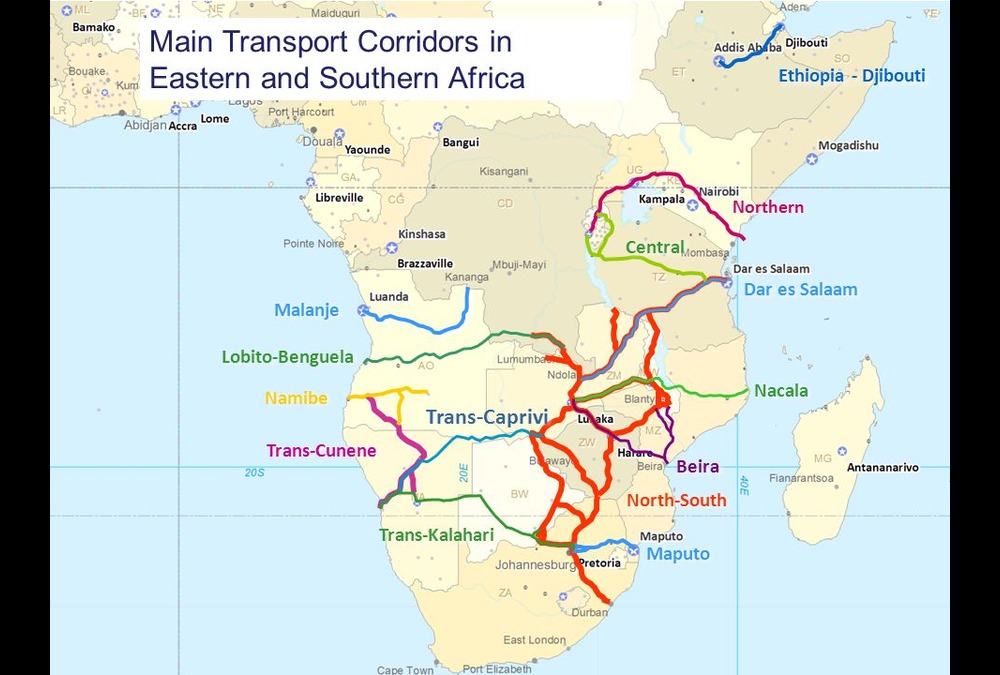
On February 7, 2025, the Southern African Development Community (SADC) officially presented a Time Release Study (TRS) analyzing the primary trade barriers along the North-South Corridor. This corridor serves as a crucial import and export route, linking Southern Africa to parts of East and Central Africa.
The study evaluates the average time required for clearing goods at the Durban port, where the corridor begins, as well as at key border posts along the route, including Kasumbalesa, Beitbridge, and Chirundu.
Purpose and Importance of Time Release Studies
Time Release Studies are trade facilitation tools used to identify bottlenecks, delays, and constraints in clearance processes caused by Customs and other regulatory agencies responsible for cross-border trade. These studies provide authorities with valuable data to develop targeted actions aimed at reducing trade barriers and improving efficiency.
Traditional and Regional TRS Approaches
Traditionally, Time Release Studies are conducted at the national level to assess the efficiency of clearance processes at specific points of entry or exit, such as ports, airports, and land borders. However, it is not uncommon for these studies to be conducted jointly between two states (bilaterally), among multiple states (regionally), or along specific inter-state corridors.
Introduction of TRS-Plus in Africa
More recently, some African countries – particularly in Southern Africa – have adopted an enhanced methodology developed by the World Bank, known as TRS-plus (TRS+). This approach extends the assessment beyond border clearance to include regulatory processes carried out away from the border, such as the time required to obtain import and export licenses and permits issued by various government agencies.
Implementation of TRS+ and Regional Trade Initiatives
The first TRS+ studies were implemented by Eswatini and Zambia. The Horn of Africa Initiative’s trade facilitation roadmap also recognizes TRS as a key measure for assessing trade barriers along corridors in the Horn of Africa, a region with some of the lowest levels of intra-regional trade on the continent.
Regional Economic Communities and TRS Adoption
Among Africa’s Regional Economic Communities, the East African Community (EAC) was one of the first to implement a regional TRS. In 2013–2014, two TRS were launched to analyze bottlenecks along the Northern Corridor (connecting landlocked Great Lakes countries to the Kenyan port of Mombasa) and the Central Corridor (linking Dar-es-Salaam, Tanzania, to Kigali, Rwanda, and Bujumbura, Burundi).
In 2016, another TRS was conducted under the coordination of the Northern Corridor Transit and Transport Coordination Authority (NCTTCA) Secretariat to reassess bottlenecks along the Northern Corridor. The same year, the Southern African Customs Union (SACU) launched a pilot regional TRS along the Trans-Kalahari Corridor to analyze clearance inefficiencies between Botswana and Namibia. Additionally, COMESA, with support from the African Development Bank, conducted a regional TRS covering numerous border posts across ten of its member states.
WTO and AfCFTA Support for TRS Implementation
TRS is one of the measures recommended by the World Trade Organization’s (WTO) Trade Facilitation Agreement, specifically in Article 7.6, which encourages WTO members to periodically measure and publish their average release times for goods. This provision urges members to utilize appropriate tools, such as the methodology developed by the World Customs Organization (WCO), which has published detailed guidelines for conducting TRS.
Annex 4 of the African Continental Free Trade Area (AfCFTA) Agreement’s Protocol on Trade in Goods similarly allows each AfCFTA party to develop TRS according to its specific needs and capabilities.
Findings of the TRS on the North-South Trade Corridor
Speaking at the presentation of the Time Release Study Report on the North-South Trade Corridor in Harare, Zimbabwe, the SADC representative emphasized the importance of eliminating cross-border trade barriers as a crucial step toward increasing intra-SADC trade, which currently stands at approximately 23 percent. Despite ongoing efforts, the cost of doing business at ports and border posts in the region remains high due to persistent bottlenecks, cumbersome and unharmonized procedures, lack of coordination among border agencies, inadequate infrastructure, and various non-tariff barriers.
Challenges and Future Outlook
Although not yet publicly available, the TRS highlights several key challenges contributing to trade inefficiencies along the North-South Corridor. These include the presence of multiple regulatory agencies at border posts, various fees imposed by these authorities that increase trade and transportation costs, and lengthy border clearance procedures.
The study aims to provide insights that will help address these challenges. Ensuring efficient and effective clearance of goods at SADC Member States’ border posts remains a key priority under the SADC Corporate Plan 2022/23.
Danilo Desiderio serves as the CEO of Desiderio Consultants Ltd in Nairobi, Kenya, specializing in African customs, trade, and transport policies. He is a customs and trade expert at the World Bank and a senior associate to the Horn Economic and Social Policy Institute (HESPI).
