
Opinion
The Western Policy Elite Is Failing African and Asian Agriculture

By Balbir Singh
International development organizations are pushing outdated agricultural models that ignore ground realities and perpetuate poverty.
A recent high-level meeting with delegates from international development organizations and NGOs revealed a troubling truth: the professionals shaping agricultural policy across Africa and Asia possess alarmingly little understanding of farming realities on the ground. These well-credentialed experts, educated in Western institutions and operating from air-conditioned conference rooms, continue advocating theories and policies increasingly divorced from the needs of small-scale farmers.
This disconnect has created a development catastrophe. The prevailing agricultural paradigm – focused on industrial-scale production, imported genetics, and input-intensive farming – is systematically destroying rural livelihoods while failing to deliver promised prosperity.
The False Promise of Industrial Agriculture
The international development community remains fixated on mass production: large mechanized farms, high-yield varieties, and economies of scale. This model fundamentally misunderstands what developing economies need.
Rather than concentrating production in fewer hands, we should enable masses of small farmers to produce quality, nutritious food for local markets.
Decentralized agricultural production generates employment, reduces rural-to-urban migration, and minimizes environmental damage from long-distance transportation. Small farms can respond flexibly to local demand, reducing the boom-bust cycles that plague industrial agriculture.
When production remains distributed across millions of smallholders, rural communities maintain economic vitality instead of hemorrhaging population to overcrowded cities.
The Genetic Colonialism Disaster
Perhaps no policy failure illustrates this disconnect more starkly than the push for Western livestock genetics in tropical climates. High-yielding Holstein-Friesian
cattle, bred for temperate conditions, have been promoted across West Africa and Southeast Asia with disastrous results.
These animals rarely survive beyond three calvings in tropical heat, making them economically unviable for smallholders.
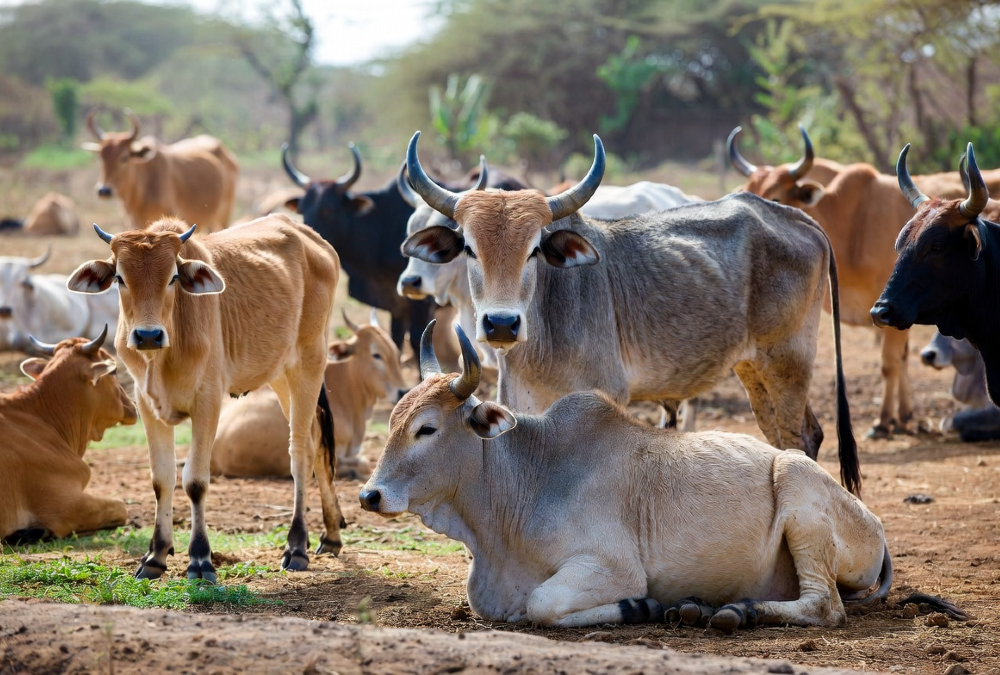
In India, where cultural practices prohibit beef consumption, imported cattle genetics have created an absurd crisis: unproductive animals roaming streets and highways, imposing costs on farmers and communities alike. Meanwhile, indigenous breeds – adapted over centuries to local conditions – are abandoned in favor of imports that enrich seed companies and consultants while impoverishing farmers.
This pattern extends across crops and livestock. Local varieties, nutritionally superior and environmentally adapted, are replaced with patented genetics requiring expensive inputs.
The beneficiaries are multinational corporations and the consultants who receive handsome fees for promoting their products. The losers are farmers and consumers.
The Overproduction Paradox
Current policies encourage maximum yield regardless of market demand or nutritional value. Markets overflow with oversized, visually appealing produce that lacks flavor and nutrition.
These industrial products contain perhaps 10 percent of the nutritional density found in traditionally grown varieties.
Overproduction triggers price collapses. In India, farmers sometimes sell 100 kilograms of tomatoes for one dollar – less than transportation costs.
Poultry producers resort to mass culling when prices crash. Farmers harvest crops at a loss, generating waste, pollution, and despair.
This boom-bust cycle stems from policies that prioritize volume over value. High-input agriculture – expensive seeds, synthetic fertilizers, agrochemicals – escalates production costs while degrading soil and water.
Farmers chase higher yields at higher costs, squeezing profit margins until farming becomes economically unviable.
Simplifying Agriculture, Empowering Farmers
Agricultural science has become unnecessarily complex, creating dependence on credentialed experts rather than empowering practitioners. Farming existed for millennia before modern agricultural education, extension services, and development programs.
While scientific knowledge has value, the current system deliberately mystifies farming to justify consultant fees and institutional budgets.
Farmers need practical knowledge about soil biology, integrated pest management, and market access – not dependency on external inputs and expertise. Low-input farming systems that work with natural processes rather than against them can achieve profitable production without the cost spiral of industrial methods.
Evaluating Policy Through Human Impact
Every agricultural policy should be evaluated through a simple metric: does this intervention strengthen farming families or drive them into urban poverty? The migration flooding cities across Africa and Asia originates in failed agricultural policies that make farming unprofitable and undignified.
Data generated in conference rooms cannot substitute for field realities. Development professionals must spend significant time with farming families, understanding their constraints, aspirations, and indigenous knowledge.
Policies crafted in isolation from practitioners inevitably fail – often catastrophically.
A Crisis of Confidence in Farming
The ultimate indictment of current agricultural development policy is this: across the developing world, farmers discourage their children from farming. What father, having experienced the broken promises of development agencies and the exploitation of input suppliers, would wish that life upon his son?
This rejection of farming as a viable livelihood represents a civilizational crisis. When those who feed nations cannot earn dignified livelihoods, food security becomes precarious and rural communities collapse.
Toward Genuine Development
Reversing this catastrophe requires acknowledging that current approaches have failed. International development organizations must prioritize farmer knowledge over consultant credentials, local adaptation over imported models, and distributed prosperity over concentrated production.
Agricultural policy should support small-scale farmers in producing nutritious food for local markets using low-input, ecologically sound methods. This means investing in farmer-to-farmer knowledge exchange, local seed systems, and value chains that reward quality over quantity.
The professionals earning comfortable salaries while promoting failed policies bear responsibility for this disaster. Real development requires humility, field engagement, and willingness to learn from those whose livelihoods depend on getting agriculture right.
Until international development embraces these principles, the policy blunders will continue – and so will the exodus from farms to urban slums.
Balbir (Shekhawat) Singh, PhD, is a results-driven agribusiness techno-commercial professional with over 18 years of experience in sales, marketing, agronomy, product management, farming, commodity trading, and agri-inputs (fertilizers, seeds, agrochemicals). Passionate about advancing sustainable farming, he currently serves as Director General/CEO of Sodesep SA-Fertilizer Abuja, Nigeria. He has worked across emerging markets including India, Uganda, Kenya, Cameroon, Tanzania, Indonesia, and Nigeria.
