
Opinion
The Weight We Carry: How Africa’s Emotional Inheritance Shapes Its Future

By Daki Nkanyane
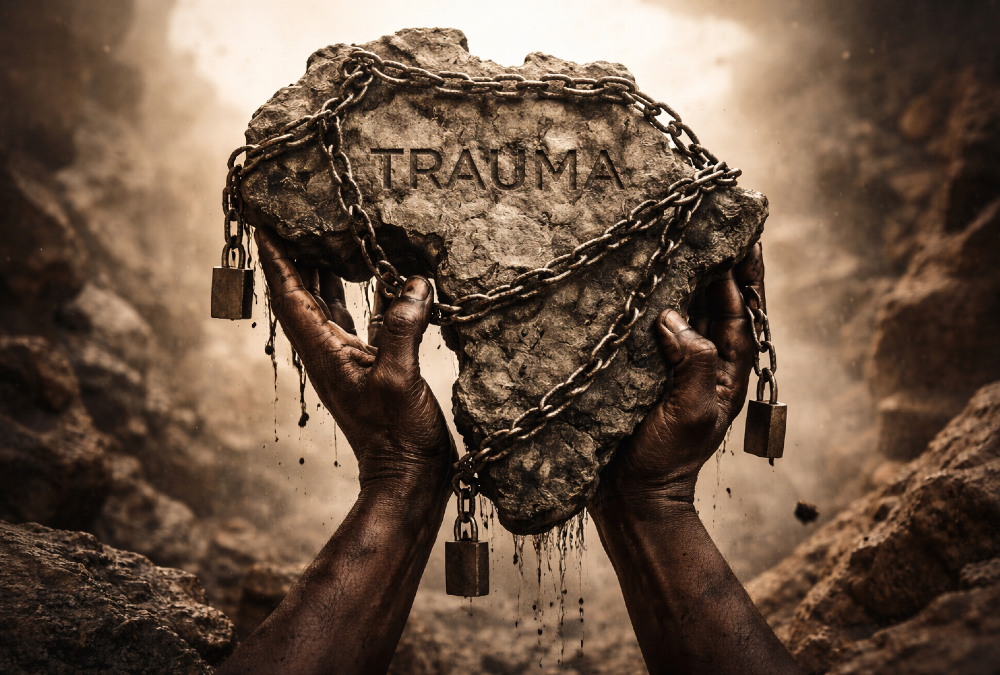
Every society carries weight. Some burdens are visible – poverty, inequality, underdevelopment, conflict. Others are structural – institutions shaped by interruption, economies molded by extraction.
But the heaviest loads are often invisible, carried quietly in the emotional lives of people who have learned to endure more than they were ever meant to bear.
Africa carries all three.
Yet it is this invisible weight, this emotional inheritance, that remains least discussed and most influential. It shapes how people respond to opportunity, how they relate to power, how they process loss, and how they imagine their futures.
Understanding this inheritance is essential to understanding Africa’s present – and its potential.
The Paradox of Resilience
Across the continent, resilience is celebrated, and rightly so. Africa has endured colonialism, survived extraction, and adapted through decades of instability.
This resilience is real, earned, and worthy of profound respect. But survival, when prolonged, leaves residue.
The question we must now confront is not whether Africa is resilient – it clearly is. Rather, we must ask: what has this resilience cost emotionally? And what happens when unprocessed trauma is passed forward to the next generation?
When Strength Demands Silence
Resilience has served as Africa’s shield, allowing people to build families amid uncertainty and find joy even when circumstances proved unforgiving. Yet this same resilience has demanded silence – about grief, exhaustion, fear, and anger.
When survival becomes the priority, emotion becomes a luxury. Pain is postponed. Reflection is delayed. The body and mind learn to cope, but not to heal. Over time, resilience hardens into what might be called emotional compression: feelings pressed down rather than processed, accumulated rather than released.
This creates a dangerous paradox. The very strength that enables survival can, if left unexamined, prevent the deeper healing necessary for sustainable growth.
The Normalization of Pain
One of the quietest tragedies of prolonged adversity is how it normalizes suffering. What would be considered traumatic elsewhere becomes ordinary. Loss becomes routine. Instability becomes expected. Emotional distress becomes strictly private.
This normalization does not eliminate pain – it buries it. And buried pain does not disappear. It re-emerges as distrust, impatience, aggression, withdrawal, and difficulty with intimacy and cooperation.
A society that has learned to survive without processing its pain eventually struggles to sustain the trust essential for collective progress.
The Mechanisms of Inherited Trauma
Trauma is not only personal; it is profoundly collective. Children inherit not merely stories but silences. They absorb coping mechanisms, emotional patterns, and unspoken fears from families and communities shaped by hardship. They learn which feelings are safe to express and which must be suppressed.
This is how trauma travels across generations without ever being named.
Africa’s emotional inheritance includes interrupted security, repeated uncertainty, institutional mistrust, hypervigilance, and a deep fatigue often masked as strength. None of this represents moral failure.
It is historical consequence – the predictable residue of disrupted development and sustained adversity.
Strength Without Flexibility
Many African societies prize strength, particularly in men, leaders, and elders. This emphasis has been necessary.
Weakness invited exploitation. Vulnerability seemed dangerous. Endurance meant survival.
But strength without emotional honesty becomes rigidity. When societies lose the ability to acknowledge pain, they lose flexibility.
Conflict escalates rapidly. Dialogue becomes difficult. Power is expressed harshly. Compassion is viewed as weakness rather than wisdom. A future built solely on toughness will ultimately prove brittle.
Resilience Is Not Healing
Here lies a crucial distinction: resilience keeps people going, while healing allows them to grow.
Africa has mastered resilience. Healing remains the unfinished work.
Healing does not mean forgetting the past or dwelling endlessly in pain. It means integrating experience without being governed by it, allowing memory to instruct rather than imprison.
Without this integration, resilience becomes mere repetition – the same dysfunctional patterns enacted with different actors.
The Hidden Costs of Unacknowledged Trauma
Unacknowledged trauma distorts ambition in subtle but significant ways. It can transform success into overcompensation, leadership into control, and authority into defensiveness.
When people carry unresolved emotional weight, power feels threatening rather than empowering. Trust feels risky. Collaboration feels fragile.
This helps explain why some societies struggle with cohesion even as resources improve. The obstacle is not capacity or intelligence – it is unprocessed experience that continues to shape behavior in counterproductive ways.
Emotional Literacy as National Infrastructure
Few development conversations include emotional literacy, yet they should. The ability to name feelings, process loss, manage anger, and tolerate vulnerability is not merely personal – it constitutes collective infrastructure as vital as roads or electrical grids.
Emotional maturity affects how societies handle disagreement, navigate change, and withstand stress. Africa’s future institutions will be only as stable as the emotional health of the people who inhabit them.
This does not require importing Western therapeutic frameworks wholesale. It requires reclaiming existing spaces – cultural, communal, and educational – where emotion has historically been acknowledged rather than suppressed.
The Unfair Burden on Youth
Africa’s youth carry inherited weight they did not create. They are expected to be hopeful without being allowed to grieve, ambitious without being allowed to rest, confident without being allowed to question.
They inherit trauma and are then asked to innovate their way out of it.
This expectation is profoundly unfair. A generation tasked with building the future must be permitted to process the past. Without this permission, frustration turns inward as depression or outward as anger – neither of which sustains healthy societies.
Community as the Vehicle for Healing
In African contexts, healing is rarely individual – it is communal. Traditional mechanisms for processing collective weight have always existed: rituals, storytelling, art, music, dialogue, and shared remembrance.
When these practices erode under pressure from urbanization, digital fragmentation, and economic speed, healing becomes exponentially harder. Reclaiming communal spaces for reflection is not nostalgia – it is practical necessity.
A society that does not process trauma together eventually fractures alone.
From Endurance to Integration
Africa’s developmental task now is to move from endurance to integration: to integrate pain without glorifying it, to honor resilience without being imprisoned by it, to allow softness without abandoning strength.
This transition will not be loud or immediately visible. It will not trend on social media. But it will shape everything that follows – leadership styles, work cultures, religious expression, and the search for meaning.
The societies that make this transition will discover that healing does not weaken nations – it makes them coherent. It transforms resilience from a defensive crouch into a foundation for sustainable growth.
Daki Nkanyane is a South African – born Pan-African thought leader, entrepreneur, keynote speaker, and strategist with over 25 years of experience driving innovation, identity, and development across Africa. He is the Founder & CEO of Interflex Capital, AfrisoftLive, QonnectedAfrica, and iThinkAfrica, where he focuses on youth empowerment, entrepreneurial ecosystems, and Africa’s economic and ideological renewal. His work spans technology, digital transformation, major international events, and strategic advisory for future-ready African institutions. As a contributing writer for The Habari Network, Daki covers African innovation, leadership, human capital, economics, entrepreneurship, and Africa–Caribbean relations through cultural, philosophical, and developmental perspectives. His mission is to help shape a new African consciousness rooted in pride, possibility, and self-determination for Africans on the continent and in the diaspora. He can also be reached on Facebook and X.
