
Opinion
The Unifying Spirit of an African Christmas: Faith, Family, and Ubuntu

By Farhia Noor
As the year draws to a close, I find myself reflecting with gratitude – not merely on the work we accomplish, but on the people, cultures, and values that sustain us through challenge and triumph alike.
In Africa, Christmas represents far more than a date circled on the calendar. It embodies something profoundly human: faith, family, and Ubuntu – that essential African philosophy holding that our humanity is inextricably bound to one another’s.
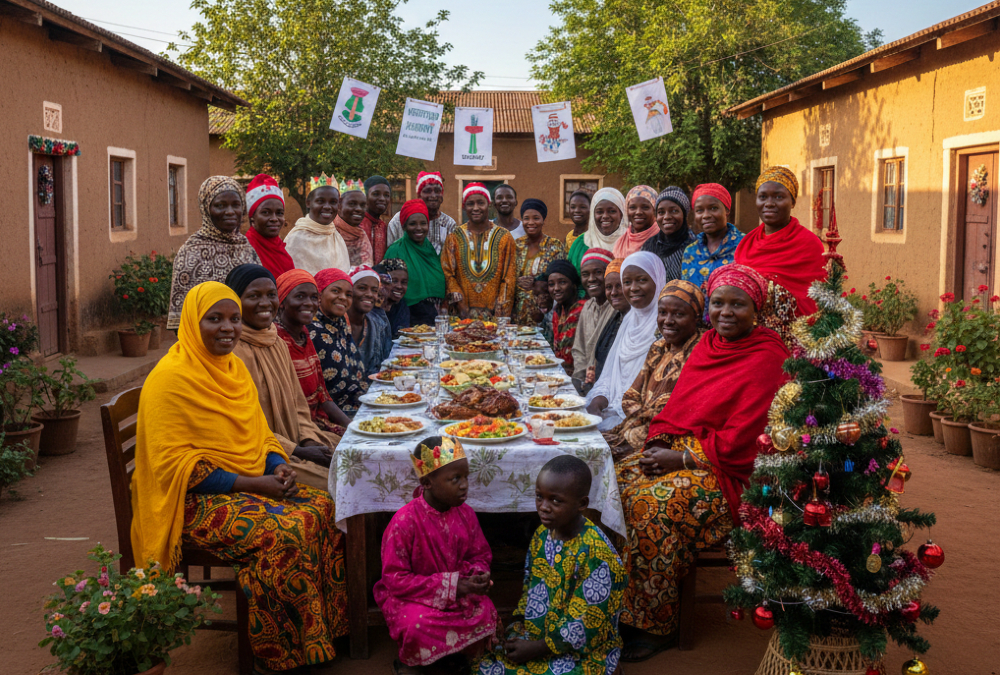
Across the vast expanse of our continent, from the Atlantic shores of West Africa to the Indian Ocean coastlines of the East, from the Mediterranean rim of the North to the Cape in the South, communities gather in a spirit that defies the sectarian divisions plaguing much of the world. Christians celebrate the birth of Christ, while Muslims stand beside them – not as distant observers, but as neighbors, friends, and family.
This is not tokenism or political correctness. This is simply how we live.
When Faith Lives Under One Roof
In countless African households, interfaith harmony isn’t an abstract ideal debated in policy papers – it’s the daily reality of family life. A Christian husband and Muslim wife raise children together, weaving lessons of love, respect, and unity into the fabric of their upbringing.
These families represent Africa’s quiet revolution: proof that religious difference need not breed division, that faith can strengthen rather than fracture communal bonds.
During Christmas, Christian families prepare abundant meals and share them generously with Muslim neighbors. The gesture is reciprocated during Eid, when Muslims slaughter livestock, cook elaborate feasts, and invite the entire community to their tables – Christians very much included.
No one is excluded. No one is othered.
This reciprocal hospitality isn’t remarkable to us; it’s simply how we have always organized our social lives, how we have survived and thrived through centuries of change.
The Village Celebrates Together
Africa’s diversity – of tribes, languages, and traditions – could easily fragment into competing identities. Instead, it coheres around a singular spirit of communal celebration.
The Yoruba, Igbo, and Akan peoples gather for thanksgiving and elaborate family feasts.
Along the Swahili coast, communities celebrate with legendary hospitality and shared meals that blend Arab, African, and Indian culinary traditions.
The Zulu, Xhosa, Maasai, Amhara, and countless other ethnic groups honor their elders, strengthen community ties, and reaffirm the principle that we rise or fall together.
This is Africa’s greatest export, though it rarely features in economic reports or development indices: the understanding that celebration belongs not to the individual, but to the village.
While Western societies increasingly atomize into isolated households and curated social media feeds, African communities maintain something the modern world desperately needs – the knowledge that joy multiplies when shared, that meaning deepens through collective ritual, that our individual stories only make sense as chapters in a larger communal narrative.
Lessons for a Fractured World
As sectarian violence flares across multiple continents, as religious nationalism gains political currency, and as digital echo chambers amplify our differences, Africa’s model of interfaith coexistence deserves closer examination. This isn’t naive multiculturalism or forced tolerance.
It’s a lived practice refined over generations, rooted in the understanding that survival itself demands cooperation across lines of difference.
The Ubuntu philosophy – “I am because we are” – finds its fullest expression in these moments of shared celebration. It reminds us that our humanity isn’t diminished by honoring another’s faith traditions; it’s enhanced.
That building bridges across religious divides doesn’t weaken our own convictions; it strengthens the social fabric that supports us all.
Carrying These Values Forward
To communities across Africa and throughout the African diaspora, I extend wishes for a Christmas rooted in peace, unity, and shared humanity.
But more importantly, I urge us all to carry these distinctly African values into the year ahead – not as nostalgic throwbacks, but as urgent remedies for a world that seems to have forgotten how to gather, how to share, and how to celebrate together.
In an era of rising walls and hardening borders, perhaps the greatest gift we can offer is the simple African practice of setting an extra place at the table, of treating our neighbor’s holy day as worthy of our participation, of recognizing that our fates are fundamentally intertwined.
This Christmas, as families across the continent gather to celebrate, they are modeling something the world urgently needs to relearn: that our differences need not divide us, and that the village thrives when no one is left out. That, ultimately, is the enduring message of Ubuntu – and the most valuable export Africa can offer to a fractured world.
Farhia Noor is a seasoned business consultant based in Dar es Salaam, Tanzania. With a proven track record in developing enterprises and executing turnkey projects across both government and private sectors, she brings deep expertise to the table. Farhia is also a committed advocate for community-led development and is passionate about advancing sustainable, intra-African growth.
