
Opinion
The State of ICT in Black Societies
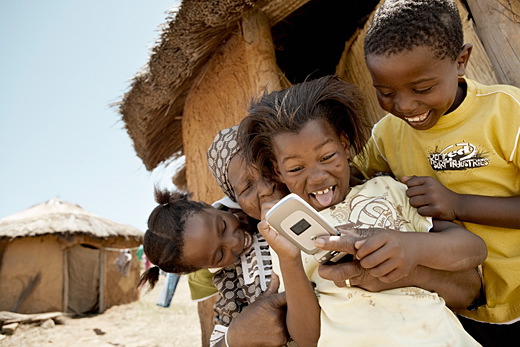
An argument can be made that South Korea is progressing as rapidly as it is doing nowadays simply because its government has embraced ICT.
Human development and social development are being helped along in that part of the world because the public sector is deploying ICT to improve knowledge and information in the service of the citizen in aspects like finance, infrastructure, human capital, regulatory affairs, administrative and systemic capabilities of the state. South Korea is Number 1 when it comes to using ICT to improve people’s lives.
Juxtapose that with the world’s second largest economy, China which stands at Number 78! Even black societies like Barbados at Number 44 and the Bahamas at Number 65 are doing much better.
Basically, the argument here is that anything a country does towards applying the awesome power of ICT for ordinary people is an even more awesome thing for human security and basic human rights.
Back to black societies, though: Statistics reveal that black societies are disproportionately affected by the so called “digital divide” (a term used to express access inequalities to use of ICT) in relation to other groups. Access to ICT infrastructure such as computers, the Internet, mobile phones and broadband services is still much too low.
According to International Telecommunication Union (ITU) statistics, as at 2011, only 35 percent of the world’s population of approximately 7 billion had access to the Internet. Of that 35 percent, Africa has a miserable share of only 6.2 percent and the Caribbean only has 0.5 percent as its quota. Compare this less than 7 percent ICT penetration to Asia’s 44.8 percent, Europe’s 22.1 percent, North America (USA and Canada)’s 13 percent. Relative to their populations, Africa and the Caribbean have the lowest regional penetration rates at 13.5 percent and 28.7 percent respectively. This trend is repeated with respect to the other mentioned ICT indicators. These statistics are quite sobering given that ICT is, indeed, the sine qua non in global economics.
Conversely, we have already mentioned the green shoots in the projects 5 years down the road – and the silver lining here is that the ICT growth rate in Africa – especially in regard to mobile phone access – is among the highest in the world.
