Opinion
The State of ICT in Black Societies
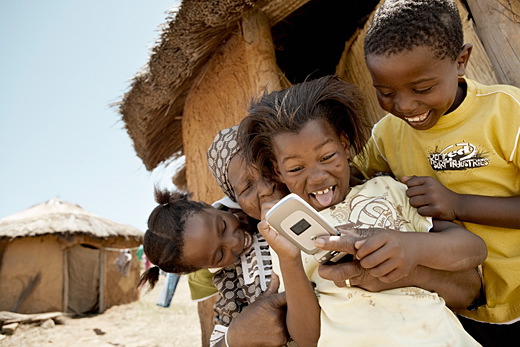
By Emmanuel Musaazi
According to the World Bank Group’s 2012 – 2015 strategy for the Information and Communication Technology (ICT) sector, new developments in telecommunications, in e-commerce and basic exchange of ideas can help reduce poverty, boost economic growth and improve accountability and governance. In simple terms, the world will only do better if it is ensconced in mobile phone applications, in Internet attributes like Twitter and Facebook and a myriad of other fascinating things.
It is even more exciting to see, first, how these aspects will propel African countries towards effective and efficient delivery of basic services. Secondly, if ICT can drive innovation and productivity in the West, surely it can perform miracles in Africa. And lastly, we await with bated breath for ICT’s potential to positively influence how Black Society competes on an international stage that operates in terabytes while many are, ostensibly, still dialing up in kilobytes!
But there are too many shoots of green sprouting everywhere. According to Jon Evans of TechCrunch.com, the current estimated smartphone penetration in Africa ranges from 3 percent to 17 percent. Evans is even more sanguine with his predictions by arguing that in 5 years, most Africans will have a smart phone.
Yes … In 5 years, the reality of 4G and other Gs could hit our illiterate and subsistence farming grandparents in the face. My colleague Dennis Matanda attended a bloggers’ conference in New York the other day and some Africans were even claiming that the 4G service in Masindi, Uganda Africa beats the crap out of the one found in North America!
Embellishments and excitement aside, ICT is the 21st century’s parallel to the discovery of fire; to the Industrial Revolution and is probably the best thing since sliced bread! ICT is the 21st century’s development phenomenon and we are in the middle of the information age characterized mainly by the very fast transmission of vast amounts of information through computers, the Internet and other technologies.
Almost every facet of the human endeavor is impacted by technology – from mundane applications such as sending a letter [now called ’email’ or ‘texting’] to high-end applications such as running the electronic payments of the Stock Exchange. ICT is even used to wage modern war fare. Unmanned military drones are rife in the age of Obama’s America and increasingly, small, medium to large scale industries are being driven by ICT infrastructure.
But what about The Black World? Again, there are more green shoots. In the United Nation’s estimation, if governments and their public sectors can deploy ICT to improve knowledge, then the world’s citizens will benefit in more ways than one.
An argument can be made that South Korea is progressing as rapidly as it is doing nowadays simply because its government has embraced ICT.
Human development and social development are being helped along in that part of the world because the public sector is deploying ICT to improve knowledge and information in the service of the citizen in aspects like finance, infrastructure, human capital, regulatory affairs, administrative and systemic capabilities of the state. South Korea is Number 1 when it comes to using ICT to improve people’s lives.
Juxtapose that with the world’s second largest economy, China which stands at Number 78! Even black societies like Barbados at Number 44 and the Bahamas at Number 65 are doing much better.
Basically, the argument here is that anything a country does towards applying the awesome power of ICT for ordinary people is an even more awesome thing for human security and basic human rights.
Back to black societies, though: Statistics reveal that black societies are disproportionately affected by the so called “digital divide” (a term used to express access inequalities to use of ICT) in relation to other groups. Access to ICT infrastructure such as computers, the Internet, mobile phones and broadband services is still much too low.
According to International Telecommunication Union (ITU) statistics, as at 2011, only 35 percent of the world’s population of approximately 7 billion had access to the Internet. Of that 35 percent, Africa has a miserable share of only 6.2 percent and the Caribbean only has 0.5 percent as its quota. Compare this less than 7 percent ICT penetration to Asia’s 44.8 percent, Europe’s 22.1 percent, North America (USA and Canada)’s 13 percent. Relative to their populations, Africa and the Caribbean have the lowest regional penetration rates at 13.5 percent and 28.7 percent respectively. This trend is repeated with respect to the other mentioned ICT indicators. These statistics are quite sobering given that ICT is, indeed, the sine qua non in global economics.
Conversely, we have already mentioned the green shoots in the projects 5 years down the road – and the silver lining here is that the ICT growth rate in Africa – especially in regard to mobile phone access – is among the highest in the world.
Unfortunately, we need to introduce the paradox that is the blacks who live in the developed countries. A USA Today shows that while Blacks and Whites in the U.S. have similar access and use rates to mobile technology, computers and the Internet, Whites have, significantly, more access to broadband. The report also revealed then that Blacks [and other minorities like Latinos] tend to use ICT access mainly for communication and entertainment rather than empowering their business, enhancing their education and other things the Whites were doing.
In extrapolation, the challenge in Black Society going forward is, probably, to expand access and the quality of use of ICT. The solution could lie in strategic and structural frameworks made up of local, regional, private, government and non-government bodies working together to ensure that ‘affirmative action’ is applied to the circumstances. Not only would this lead to the proverbial rising tide that raises all ships – but it could lead to an evolution of consumers to creators of custom made ICT solutions. The best example for this is Kenya’s Ushahidi; an application that did not let the chaos in Kenya go to waste.
Kenya is actually considered Africa’s Silicone Valley, beating Nigeria and South Africa to have what can be known as a ‘Sustainable Information Society.’ In this respect, initiatives such as M-Pesa in Kenya, a mobile phone money transfer application, has changed the lives of countless people around this globalized world. Also, the Caribbean ICT Roadshow, a regional initiative working with governments and business to expand ICT access and use, should be supported and built on.
The New Partnership for Africa’s Development – NEPAD – additionally has an ICT broadband initiative whose aim it is to expand broadband access in Africa.
The major impediments to successfully integrating ICT into Black Society are just the same as everything else: Human capital deficiency, organizational problems, infrastructure and technical constraints, cultural and attitudinal problems, and institutional corruption. These are local problems that applications cannot fix – but require local solutions from governments. Thus, for ICT to flourish and have the desired effect in society, the infamous public-private partnership can come into play right there.
One of the most heartwarming tales and justification for ICT came from Haiti during their 2010 earthquake. Using text messages translated from Creole to English, an American search and rescue team was able to find a 7 year old girl and two women buried under the rubble of a collapsed supermarket. They were alive; and their lives had been saved by technology from Africa. Ushahidi, which means to ‘Witness’ in KiSwahili seems to have mutated to telling those who wanted to do something where their help was most needed miles and miles away from whence it came.
Emmanuel Musaazi is a college professor based in Toronto, Canada.
emusaazi@thehabarinetwork.com