
Opinion
The Nadapal Chokepoint: Security vs. Commerce in East Africa

By Danilo Desiderio
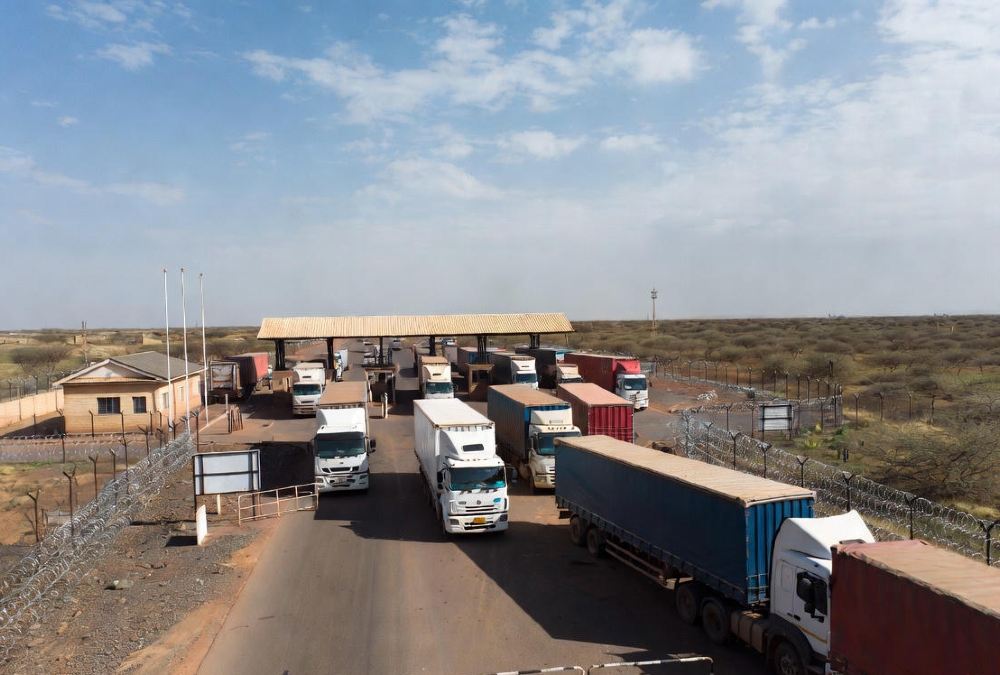
On January 2nd, heavy weapons fire shattered the uneasy calm at Nadapal, a remote border post between Kenya and South Sudan. Clashes between South Sudan’s national army and its main armed opposition left casualties scattered, a weapons depot destroyed, and the border effectively closed.
For traders watching from hundreds of kilometers away, the message was clear: another route had become too dangerous to use.
This wasn’t just another security incident in a volatile region. It was a trade shock that exposed a fundamental truth about commerce in fragile states – security doesn’t merely protect trade, it determines where trade flows.
The Strategic Promise of an Unused Gateway
Nadapal should matter. The border post sits on the most direct overland route linking South Sudan’s Eastern Equatoria State to northern Kenya, forming a crucial 945-kilometer (587-mile) corridor through Eldoret, Kitale, Lodwar, and Kapoeta to Juba.
This isn’t some dusty backwater – it’s a strategic node connecting South Sudan to the Port of Mombasa and, eventually, to the planned LAPSSET Corridor from Lamu Port on the Indian Ocean.
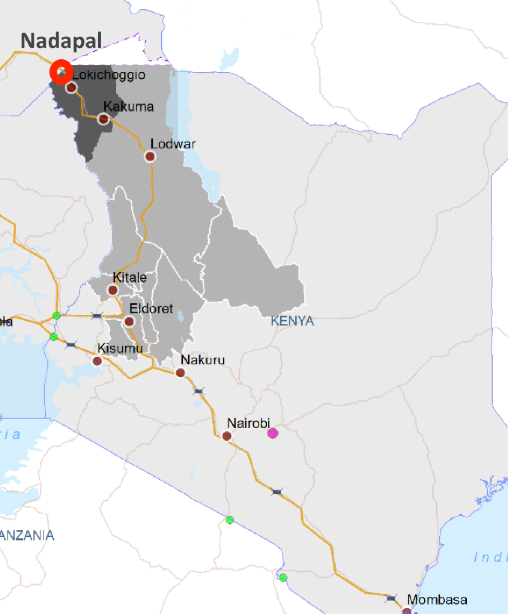
Kenya has already secured African Development Bank financing to upgrade key sections on its side, particularly the Lesseru – Kitale and Morpus – Lokichar stretches. Regional integration blueprints envision Nadapal as a vital gateway reducing transport costs and time for South Sudanese imports while opening markets for Kenyan goods.
On paper, the economics are compelling. In practice, the road remains a dangerous gamble.
The problem begins on the South Sudan side, where the road remains mostly unpaved. Border disputes and political gridlock over demarcation have stalled construction indefinitely.
Poor road conditions create a vicious cycle: slow-moving trucks become easier targets for ambushes and bandit attacks. As the industry maxim warns, “cargo at rest is cargo at risk.”
Without security, infrastructure investments become monuments to unrealized potential.
The Uganda Detour: When Safety Trumps Efficiency
Faced with unpredictability at Nadapal, traders have voted with their wheels. Despite being longer and more congested, the Uganda–South Sudan corridor via the Nimule border post has become the dominant route for South Sudanese trade.
Nimule offers something Nadapal cannot: relative security and a lower risk of armed confrontation.
This represents a textbook case of trade diversion driven not by tariffs, customs procedures, or infrastructure quality, but by violence. Traders aren’t optimizing for cost or speed – they are optimizing for survival.
The detour adds hundreds of kilometers, increases fuel costs, and extends delivery times. Yet for transport companies calculating risk premiums and insurance rates, the choice is rational.
Kenya loses potential transit traffic and revenue. South Sudan faces higher logistics costs that ultimately burden consumers.
Regional integration suffers as corridors designed for efficiency become irrelevant due to insecurity. The economic losses compound daily, measured not just in dollars but in opportunities foregone and markets left underserved.
The Hidden Economics of Fear
The paralysis of Nadapal illustrates a broader pattern across Africa: security considerations override formal trade agreements, infrastructure investments, and policy reforms.
Corridors that look efficient on maps become ghost routes when violence disrupts movement. Informal risk calculations – the likelihood of ambushes, the presence of roadblocks, the volatility of armed groups – shape trade flows more decisively than any customs modernization program.
This dynamic is particularly acute in post-conflict and fragile states where border areas represent the weakest points of state authority. When central governments struggle to project power, peripheral zones like Nadapal become ungoverned spaces where armed groups operate with impunity.
The result is a geography of commerce determined less by economic logic than by the need to avoid danger.
Transport companies must factor these risks into every decision. Insurance premiums spike for routes through conflict zones.
Drivers demand hazard pay. Cargo gets delayed or abandoned. Each incident reinforces traders’ preferences for safer alternatives, even when those alternatives are demonstrably less efficient.
The Inertia Problem: Why Recovery Is Harder Than Collapse
Perhaps most troubling is what happens after traders adapt to alternative routes. Even when security conditions improve, reversing those behavioral patterns proves remarkably difficult.
This reflects a form of cognitive inertia: habits forged under risk conditions become embedded preferences that persist long after the original threat diminishes.
Traders who have established relationships with transporters on the Uganda route, learned its rhythms, and built trust with border officials are reluctant to experiment with Nadapal again. The switching costs – psychological, operational, and financial – create a lock-in effect.
What begins as a rational response to insecurity evolves into a structural feature of regional trade patterns.
This behavioral dynamic is often overlooked by economists, policymakers, and development practitioners who assume that improving infrastructure and security will automatically restore trade flows. The reality is messier.
Once diverted, trade routes develop their own momentum, supported by networks of relationships, established procedures, and institutional memory. Breaking those patterns requires not just security improvements but active efforts to rebuild trust and demonstrate sustained stability.
Regional Integration’s Achilles Heel
The biggest loser in this equation is South Sudan itself. Already among the world’s most challenging business environments, the country now faces increased dependence on a single main trade corridor through Uganda.
This vulnerability compounds other structural weaknesses: limited productive capacity, high inflation, currency instability, and weak governance.
For Kenya, Nadapal’s dysfunction represents a missed opportunity to deepen commercial ties and diversify corridor usage. The broader East African Community’s integration agenda – built on promises of seamless cross-border trade and reduced transaction costs – stumbles when key border posts cannot function reliably.
The paradox is stark: billions of dollars flow into infrastructure development across the region while security failures render those investments worthless. Roads get paved, bridges get built, and border posts get modernized, yet if armed groups can shut down movement at will, the physical infrastructure becomes irrelevant.
Beyond Infrastructure: The Security Imperative
Nadapal serves as a harsh reminder that regional integration cannot succeed on infrastructure and policy reforms alone. Border posts and the corridors they connect function only when security is credible, stable, and expected to endure.
Traders need confidence not just that a route is safe today, but that it will remain safe next week, next month, and next year.
This requires more than occasional military deployments or temporary ceasefires. It demands sustained state presence, effective policing, functional justice systems, and political agreements that hold.
In South Sudan’s case, this means resolving the underlying conflicts that fuel violence, completing demarcation processes, and building governance capacity in border regions.
For regional bodies like the East African Community and the Intergovernmental Authority on Development, Nadapal’s paralysis should prompt serious reflection. Trade facilitation measures, harmonized customs procedures, and infrastructure financing are necessary but insufficient.
Without addressing the security dimensions of regional integration, even the best-designed corridors remain vulnerable to collapse.
The Path Forward
Reviving Nadapal requires a comprehensive approach. The immediate priority is establishing a credible ceasefire and deploying neutral forces to stabilize the border area.
This must be followed by completing road construction on the South Sudan side, upgrading border facilities, and establishing permanent security arrangements that can withstand political shocks.
Equally important is rebuilding trader confidence through sustained demonstration of stability. This might include guaranteed security escorts for initial convoys, insurance mechanisms to mitigate residual risks, and public information campaigns highlighting improvements.
The goal is to overcome the behavioral inertia that keeps trade flowing through Uganda even after conditions improve.
Regional organizations can play a facilitation role, providing neutral monitoring, technical support, and diplomatic pressure to maintain commitments. Development partners should align infrastructure financing with security conditionalities, ensuring that roads get built only when mechanisms exist to protect them.
The Broader Lesson
As long as Nadapal remains synonymous with violence rather than reliability, trade will continue its detour through Uganda. The lesson extends far beyond this single border post.
Across East Africa and throughout the developing world, the dream of regional integration confronts the reality that commerce requires more than open borders and paved roads.
Security is not merely protective infrastructure for trade – it actively determines where trade goes, how it moves, and whether it moves at all. Until policymakers fully internalize this lesson and act accordingly, countless Nadapals will dot the map: strategic gateways that exist in planning documents but remain empty in practice, bypassed by traders who have learned that survival matters more than efficiency.
The question is not whether Nadapal can recover, but whether the region’s leaders will address the security foundations that make trade corridors viable in the first place. Until they do, the promise of regional integration will remain just that – a promise undermined by the persistent reality of insecurity.
Danilo Desiderio serves as the CEO of Desiderio Consultants Ltd in Nairobi, Kenya, specializing in African customs, trade, and transport policies. He is a customs and trade expert at the World Bank and a senior associate to the Horn Economic and Social Policy Institute (HESPI).
