
Opinion
The Future of UEMOA: Challenges and Opportunities for West Africa’s Economic Bloc

By Dishant Shah
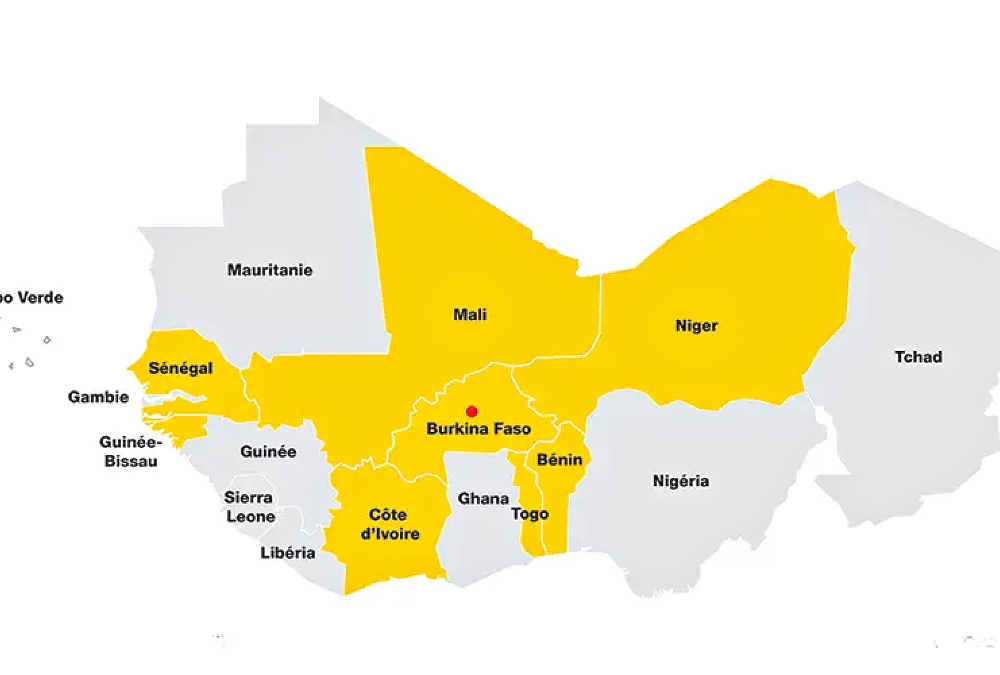
The West African Economic and Monetary Union (UEMOA), also known as WAEMU, is a unique and ambitious economic bloc that aims to integrate eight member countries in the West African region. These nations Benin, Burkina Faso, Côte d’Ivoire (Ivory Coast), Guinea-Bissau, Mali, Niger, Senegal, and Togo – share a common currency, the West African CFA franc, which is pegged to the Euro.
While this arrangement ensures currency stability, it also links their economies to France, fueling ongoing debates about the region’s financial independence and sovereignty.
Economic Integration: Successes, Struggles, and Potential
Founded in 1994, WAEMU’s primary objective has been to enhance economic cooperation and integration among its member states. However, despite sharing a common currency, intra-regional trade within WAEMU remains strikingly low, representing just 15 percent of the region’s total trade.
By comparison, regions like the European Union have intra-regional trade figures exceeding 60 percent. This gap reflects deeper issues within WAEMU, including infrastructure deficits, high logistics costs, and bureaucratic red tape.
The transportation of goods, for instance, can be a major hurdle – moving goods between cities like Abidjan in Ivory Coast and Ouagadougou in Burkina Faso is often delayed by roadblocks, customs processes, and inefficient border management. These challenges hinder the flow of goods and stifle economic growth across the bloc.
Despite these obstacles, WAEMU has made notable strides. Inflation within the region remains impressively low, typically staying under 3 percent, thanks to the sound monetary policies enforced by the Central Bank of West African States (BCEAO).
Economies such as Ivory Coast and Senegal are emerging as fast-growing powerhouses in Africa, with consistent gross domestic product (GDP) growth rates above 6 percent. This resilience demonstrates that, despite the region’s challenges, there is significant potential for continued economic development.
For investors, WAEMU presents a relatively stable gateway into the broader West African market, particularly in sectors like agribusiness, infrastructure, and consumer goods. The stability provided by the CFA franc, alongside a growing middle class and dynamic consumer markets, makes the region an attractive prospect.
The CFA Franc Dilemma: Stability vs. Sovereignty in WAEMU’s Monetary Union
However, the reliance on the CFA franc is a double-edged sword. While the currency’s stability fosters regional trade, it limits the bloc’s ability to adjust its monetary policy according to its own economic needs.
Critics argue that a floating currency might offer more flexibility and boost competitiveness, while others warn that such a move could trigger financial instability. This debate has gained traction in recent years, especially as neighboring countries like Nigeria and Ghana – outside of WAEMU – pursue independent monetary policies.
Another critical issue facing WAEMU is the disparity in economic development among its members. While Ivory Coast contributes nearly 40 percent of the region’s GDP, smaller economies like Guinea-Bissau and Niger are grappling with poverty and low industrial output. To ensure long-term stability and prosperity, bridging this economic divide is essential.
Significant investments in education, technology, and infrastructure will be necessary to lift the smaller economies and foster more balanced growth across the region.
Ultimately, WAEMU’s future success will depend on its ability to address the challenges that have long held back its economic integration. From improving infrastructure to reducing trade barriers and reassessing its monetary union, WAEMU faces a pivotal moment in its development.
If the bloc can overcome these hurdles, it could serve as a model for other African regions striving to deepen economic cooperation. But without addressing these issues head-on, WAEMU’s vision of a fully integrated West African economy may remain a distant dream.
Dishant Shah is a partner at Legion Exim, a company specializing in facilitating the export of high-quality engineering products directly sourced from manufacturers in India to Africa. His areas of expertise include new business development and business management.
