
Opinion
The Energy Paradox: How Resource-Poor Nations Control the Resource-Rich

By John Kourkoutas
Wealthy nations that built their prosperity on fossil fuels now demand developing countries skip the same path. The timing raises uncomfortable questions.
A curious pattern emerges when examining global energy politics. Map the world’s remaining oil reserves on one side, then map which nations most aggressively advocate for rapid fossil fuel phase-outs on the other.
The inverse correlation is striking – and troubling.
Countries with the smallest hydrocarbon endowments are demanding the fastest energy transition. Meanwhile, nations sitting atop billions of barrels of untapped crude are being urged to “leapfrog” the fossil fuel era entirely, moving directly to renewable energy systems that took wealthy nations decades and trillions of dollars to develop.
Asking Nigeria or Mozambique to skip directly to renewable systems while lacking basic grid infrastructure, financing mechanisms, or industrial capacity is not climate policy. It is economic fantasy dressed in environmental rhetoric.
The Arithmetic of Hypocrisy
Consider the specifics. Nigeria possesses 37 billion barrels of proven oil reserves.
Norway, with just 6.6 billion barrels, positions itself as a global authority on “responsible energy policy.” Libya holds 48 billion barrels yet receives sustainability lectures from Germany, which controls a mere 0.1 billion.
Venezuela sits on 300 billion barrels – the world’s largest proven reserves – while being told by resource-depleted European nations to embrace solar power as its primary development pathway.
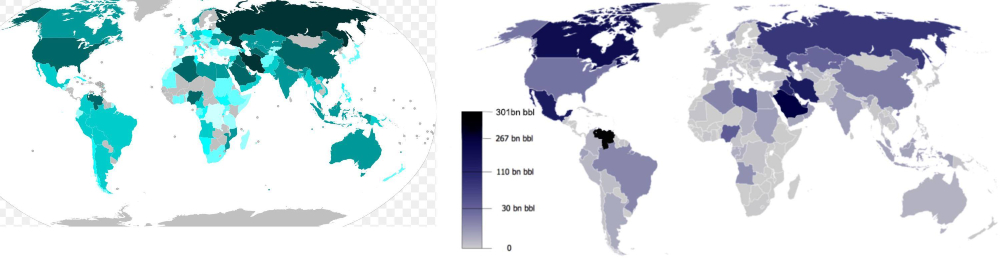
Left: Resource-rich nations. Right: Power over the energy narrative
The asymmetry becomes more pronounced when viewed through a historical lens. European industrialization was built on an uninterrupted century-and-a-half of fossil fuel extraction and combustion.
Coal powered the factories of the Industrial Revolution. Oil fueled the post-war economic boom.
Natural gas heated homes and generated electricity as economies matured. Every highway system, every steel mill, every urban center in the developed world was constructed on the back of hydrocarbon energy.
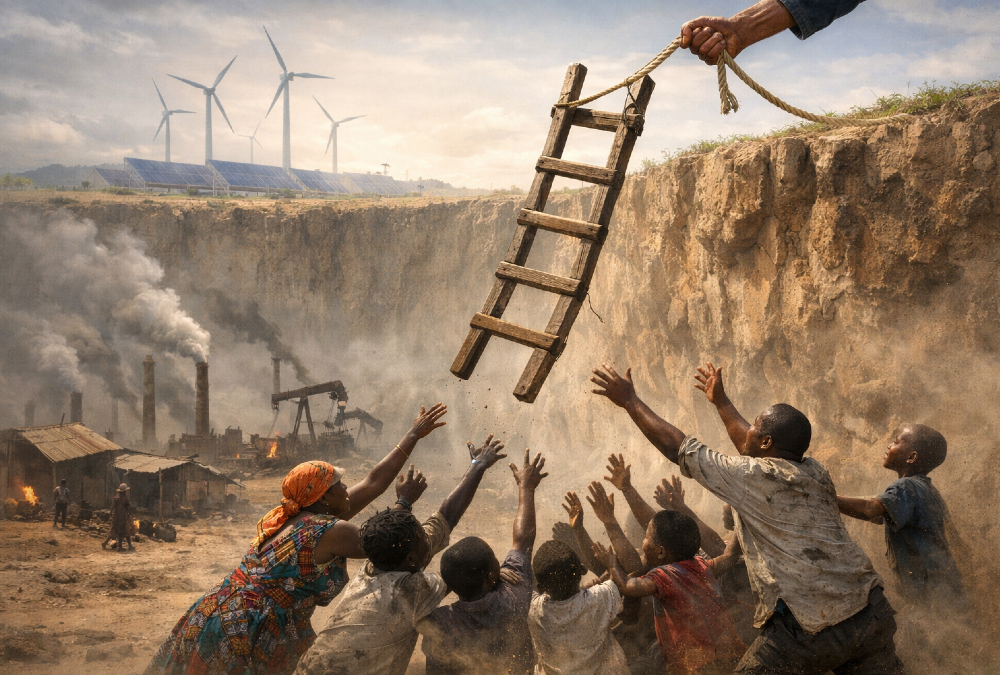
Then, conveniently, just as Europe’s own reserves dwindled toward depletion, the climate crisis became an urgent moral imperative requiring immediate global action. The message to developing nations crystallized: the development ladder that lifted billions out of poverty must now be pulled up.
A Question of Timing
Africa’s vast fossil fuel discoveries – from Mozambique’s natural gas fields to Uganda’s oil deposits – have coincided precisely with intensifying pressure from international institutions, development banks, and Western governments to forgo their development. The timing is not lost on African leaders, who increasingly view climate advocacy through a lens of economic self-interest rather than planetary altruism.
Norway has extracted US$1.4 trillion in oil wealth since the 1970s, building the world’s largest sovereign wealth fund in the process. That fund, ironically branded as ethical and sustainable, was built entirely on fossil fuel revenues.
Today, Oslo lectures Lagos on the immorality of oil development. Germany industrialized on Ruhr Valley coal, transforming itself from an agrarian society into an economic powerhouse.
Berlin now instructs African nations to pursue “clean energy pathways” without acknowledging the carbon-intensive foundation of its own prosperity.
The Logic of Energy Justice
Developing nations, particularly those in Africa, are advancing a straightforward counterargument: they will industrialize using available resources, just as Europe did, and transition to cleaner energy once they achieve comparable levels of development and wealth. This position is often mischaracterized as climate denialism.
It is not. It is a demand for economic equity.
The current global energy architecture perpetuates a troubling paradox. The nations demanding the most aggressive fossil fuel phase-outs are those that have already extracted and monetized their hydrocarbon wealth.
Countries with substantial remaining reserves are told to leave them untapped – for the climate. Yet these same lecturing nations continue importing oil and gas from the very countries they urge toward restraint.
European utilities sign long-term contracts for African natural gas while European diplomats advocate against African gas development.
African nations currently attract less than 2 percent of global energy investment. The suggestion that they should bypass their own natural resources while Western nations achieved development by exploiting theirs defies both economic logic and moral consistency.
The Infrastructure Reality
The renewable energy transition requires massive upfront capital investment, advanced technological capacity, and robust electrical grids – infrastructure that took wealthy nations generations to build using fossil fuel revenues.
Asking Nigeria or Mozambique to skip directly to renewable systems while lacking basic grid infrastructure, financing mechanisms, or industrial capacity is not climate policy. It is economic fantasy dressed in environmental rhetoric.
Consider the numbers. The International Energy Agency estimates that achieving universal energy access in Africa alone would require US$25 billion annually through 2030.
African nations currently attract less than 2 percent of global energy investment. The suggestion that they should bypass their own natural resources while Western nations achieved development by exploiting theirs defies both economic logic and moral consistency.
A Path Forward
The climate crisis is real and urgent. But climate policy divorced from considerations of economic justice and development equity will fail.
If wealthy nations are serious about global decarbonization, they must acknowledge several uncomfortable truths.
- First, they must recognize that their own prosperity was built on unrestricted fossil fuel use over 150 years.
- Second, they must provide genuine financial and technological support – not loans, but transfers – to enable developing nations to build renewable capacity at the scale and speed required.
- Third, they must accept that developing nations will use their natural resources during this transition period, just as Europe did.
The alternative is the status quo: wealthy nations maintaining their prosperity while demanding developing nations sacrifice their economic futures for a climate crisis they did little to create. That is not climate policy. It is economic gatekeeping with a green veneer.
The question facing the international community is not whether Africa should use its fossil fuel reserves. Africa will use them.
The question is whether that development occurs within a framework of genuine partnership and technology transfer, or amid growing resentment at a system that appears designed to preserve existing global hierarchies under the banner of environmental protection.
Energy justice demands more than rhetoric. It demands acknowledging that the countries sitting atop unextracted resources did not cause the climate crisis, and they should not be asked to bear its costs without recompense.
Until wealthy nations confront that reality, the energy transition will remain stalled – not by climate denial, but by economic common sense.
John Kourkoutas is business development expert that specializes in helping companies, export teams, and business leaders succeed in Africa’s dynamic and emerging markets.
