
Opinion
The Cocoa Paradox: Why Africa’s Trade Revolution is Stuck at the Border

By Ziad Hamoui
Ghana’s president is right to call current trade arrangements neo-colonial. But diagnosis without execution changes nothing.
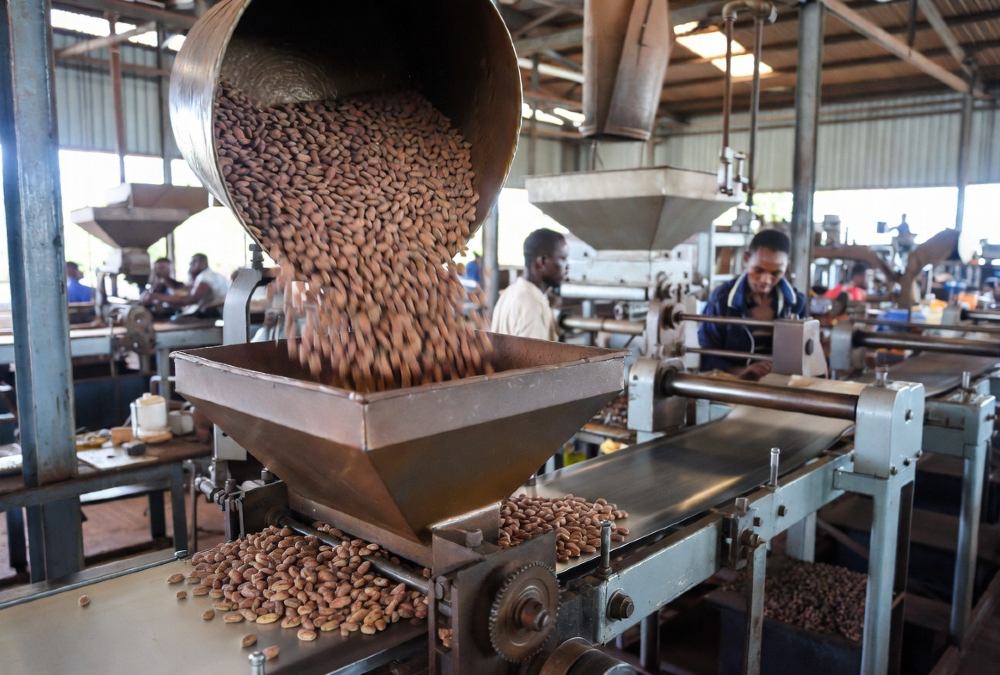
Ghana produces the cocoa. Switzerland pockets US$130 billion annually from the global chocolate market.
At the recently concluded Africa Trade Summit, Ghanaian President John Dramani Mahama didn’t mince words, branding this disparity “a new colonial arrangement.” He’s not wrong. But identifying the problem is the easy part.
Both Mahama and Sam Jonah, former CEO of Ashanti Goldfields Company and now an equity fund entrepreneur, issued the same challenge: Africa must move “beyond policy commitments to practical execution.”
After spending a decade documenting trade barriers, I can confirm their diagnosis. We have catalogued the problems exhaustively.
What remains conspicuously absent is the authority to act on solutions we already know.
Infrastructure Without Implementation Is Just Expensive Concrete
The US$15.6 billion Abidjan-Lagos Corridor stands as the most ambitious transport investment in West African history. It should be transforming regional commerce.
Instead, trucks routinely wait 72 hours at borders, bleeding money while their cargo wilts in the heat.
We don’t lack data. Time Release Studies document precisely where delays occur.
Through engagement with economic operators, we have mapped checkpoint locations across the Economic Community of West African States (ECOWAS) Commission corridors, identified procedural bottlenecks at customs posts, and catalogued regulatory inconsistencies that shift bewilderingly from one country to the next. The problems aren’t hidden.
They are documented, measured, and understood.
Value capture fails for specific, traceable reasons. Transport costs inflate final prices beyond competitiveness.
Border delays spoil perishables before they reach markets. Cold chain infrastructure for processed products remains woefully inadequate.
Regional value chain integration, despite endless summit declarations, has yet to materialize at meaningful scale.
The Processing Paradox
Mahama rightly argues that Ghana could add substantial value to cocoa, cashews, oil palm, and cassava before export. The logic is impeccable. The execution is not.
Processing plants require predictable supply chains. They need to know that raw materials will arrive on schedule, that finished products can reach markets reliably, and that cross-border commerce follows consistent rules.
Border unpredictability demolishes that investment case. No rational investor builds a processing facility when they cannot predict whether their inputs will arrive this week or next month, or whether their outputs will clear customs in three days or three weeks.
This is how Switzerland captures the chocolate fortune while Ghana supplies the beans. It’s not superior cocoa knowledge. It’s superior infrastructure execution.
The Accountability Gap
According to UN Trade and Development (UNCTAD), 74 percent of National Trade Facilitation Committees (NTFCs) held regular meetings in 2024. Meetings are happening.
Workplans are being developed. Documents are being drafted. But here’s the critical distinction: NTFCs currently advise ministries. They lack authority to override them.
Border agents follow ministry directives, not NTFC recommendations. Pilot programs succeed in controlled environments but cannot scale because no entity possesses a mandate to enforce adoption across jurisdictions.
Success remains confined to PowerPoint presentations at conferences.
The African Continental Free Trade Area (AfCFTA) has now entered its fifth year of operationalization. Protocols have been signed with appropriate ceremony.
Rules of origin have been negotiated through countless technical sessions. The legal architecture exists.
What doesn’t exist is institutional power to resolve barriers where commerce actually happens: at border posts, customs facilities, and regulatory checkpoints.
When Delays Become Competitive Death Sentences
Jonah warned that continued AfCFTA implementation delays “could weaken competitiveness.” The understatement is almost polite.
We know exactly what these delays look like in practice: 72-hour border waits that turn fresh produce into compost, incompatible digital systems between neighboring countries that require duplicate documentation, and checkpoints along modern highways that render billions in infrastructure investment nearly useless for efficient commerce.
African exporters aren’t competing against other African producers. They are competing against global supply chains where goods move from Asian factories to European retailers in less time than it takes a Ghanaian truck to cross three West African borders.
This isn’t a minor inefficiency. It’s a competitive death sentence.
The Path Forward: Authority, Not More Advice
The question isn’t what needs to happen. We know what needs to happen. The question is who has the authority to make it happen.
How can we transform National Trade Facilitation Committees from advisory bodies producing recommendations that gather dust into institutions with genuine authority to resolve trade barriers? How do we create mechanisms that can override competing ministry interests when those interests block regional commerce?
How do we move from endless pilot programs to mandatory, scaled implementation?
These aren’t rhetorical questions. They are the difference between Africa capturing value from its own resources and continuing to supply raw materials for others to profit from.
They are the difference between the AfCFTA becoming a transformative economic force and remaining an impressive collection of signed protocols.
President Mahama is right to call current arrangements neo-colonial. But outrage without execution merely adds another critique to a well-documented pile.
What Africa needs now isn’t more diagnosis. It needs institutions empowered to prescribe treatment and enforce compliance.
The cocoa beans will continue growing regardless. Whether Ghana captures chocolate market value or continues watching Switzerland do so depends entirely on whether African leaders are willing to grant their trade facilitation institutions actual teeth. Everything else is just conference conversation.
Ziad Hamoui is the Co-Founder and Past President of the Borderless Alliance, a leading private-sector advocacy group promoting economic integration and removing trade and transport barriers in West Africa. With extensive experience in Ghana’s road transport, logistics, and shipping sectors, he currently serves as Executive Director of Tarzan Enterprise Ltd., a long-established family business. He is a former Co-Chair of the Africa Food Trade Coalition, Co-Founder of the Trade Facilitation Coalition for Ghana, and serves on multiple high-level advisory committees on trade, transport, agriculture, and security. A Chartered Fellow of the Chartered Institute of Logistics and Transport (CILT) Ghana, he is also a former member of its Governing Council.
