
Opinion
The Cocoa Crash and the Lithium Illusion: Why Africa Must Own the Value Chain
Why commodity booms keep enriching everyone except the people who grow and mine them – and what Nigeria’s new lithium bet says about breaking the pattern.

By Gregory September
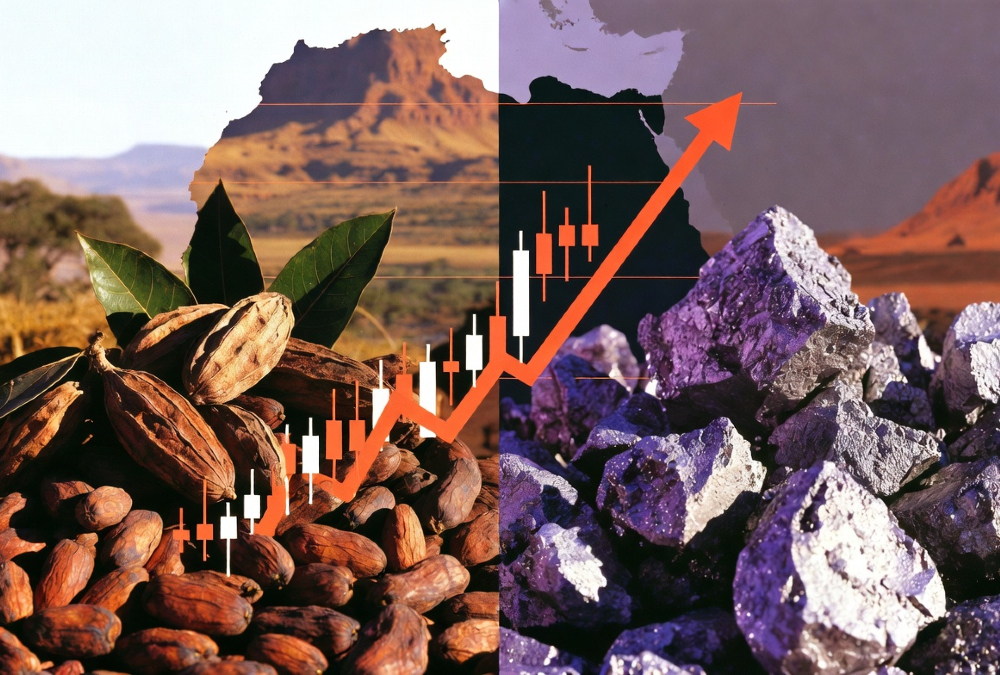
Cocoa hit nearly USUS$13,000 a ton in 2024, a record that made headlines from Abidjan to London. By April 2026, it had fallen to roughly USUS$3,000 – a collapse of about 75 percent in barely a year.
Investors who track commodities are trained to watch that kind of swing closely. What they should watch just as closely is a quieter, more durable fact: where the pricing power actually sits.
Most cocoa farmers never saw the top of the boom. Most will not feel the bottom of the crash either. They were priced out of both ends of the cycle, and that is not an accident of bad luck. It is the predictable outcome of how the system is built.
A Boom That Never Reached the Farm
The mechanics are straightforward once you look past the headline price:
- Prices spike on supply shocks – disease, drought, poor harvests – not on anything a farmer did or invested in.
- Farmers rarely hold contracts that lock in high prices while the market is hot.
- Processing and trading margins sit upstream, closer to the buyers and exporters than to the growers.
- When prices fall, the risk lands on the producer, not the trader who has already moved on to the next commodity.
A commodity boom without local processing or price protection is not wealth. It is exposure with good timing – and when the timing turns, so does the exposure.
This is not unique to cocoa. The same structural gap runs through Africa’s mineral exports, from cobalt to lithium to gold. Commodity markets reward control, not production. Until producers capture more of the value chain – processing, refining, branding – price booms will keep functioning as temporary windfalls rather than the foundation for lasting development. Cocoa simply made that gap visible faster than usual.
The Lithium Test Case
So where else is a boom currently being mistaken for security?
Zimbabwe offers one answer. In 2022, the government banned raw lithium exports to force processing onshore. The policy worked, in a narrow sense: a processing plant got built. But it was Chinese capital that built it, and Chinese firms that now own the value it creates. The law forced a plant into existence; it could not dictate who would end up owning it.
Nigeria is now running the same experiment with a different hypothesis. The country recently inaugurated its own lithium processing plant in Nasarawa State, framed this time as state-led rather than foreign-financed.
Beneficiation policy – the push to process raw materials domestically instead of shipping them out – has a consistent failure mode across the continent, and it goes like this:
- A government restricts raw exports to force local processing.
- Someone still has to build the plant.
- Whoever has the capital and the speed wins the build.
- That party – not the government that wrote the law – captures the new value chain.
Zimbabwe answered the ownership question one way. Nigeria is attempting to answer it differently. Whether that attempt succeeds is not yet knowable, and treating it as a finished success story would be premature.
Watch the Ownership Structure, Not the Ribbon-Cutting
Passing the law was always the easy part. Owning the plant is where the real value sits, and that is the harder, slower fight – one measured in financing terms, equity stakes, and operating contracts, not press releases.
A year from now, the important question about Nigeria’s lithium plant will not be whether the country succeeded in processing lithium domestically. It will be who financed it, who operates it, and who ultimately profits from what comes out of it.
Cocoa’s collapse is a warning written in fast, brutal numbers. Lithium’s slower-moving story is the same warning, arriving in policy form. In both cases, the price chart tells you what happened to the commodity. It does not tell you who actually owns the value – and that is the number worth watching.
Gregory September is a South African academic, author, and geopolitical analyst with extensive experience in government and Parliament. He is the founder and CEO of SAUP (Sustainability Awareness and Upliftment Projects NPC), which focuses on sustainability education and community development. He previously served as Head of Research and Development for the Parliament of South Africa. His work centers on sustainability, African geopolitics, and economic development, and he regularly contributes to analysis of global political and economic affairs.
