
Opinion
The $15.6 Billion Abidjan-Lagos Corridor: Transforming West Africa’s Trade Landscape

By Ziad Hamoui
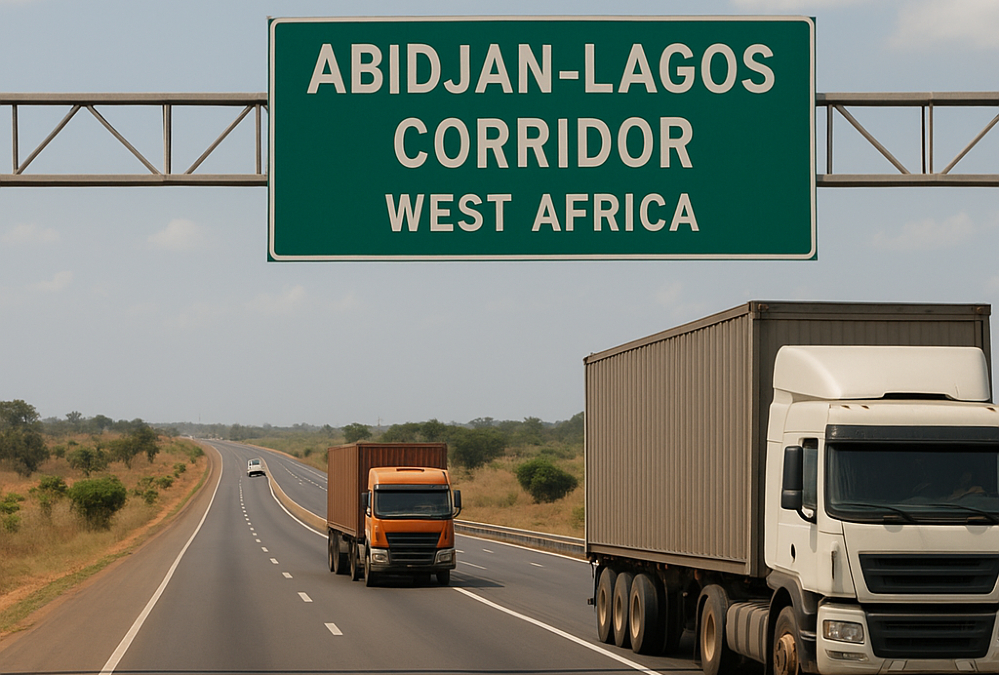
When history looks back on the defining infrastructure projects of 21st-century Africa, the Abidjan-Lagos Corridor will stand out – not as just another road, but as the spine of a new economic era.
Spanning 1,028 kilometers (639 miles) across five nations – Côte d’Ivoire (Ivory Coast), Ghana, Togo, Benin, and Nigeria – the US$15.6 billion Abidjan-Lagos Highway is more than a transportation project. It is the single largest regional infrastructure investment in West African history, backed by the African Development Bank, the European Union, and the Economic Community of West African States (ECOWAS).
And its stakes couldn’t be higher: this corridor holds the key to unlocking 75 percent of the region’s GDP, serving a population projected to reach 173 million by 2050.
For decades, West Africa’s economic potential has been shackled by fractured logistics. Trucks endure delays of up to 72 hours at borders.
Cross-border transport costs are inflated by 15–20 percent due to poor roads, bureaucratic bottlenecks, and inconsistent enforcement. The result? A regional trade volume that remains stubbornly low – just 18 percent of total trade, compared to over 60 percent in Europe and 70 percent in Southeast Asia.
From Bottleneck to Backbone: Rewriting West Africa’s Logistics Narrative
The Abidjan-Lagos Corridor changes all that.
Upon full completion, this modern, multi-lane highway will slash transit times by up to 40 percent, reduce freight costs dramatically, and eliminate the chaos that has long deterred investors. The payoff? An estimated US$16 billion in added regional value, 70,000 direct jobs, and another 160,000 indirect roles – from warehousing to logistics tech to small-business expansion along the route.
But its true power lies beyond statistics.
This isn’t merely about moving goods faster – it’s about transforming how West Africa participates in the global economy. As supply chains reconfigure away from over-reliance on Asia and Europe, manufacturers are seeking agile, lower-cost production hubs.
The Abidjan-Lagos Corridor offers precisely that: a seamless, predictable artery connecting major ports, industrial zones, and growing urban markets – from Abidjan’s free trade zone to Lagos’ Apapa port, through Accra and Cotonou.
It is, in effect, West Africa’s answer to the ASEAN highway networks or the North American freight corridors: a strategic backbone designed to attract manufacturing FDI, enable export diversification beyond raw commodities, and position the region as a competitive player under the African Continental Free Trade Area (AfCFTA).
AfCFTA’s Missing Link: Why This Corridor Is Non-Negotiable
AfCFTA promises intra-African trade growth of US$3.5 trillion annually – but only if the physical infrastructure exists to make it real. Right now, the corridor is the most tangible manifestation of that promise.
Governments must accelerate final-phase funding and harmonize customs procedures along the route. Private sector actors – from logistics firms to fintech startups – must partner with public agencies to digitize border crossings and build last-mile connectivity.
And regional institutions need to enforce consistent standards for road safety, tolling, and maintenance.
This is not a road project. It is a nation-building initiative disguised as asphalt and concrete.
If executed with urgency and integrity, the Abidjan-Lagos Corridor won’t just move trucks – it will move economies. It will empower SMEs, create youth employment, reduce food insecurity by improving agricultural distribution, and turn West Africa from a commodity exporter into a manufacturing hub.
The world is watching. So too should investors, policymakers, and citizens who believe that Africa’s future shouldn’t be dictated by its past.
The time to build – and to believe – is now.
Ziad Hamoui is the Co-Founder and Past President of the Borderless Alliance, a leading private-sector advocacy group promoting economic integration and removing trade and transport barriers in West Africa. With extensive experience in Ghana’s road transport, logistics, and shipping sectors, he currently serves as Executive Director of Tarzan Enterprise Ltd., a long-established family business. He is Co-Chair of the Africa Food Trade Coalition, Co-Founder of the Trade Facilitation Coalition for Ghana, and serves on multiple high-level advisory committees on trade, transport, agriculture, and security. A Chartered Fellow of the Chartered Institute of Logistics and Transport (CILT) Ghana, he is also a former member of its Governing Council.
