
Opinion
Rural Women: The Unsung Architects of Africa’s Future

By Jean Claude Niyomugabo
Did you know that rural women produce more than half of the world’s food – yet remain among the least empowered when it comes to owning land, accessing credit, or adopting modern agricultural technologies?
Nowhere is this paradox more evident – and more consequential – than in Africa, where women are not only the backbone of smallholder farming but also the architects of family well-being and community resilience. In Rwanda, their role is nothing short of foundational to national development.
Last week, the world marked the International Day of Rural Women under the global theme “Rural Women Rising: Shaping Resilient Futures.” Rwanda amplified this message with its own resonant national slogan: “Umugore ni uw’agaciro” – “A Woman of Dignity.”
This is far more than a ceremonial tribute. It is a call to action – one that recognizes rural women not as passive beneficiaries of aid, but as dynamic agents of economic transformation, social cohesion, and climate resilience.
From Marginalized Laborers to Drivers of Development
Consider the work underway in Rwanda’s Gisagara District. Through the She Can Project, a collaborative initiative led by World Relief Rwanda in partnership with the World Food Programme and other stakeholders, rural women are being equipped with the tools to thrive – not just survive.
The results speak volumes:
- Over 41,000 farmers have enhanced their food security and gained better access to markets – 80 percent of them women.
- More than 52,000 individuals have received training in financial literacy, savings, and agribusiness development.
- 38 home-based Early Childhood Development (ECD) centers now provide safe, nurturing spaces for young children – freeing mothers to engage in income-generating activities without compromising their children’s care.
- Over 2,600 couples have participated in relationship-strengthening dialogues that foster mutual respect, reduce gender-based violence, and build more equitable households.
These are not abstract statistics. They are lived realities – testaments to what happens when dignity is paired with opportunity.
Investing in Rural Women Is Investing in National Resilience
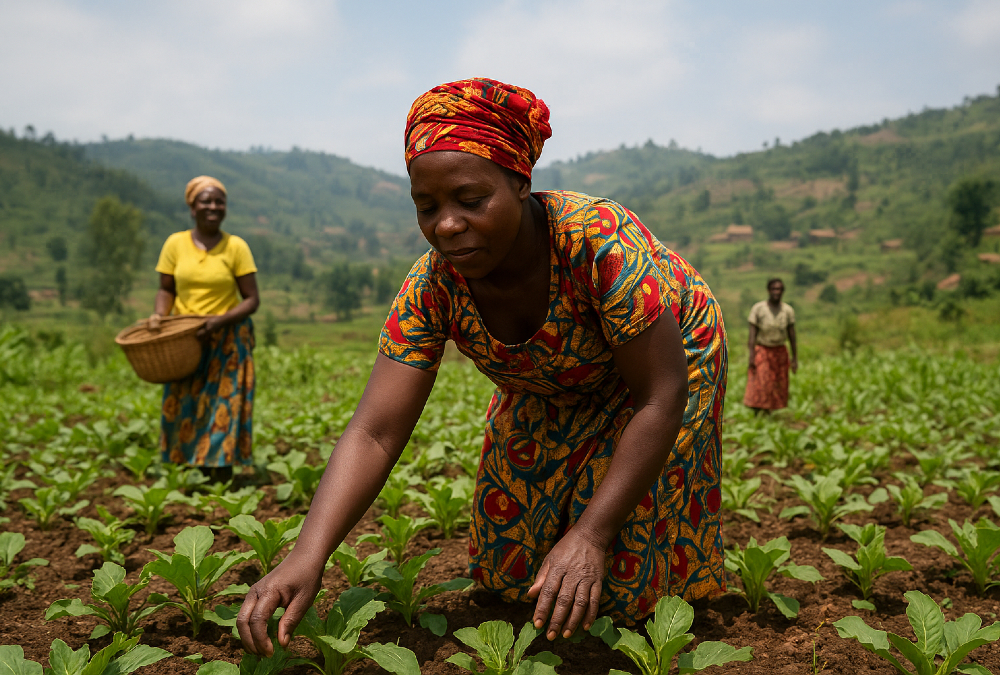
Rural women rise before dawn, tend to their fields, feed their families, educate their children, and still find ways to invest in their communities. They do so despite systemic barriers: discriminatory land tenure laws, limited access to finance, and entrenched gender norms that often render their labor invisible.
Yet, as Rwanda’s experience shows, targeted, gender-responsive investments yield transformative returns – not just for women, but for entire economies. When rural women gain control over productive resources, yields increase, nutrition improves, and intergenerational cycles of poverty begin to break.
The International Day of Rural Women should not be a once-a-year acknowledgment. It must serve as a recurring benchmark for policy, investment, and partnership. Governments, development agencies, and the private sector must move beyond tokenism and embed rural women at the center of agricultural, climate, and economic strategies.
Because when rural women rise, nations rise.
And in a world grappling with food insecurity, climate shocks, and widening inequality, empowering rural women isn’t just the right thing to do – it’s the smartest investment we can make.
Jean Claude Niyomugabo is an entrepreneur and digital communication specialist with a strong passion for Africa’s development. He is dedicated to harnessing the power of social media to drive positive change and enhance livelihoods. With diverse interests and a strategic approach to digital engagement, he strives to create meaningful impact through innovation and connectivity.
