
Opinion
Robert Mugabe is a hero to many in Africa, a fact that Western media struggles to grasp
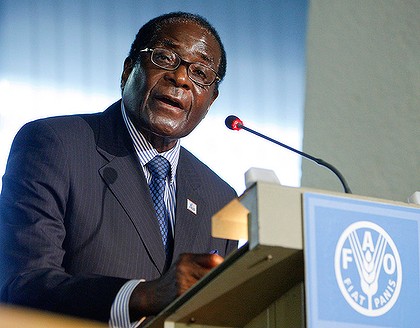
By Murithi Mutiga
So what that Zimbabwean President Robert Mugabe is the new African Union (AU) chairman? How many people know whom he replaced in that post? The answer, of course, is that virtually nobody does.
The AU chairmanship is a purely ceremonial, rotational post that is held by a head of state from one of the continent’s regions every couple of years.
The position has now attracted so much attention because the new holder is Robert Mugabe, which means the question former South African president Thabo Mbeki asked in an important public lecture at the University of South Africa in August 2013 must be repeated.
“Why this obsessive focus on Zimbabwe? Why do all the major television networks devote so much air time to Zimbabwe and Mugabe? Why devote acres of space in (mainly UK and US) newspapers to the subject of little Zimbabwe”?
The answer, of course, is that Mugabe dared to disturb the status quo in his country which heavily favored a powerful minority which, in the words of Mbeki, were the “kith and kin” of the decision makers in the major capitals of Europe.
By the time the land redistribution program began in Zimbabwe, 70 percent of the productive land in the country was in the hands of the white minority which makes up less than 1 per cent of the population.
All the armed struggles for independence in the three countries that saw the bitterest opposition to settler colonialism — Algeria, Kenya and Zimbabwe — were about land.
Crippling sanctions
Mugabe, who was jailed for 11 years by Ian Smith’s brutal regime and missed the funeral of his son while locked up, decided to implement land reform from around 2000, against the stern warnings of Tony Blair’s administration.
He may well have done it for self-serving reasons but the program made him a hero nonetheless in the eyes of many of his people.
