
Opinion
Powering the Future on Unethical Ground: The Dark Side of Electric Vehicles

By NJ Ayuk
To any newcomer navigating the congested, fast-paced freeways of Los Angeles, California, the sheer volume of traffic is only part of the story. The real spectacle lies in the astonishing variety of vehicles inching forward bumper-to-bumper for miles – a mobile showcase of modern automotive culture.
Los Angeles is globally renowned as the entertainment capital of the world. But it’s also emerged as a leader in another arena: electric vehicle (EV) adoption.
In fact, no other U.S. city boasts more EVs on the road.
As drivers glide along the 405 in their electric sedans and SUVs, few likely pause to consider the lithium-ion batteries humming beneath their seats. For many, choosing an EV feels like a clear-cut decision – an environmentally conscious step toward a cleaner future.
But behind that clean image lies a complex – and troubling – truth, one rooted thousands of miles away in the Democratic Republic of Congo (DR Congo).
Much of the cobalt essential to powering those EV batteries originates in this Central African nation, where nearly 60 percent of the world’s supply is mined – often under dire conditions. Many of these mines are controlled by Chinese companies, where efficiency and profit frequently override concerns about worker safety.
In the southern provinces, where so-called “artisanal” mining thrives, the human cost becomes even starker.
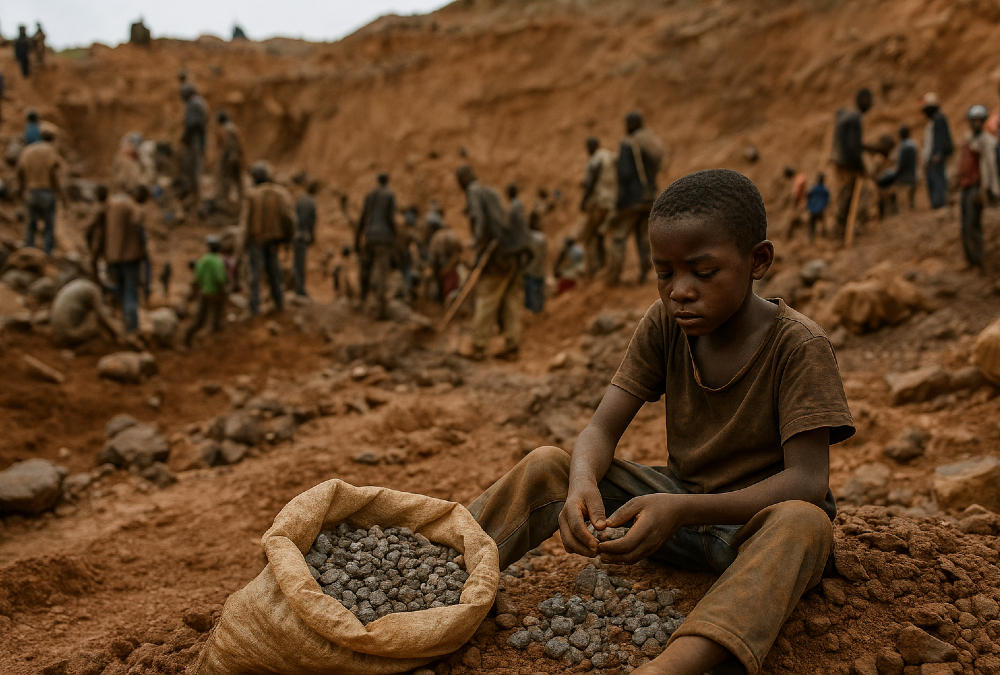
Reports have surfaced of children, some as young as seven, scavenging for cobalt at industrial sites, their small hands prized for reaching into tight crevices. These are not isolated incidents.
Human rights watchdogs, including Amnesty International, have linked cobalt extraction to widespread labor abuses and grave violations of human dignity.
This reality casts a shadow over what was intended to be a feel-good climate solution. Rather than a leap toward sustainability, the EV revolution risks becoming just another chapter in the long history of Africa’s resource exploitation.
Toward a Fairer Energy Transition
Africa is rich in the very minerals that power the green energy transition – not just cobalt, but also lithium, nickel, and graphite. As demand surges, the continent has both the resources and the right to fair participation in this new economy.
The International Energy Agency (IEA) has warned of a looming mismatch between global climate goals and the availability of critical minerals needed to achieve them. Now is the time to ensure that mineral wealth translates into sustainable development, not renewed exploitation.
We must protect workers, empower communities, and establish ethical supply chains. Africa should not simply be a source of raw materials – it should be a full and respected partner in the electric vehicle revolution.
Only then can the promise of clean transportation be truly clean.
NJ Ayuk is the Executive Chairman of the African Energy Chamber.
