
Opinion
Owusu on Africa: Why empowering women is fundamental to ensuring food security in Africa

By Fidel Amakye Owusu
In recent times, food insecurity has become a major security issue in Africa. Earlier this year, Nigeria declared an emergency on food security.
The largest country in terms of economic size and population – as part of the measures to mitigate the problem, has promised farmers improved seeds and subsidized fertilizer.
The millions of smallholder farmers who form the backbone of the country’s food production will need this to help feed the tens of millions of people in need of food. After the Ukraine War and its concomitant effect on food, African states are beginning to take another look at their respective food production.
One of the features of agriculture across Africa has been a land tenure system that often means food production on a smallholder basis. The majority of food production is, therefore, produced by this sub-sector.
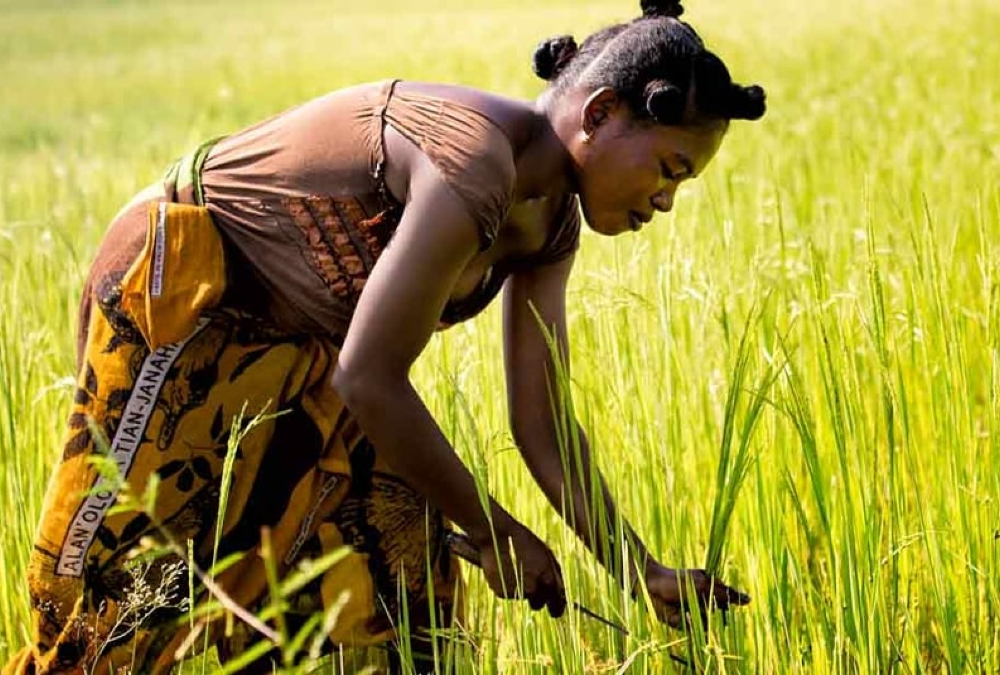
Most importantly, women form the majority of the labor force in smallholder farms across Africa. In many parts of the continent, women till the soil and plant food crops. In places like Akan communities in Ghana, women are the traditional landowners.
Even in overwhelmingly patriarchal societies, women are dominating food production.
Furthermore, women play critical roles in the supply of food after harvest. They take foodstuffs to local markets, where “middlewomen” from urban centres converge, buy them and supply the cities.
What the governments could do
With women dominating food production in Africa, any effort by the different governments to mitigate food insecurity must pay attention to empowering them. This should be in the form of workshops and training that give them knowledge of modern farming methods and practices.
This could increase output and reduce pre and post-harvest losses. Increased output is fundamental to addressing food insecurity in the continent.
More crucial, the hundreds of millions of women in the sector need to be given financial support in their occupation. This has often been a major challenge. Often, loans sought by farmers to commence the farming season are non-existent. Financial institutions are mostly not interested in giving such loans as they are considered too risky.
This notwithstanding, the government could adopt fintech to support women in the sector. They could have some money placed directly on mobile money wallets. These and the provision of seeds and fertilizer would together help reverse the current debacle.
Africa has huge tracts of arable lands that should not make it dependent on food from outside. Helping the human resources behind food production could therefore make a difference.
Fidel Amakye Owusu is an International Relations and Security Analyst. He is an Associate at the Conflict Research Consortium for Africa and has previously hosted an International Affairs program with the Ghana Broadcasting Corporation (GBC). He is passionate about Diplomacy and realizing Africa’s global potential and how the continent should be viewed as part of the global collective.
