
Opinion
Owusu on Africa: Why do violent jihadi extremists clash? The case of West Africa

By Fidel Amakye Owusu
After Osama bin Laden attacked the United States in 2001, it was clear that the organization he led, al-Qaeda, was the deadliest and most brutal terror organization in the world.
The international war on terrorism, which was heavily supported by West Asia, was, therefore, meant to curtail the ability of the group to plan and carry out attacks. Two major expensive and risky wars resulted.
By the mid-2000s, while allied forces fought the worsening insurgency in Iraq, it emerged that al-Qaeda could be more brutal. Videoed beheadings and others displayed by the group sent “shock waves”. The allied forces were constantly attacked with improvised explosive devices (IEDs).
More brutal was the fact that these were detonated in civilian populated places.
While the US and its allies found ways to curb the havoc caused by Abu Musab al-Zarqawi – leader of al-Qaeda in Iraq – there was an unexpected group that was equally worried about what was happening. The al-Qaeda leadership was unhappy.
Yes, Osama bin Laden and al-Zawahiri (his second in command) found al-Zarqawi’s actions to be too radical. They believed that his indiscriminate approach to instilling fear was way out of line.
They denounced al-Zarqawi’s actions with no consequences until coalition forces finally annihilated him.
And so what?
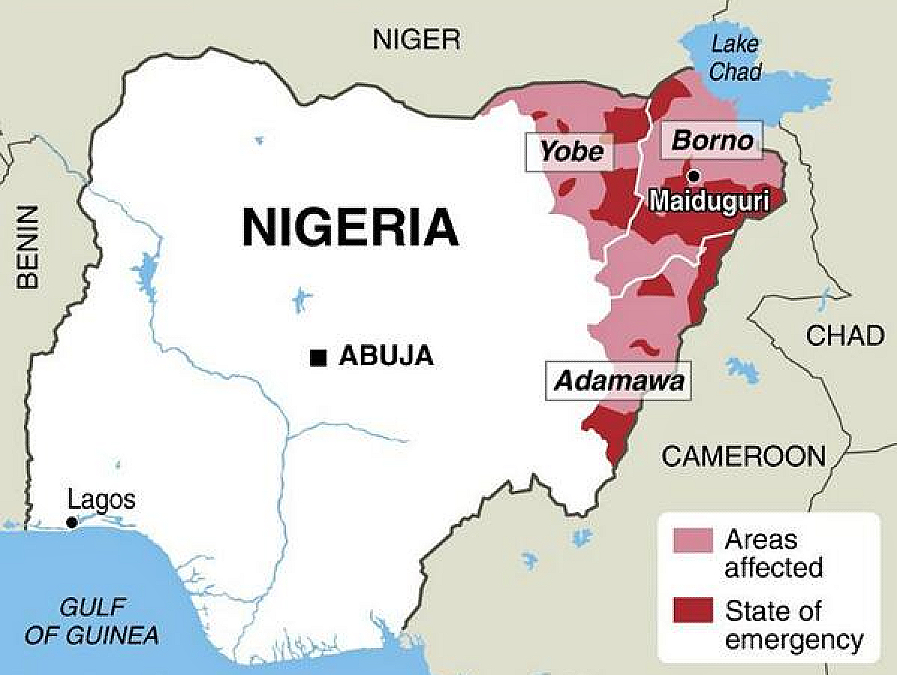
News that clashes between jihadi groups have resulted in at least 60 deaths in the Lake Chad basin has added to recent fatalities in extremist activities in the region. Like it happened in Iraq, there are ideological clashes that have resulted in macaber conflicts between jihadists in West Africa. Interestingly, these mostly occur between affiliates of al-Qaeda and ISIS. The last group had al-Zarqawi as its proto-leader.
How did it happen?
In West Africa, as with many other places, al-Qaeda was the first group to have its affiliates on the ground. It had started when the remnants of the Algerian civil war who moved downwards to the Sahel. Al-Qaeda in the Lands of the Islamic Maghreb (AQIM) continued incendiary activities in the region.
Later, some groups emerged from the radicals in the Tuareg struggle for independence. Other groups were created over the time under the al-Qaeda banner. Currently, these have formed a federation called the Jama’at Nusrat al-Islam wal-Muslimin (JNIM). In Nigeria, Boko Haram had emerged from a group of anti-West vigilantes that had their leader summarily executed by local law enforcement agents.
In 2015, however, a group of militants broke away from the al-Qaeda affiliated MUJAO to pledge allegiance to ISIS. Eventually, similar breakaway happened among other groups in the Lake Chad Basin. Currently, the main ISIS affiliates in the region are the ISGS and the ISWAP. The latter is leading the current clashes against Boko Haram in the Lake Chad Basin.
In both places the jihadists of the different persuasions are clashing over geographical space, recruitments and resources – at the expense of the poor populations.
Fidel Amakye Owusu is an International Relations and Security Analyst. He is an Associate at the Conflict Research Consortium for Africa and has previously hosted an International Affairs program with the Ghana Broadcasting Corporation (GBC). He is passionate about Diplomacy and realizing Africa’s global potential and how the continent should be viewed as part of the global collective.
