
Opinion
Oil and Gas in the Caribbean
By David Jessop

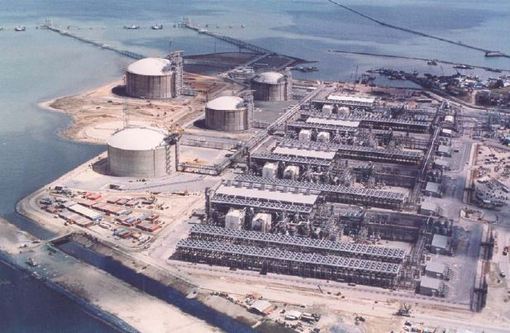
Trinidad and Tobagos Point Fortin LNG terminal. PHOTO/File
In March 1980 David Renwick, the Trinidadian journalist, and I wrote an extended feature for the Caribbean Chronicle about the future outlook for the Caribbean as an oil producing region.
In it we observed that although nobody expected the Caribbean to ever become oil or gas rich on the scale of Venezuela, it had been known for many years that two broad strata of rock of a kind likely to bear oil, run the length of the Caribbean Basin. Up to then little interest had been shown in this fact apart from where such strata coincided with island masses; the reason being that the high cost and technical problems of recovery were far beyond the value of such relatively small quantities of crude.
The article went on to say that although there were existing sites in shallow water probably capable of exploitation, most geological structures of interest were far below the Caribbean Sea. Few nations, we observed, had continental shelves and most dropped off very rapidly to depths between 600 to 3000 feet.
Somewhat presciently, we then suggested that ‘new drilling techniques and methods of platform construction now mean that it is possible to drill and, by the turn of the century, operate in depths of up to 4000 feet’. This meant, we argued, that it will be possible for Caribbean nations to begin to encourage offshore oil exploration.
Reading these words now it is clear that much of what we forecast has come to pass. The technology to drill and recover oil and gas from huge depths now exists. Oil prices have risen to levels previously thought unthinkable, making the cost of deep sea recovery viable. Demand for energy has surged and will continue to expand as the industrialisation and wealth of advanced economies continues to grow. The potential contradictions between tourism, fisheries and oil and gas recovery have been recognised and spills and environmental disasters of the kind experienced in the Gulf of Mexico have made clear the need for the legal and regulatory frameworks in all nations in or bordering the Caribbean Sea.
There have also been other issues added to the mix, making the region strategically more attractive as an energy supplier: the possibility of greater instability around the world’s major producers in the Middle East as a result of any conflict with Iran; the widening of the Panama Canal making the Caribbean a North South and East West transit a key transhipment point in the Americas; and the opportunity the regions new deep sea ports and anchorages offers for storage and transhipment.
The level of exploration now taking place in the region makes it quite possible to imagine a Caribbean, a decade from now, that is energy rich, a net exporter of oil and gas and in some cases trying to address the problems associated with wealth that hardly anybody is thinking about.
