
Opinion
Mission Over Methodology: Why Afreximbank Just Walked Away From Fitch

By Ziad Hamoui
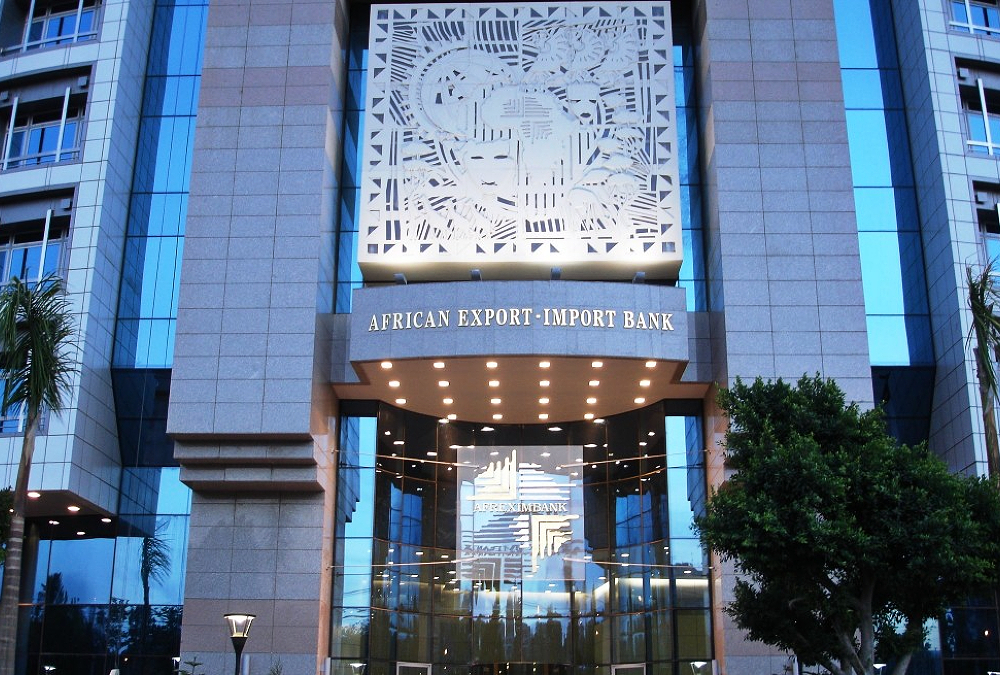
The African Export-Import Bank’s recent decision to sever ties with Fitch Ratings signals more than a routine disagreement over financial assessment. It exposes a fundamental misalignment between how credit rating agencies evaluate risk and how development finance institutions fulfill their mandates.
On January 23, 2025, Afreximbank announced it was terminating its relationship with Fitch, citing a methodology that “no longer reflects a good understanding of the Bank’s Establishment Agreement, its mission and its mandate.” The statement was diplomatically worded but surgically precise.
This wasn’t about avoiding scrutiny – the bank maintains investment-grade ratings from five other major agencies. Rather, Afreximbank was declaring that some assessment frameworks simply cannot capture what treaty-based pan-African institutions are designed to accomplish.
The conflict illuminates a critical tension in development finance. Afreximbank’s mandate explicitly requires financing ventures that traditional commercial banking methodologies classify as high-risk.
Consider the institution’s portfolio: the Pan-African Payment and Settlement System (PAPSS), adopted by the African Union as the African Continental Free Trade Area’s payment platform; the US$10 billion AfCFTA Adjustment Fund supporting countries participating in continental free trade; and strategic infrastructure corridors like the Abidjan-Lagos Highway and Ghana-Burkina Faso railway connecting landlocked economies to coastal ports.
Through a conventional credit lens, such concentrated exposure to African trade finance appears as portfolio weakness. Through a developmental lens, it represents the precise fulfillment of institutional purpose. Both perspectives are technically valid, which is exactly the problem.
The Measurement Gap
This disconnect between mission and methodology plays out dramatically on the ground. Years of advocacy work through organizations like Borderless Alliance reveal the scale of what traditional models miss.
When OECD research recently uncovered a US$10 billion informal West African food economy – six times larger than official statistics suggested – it exposed how profoundly credit frameworks misunderstand the commerce they are meant to evaluate. Ghana’s inaugural Informal Cross-Border Trade Survey found that 61.2 percent of trade with Togo and 55.7 percent with Côte d’Ivoire (Ivory Coast) occurs outside formal customs systems.
Financing this commerce means supporting the women traders who represent over 60 percent of informal cross-border activity. It means investing in digital systems that connect border communities.
It requires institutions willing to underwrite what commercial frameworks dismiss as “unconventional risk” – ventures demanding patient capital and sustained commitment to address perceived elevated exposure.
If credit models cannot recognize this economic reality, they cannot properly value the institutions working to formalize it. The result is a systematic undervaluation of development finance’s actual impact and sustainability.
Afreximbank’s decision to walk away from Fitch represents more than institutional assertiveness. It signals a maturation of African development finance – a willingness to insist that assessment frameworks must serve institutional missions, not the reverse.
Beyond Binary Choices
The G20’s Capital Adequacy Framework reforms have begun addressing this gap, recommending explicit credit for callable capital and treaty-based shareholder commitments. Alternative methodologies exist and are gaining traction.
The question is no longer whether pan-African institutions should adapt to frameworks designed for commercial banks. Instead, the question is whether these institutions should actively co-create new assessment approaches that capture both financial sustainability and developmental impact.
Developmental mandates require developmental assessment frameworks. That principle seems self-evident, yet the global financial architecture has been slow to operationalize it.
The path forward need not involve wholesale rejection of global standards. Rather, it lies in collaborative development of hybrid frameworks appropriate for institutions whose mission is continental integration.
Such frameworks would recognize that concentration in a specific mandate area reflects strategic focus, not reckless exposure. They would account for the unique risk-mitigation features of treaty-based institutions backed by sovereign commitments.
And they would measure success not merely by conventional financial metrics but by progress toward the developmental outcomes these institutions were created to achieve.
A Precedent Worth Watching
Afreximbank’s decision to walk away from Fitch represents more than institutional assertiveness. It signals a maturation of African development finance – a willingness to insist that assessment frameworks must serve institutional missions, not the reverse.
As more multilateral development banks grapple with similar tensions between commercial risk methodologies and developmental mandates, the Afreximbank precedent deserves careful attention.
The question facing the development finance community is whether rating agencies will adapt their frameworks to institutional realities, or whether institutions will increasingly seek out – or create – assessment partners whose methodologies align with their purposes. Afreximbank has provided its answer.
The response from the broader credit rating industry will reveal much about the future of development finance evaluation.
For African trade and regional integration to advance, the institutions financing that progress need assessment frameworks that understand what success actually looks like. Anything less isn’t just inadequate methodology – it’s a fundamental misreading of institutional purpose.
Ziad Hamoui is the Co-Founder and Past President of the Borderless Alliance, a leading private-sector advocacy group promoting economic integration and removing trade and transport barriers in West Africa. With extensive experience in Ghana’s road transport, logistics, and shipping sectors, he currently serves as Executive Director of Tarzan Enterprise Ltd., a long-established family business. He is a former Co-Chair of the Africa Food Trade Coalition, Co-Founder of the Trade Facilitation Coalition for Ghana, and serves on multiple high-level advisory committees on trade, transport, agriculture, and security. A Chartered Fellow of the Chartered Institute of Logistics and Transport (CILT) Ghana, he is also a former member of its Governing Council.
