
Opinion
Maritime transport disruptions offer opportunities to Africa to develop port connectivity
By Danilo Desiderio
The Greek philosopher Socrates once stated, “there is no favorable wind for the sailor who doesn’t know where to go.” Yet, this notion seems not to hold true for Africa, which is experiencing significant growth in port connectivity, largely driven by a series of unforeseen geopolitical events.
The 2024 edition of the Review of Maritime Transport, an annual flagship report from the United Nations Conference on Trade and Development (UNCTAD), sheds light on this development.
In March 2021, the Ever Given, a massive container ship, became lodged sideways in the Suez Canal, blocking it for six days and halting global shipping traffic. Even after the canal was cleared, the disruption to global supply chains persisted for weeks, causing substantial economic losses as ships carrying cargo worth billions of dollars were forced to re-route.
A recent discussion paper from the Institute of Developing Economies estimated the damages caused by shipment delays at US$79.6 billion, equivalent to 0.1 percent of global GDP.
In October 2023, the Bab-el-Mandeb strait saw a series of attacks from the Iran-backed Houthi rebel group, coinciding with a resurgence of piracy in the Gulf of Aden.
ACLED, a non-profit organization that monitors conflict and protests, reported 132 attacks on international vessels in these waters so far. The UNCTAD report highlights that, in late 2023, ship traffic through the Red Sea dropped by nearly half, forcing costly detours around Africa’s Cape of Good Hope.
This pattern has continued into 2024, leading to congestion in South African ports.
These incidents have underscored the global economy’s dependence on a handful of critical maritime chokepoints, with eight being particularly vital for world trade, which currently accounts for about 80 percent of global commerce. These chokepoints include the Straits of Gibraltar (between Spain and Morocco), Malacca (Malaysia and Indonesia), Bosporus and Dardanelles (Türkiye), Hormuz (Oman and Iran), the Panama and Suez Canals, the Cape of Good Hope, and Bab-el-Mandeb in the Red Sea.
Three of these key chokepoints (Suez, Bab-el-Mandeb, and the Cape of Good Hope) are near Africa.
Expansion opportunities for African ports
Maritime chokepoints are essential for global supply chains, as they link different regions and bodies of water. Disruptions not only impact international trade but also affect energy supplies due to their role in transporting vital energy resources.
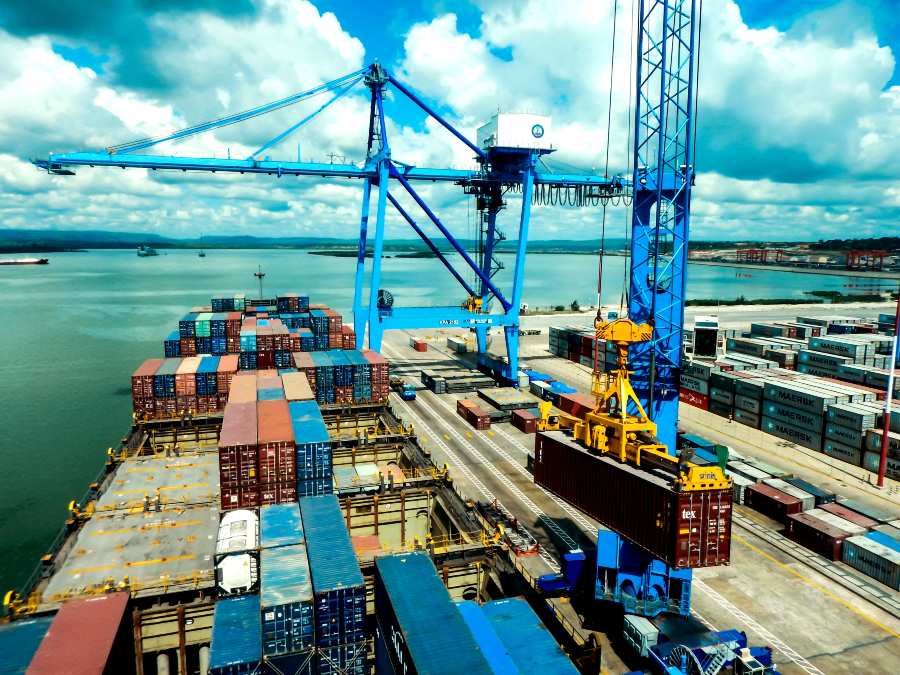
While the disruptions at the Suez Canal and Bab-el-Mandeb have caused global commercial losses amounting to billions of dollars, they have also presented opportunities for many African ports to expand. Ports along the East African coast, the Indian Ocean, and the southern and western regions of Africa have benefited from rerouted maritime traffic to the Cape of Good Hope, increasing their capacity and connectivity to global hubs.
One standout example from the UNCTAD report is Mauritius. UNCTAD statistics show that Africa has seen the largest growth in port calls for container ships and tankers in recent years.
This is a promising development, as stronger maritime links between African ports align with the African Union’s goals of boosting intra-African trade, a core objective of the African Continental Free Trade Area (AfCFTA).
In February 2022, the United Nations Economic Commission for Africa (UNECA) published a report noting that maritime transport is the continent’s second most important mode of transport, handling 22.1 percent of African trade, compared to 76.6 percent by road, 0.9 percent by air, and 0.3 percent by rail. The report also called for an increase in maritime cabotage trade (the movement of goods between African ports) to accommodate the expected surge in trade under AfCFTA.
It is encouraging to see this goal being realized, though it is a response to external challenges rather than political strategy.
Danilo Desiderio serves as the CEO of Desiderio Consultants Ltd in Nairobi, Kenya, specializing in African customs, trade, and transport policies. He is a customs and trade expert at the World Bank and a senior associate to the Horn Economic and Social Policy Institute (HESPI).
