
Opinion
Malawi: Africa’s Underrated Frontier for High-Impact Investment

By Kelly Mua Kingsly
When global investors turn their gaze to Africa, the spotlight often falls on economic powerhouses like Nigeria, Kenya, and South Africa. These nations dominate headlines with vibrant tech ecosystems, expanding urban centers, and dynamic capital markets.
Yet, beneath this familiar narrative lies a deeper truth: some of Africa’s most promising investment opportunities are not in its largest economies – but in its lesser-known corners.
One such opportunity is Malawi – the “Warm Heart of Africa.”
Often overlooked in favor of flashier destinations, Malawi represents a classic frontier market: undervalued, undercapitalized, and brimming with untapped potential. With a population of nearly 21 million and a GDP still in early expansion phase, the country offers strategic entry points across agriculture, energy, infrastructure, and sustainable tourism – sectors where targeted investment can yield outsized impact and returns.
Agriculture: From Subsistence to Scalable Value Chains
Agriculture remains the backbone of Malawi’s economy, employing over 80 percent of its workforce. But despite its centrality, productivity remains low due to reliance on rain-fed farming, limited mechanization, and underdeveloped post-harvest systems.
This isn’t a weakness – it’s an invitation.
For forward-thinking agribusiness investors, Malawi presents fertile ground for innovation. Opportunities abound in modern irrigation systems, precision farming technologies, cold-chain logistics, and agro-processing facilities that can transform raw crops into export-ready goods.
Cash crops like tobacco, tea, and macadamia nuts already have international demand; adding value locally could significantly boost foreign exchange earnings and rural incomes.
With climate-smart practices and private-sector partnerships, Malawi could evolve from subsistence farming to a competitive player in regional and global food markets.
Energy and Infrastructure: Powering Growth Beyond the Grid
Malawi faces one of Africa’s lowest electrification rates – only about 16 percent of the population has access to grid electricity. But constraints often precede transformation.
The country sits atop vast renewable energy potential: hydropower from the Shire River and Lake Malawi, solar irradiance levels among the highest in Southern Africa, and emerging prospects in biomass and mini-grids. Strategic investments in decentralized energy solutions can leapfrog traditional grid limitations and energize entire communities.
Meanwhile, infrastructure deficits in transport, digital connectivity, and logistics represent not just challenges – but blueprints for development finance and public-private collaboration. Upgrading road networks, expanding broadband access, and modernizing ports and border crossings would dramatically improve trade efficiency within the Southern African Development Community (SADC) region.
Investors who recognize infrastructure as a catalyst – not a cost – stand to shape Malawi’s growth trajectory while securing long-term returns.
Tourism and Natural Capital: A Sustainable Advantage
Lake Malawi – one of the world’s oldest and deepest freshwater lakes – is more than a scenic marvel. It’s a biodiversity hotspot, home to over 1,000 species of cichlid fish found nowhere else on Earth. Recognized as a UNESCO World Heritage Site, the lake anchors a growing eco-tourism sector poised for expansion.
From luxury eco-lodges to community-based conservation ventures, Malawi offers a rare blend of unspoiled nature and cultural authenticity. Unlike overcrowded tourist corridors elsewhere, Malawi provides space for responsible, high-value tourism models that prioritize sustainability and local inclusion.
Private investment in hospitality, adventure travel, conservation financing, and green certification programs can position Malawi as a premium destination in Africa’s booming US$35 billion tourism industry.
The Risk-Reward Equation: Why Malawi Matters Now
No frontier market comes without challenges. Malawi contends with fiscal constraints, dependence on foreign aid, and bureaucratic inefficiencies.
Currency volatility and policy uncertainty remain concerns.
Yet these very factors create asymmetry: early movers who navigate complexity with patience and local insight stand to gain disproportionate rewards. Modest investments today can help build foundational systems tomorrow – yielding both financial returns and measurable social impact.
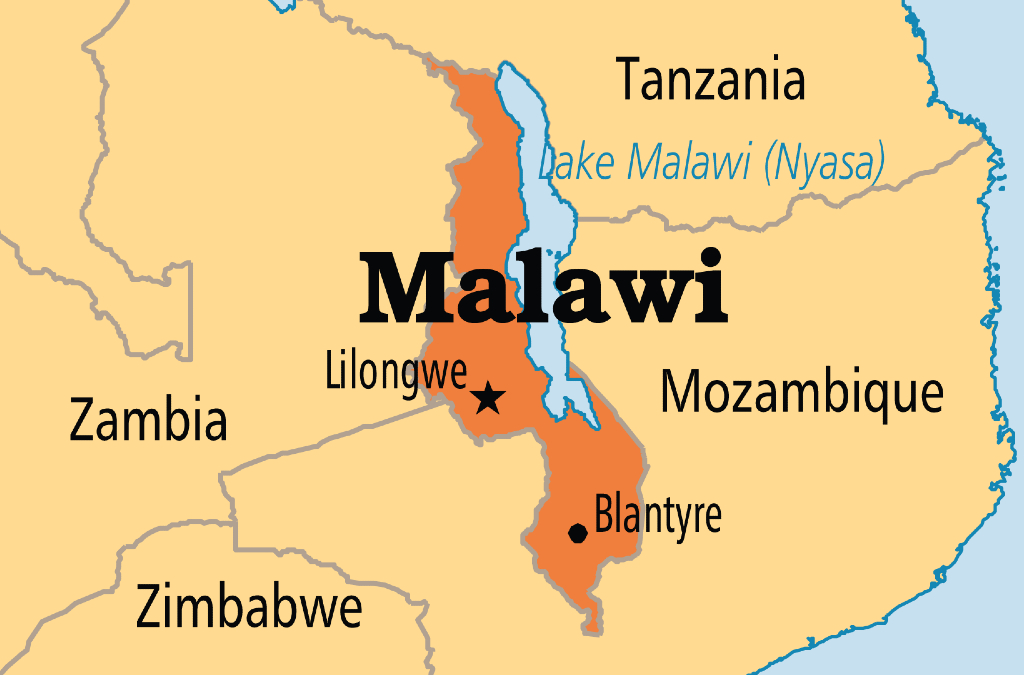
Moreover, Malawi’s stable democracy, English-speaking workforce, and strategic location between Tanzania, Zambia, and Mozambique make it a logistical and political anchor in a volatile region.
Rethinking Africa’s Growth Story
Africa’s future will not be written solely in Lagos skyscrapers or Nairobi tech hubs. It will also be shaped in quiet fields along the shores of Lake Malawi, in solar microgrids powering rural clinics, and in conservation projects that empower local communities.
Countries like Malawi remind us that progress doesn’t always roar – it often begins with a ripple.
As global capital recalibrates toward inclusive, sustainable, and impact-driven investing, Malawi emerges not as a risk to avoid, but as an opportunity to embrace. For visionary investors willing to look beyond the headlines, the Warm Heart of Africa may just be the coolest place to plant their next bet.
Kelly Mua Kingsly brings extensive expertise in public finance and strategic leadership. He currently serves as the Head of Finance Operations at the Ministry of Finance of Cameroon, while also holding a dual role as Project Finance Manager at the Ministry of Economy, Planning, and Regional Development, and Censor at the Central Bank of Central African States (BEAC). He has previously served as Chairperson of the Board of the African Trade & Investment Development Insurance (ATIDI) and as a Director on the Board of Quantum Blockchain Capital. Driven by a strong passion for Africa’s economic transformation, he is deeply committed to advancing the continent’s path toward industrialization.
