
Opinion
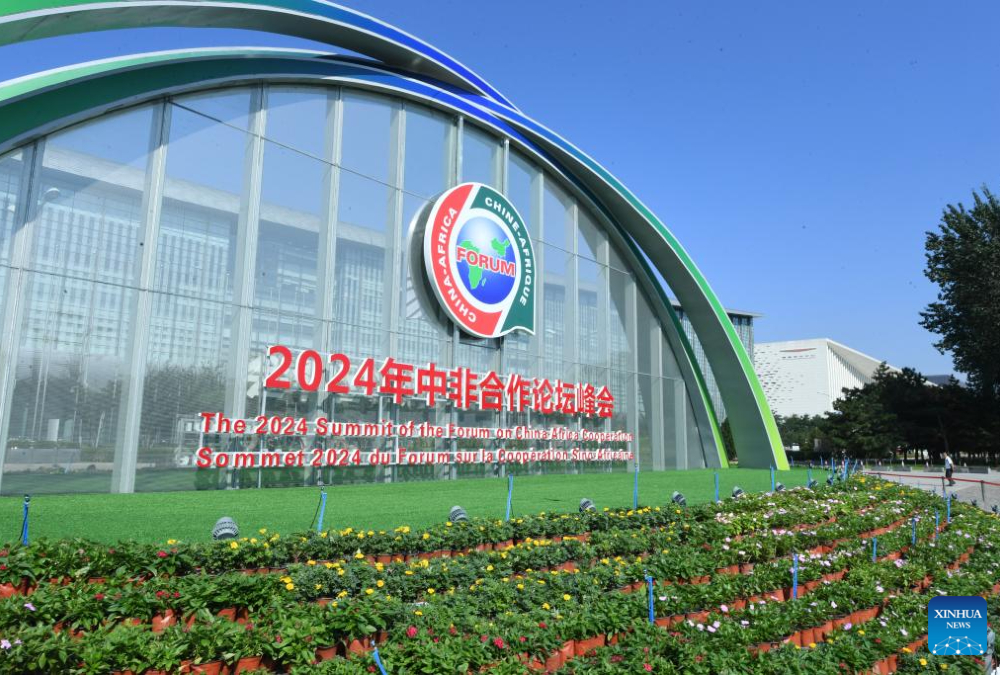
Looking forward to FOCAC 2024
By Emmanuel Musaazi
Before China’s economic involvement in Africa, the continent’s development trends were influenced by various factors but primarily colonial legacies where African economies were structured around extracting raw materials and agricultural products for export to colonial powers. The infrastructure was designed to facilitate the export of these resources rather than to support internal economic development.
Many African countries became heavily dependent on a limited number of commodities for their economies. When commodity prices collapsed in the 1970s and 80s, Structural Adjustment Programs (SAPs) were introduced to prevent severe economic crises caused by falling prices, rising debt, and mismanagement.
The International Monetary Fund (IMF) and the World Bank (Bretton Woods institutions) advocated for these programs. However, SAPs largely failed and came with significant social costs, including cuts to public spending on health, education, and social services. Expected economic growth often did not materialize, leading to increased poverty and inequality.
Despite efforts at industrialization, African economies remained mostly dependent on agriculture and raw material exports, with underdeveloped manufacturing sectors and limited industrial growth. Infrastructure was also lacking, making Africa vulnerable to global commodity price fluctuations. Trade remained focused on Europe and the United States, with minimal intra-African commerce.
The continent’s reliance on a narrow range of exports kept it dependent on external markets for growth. Western aid often came with political and economic conditions, focusing more on humanitarian needs and essential services rather than long-term economic development.
In recent years, China’s economic resurgence has provided Africa with an alternative development model to consider in its pursuit of lasting, sustainable solutions. A key appeal of China’s approach lies in the south-south dynamic of the relationship, where China is seen as more empathetic and understanding of Africa’s challenges, having faced similar experiences of domination, exploitation, and subjugation under foreign powers such as Britain, France, Germany, Russia, and Japan during its own history of semi-colonialism.
The Forum on China-Africa Cooperation (FOCAC) has been a key driver of Sino-African economic relations since the early 2000s. Through FOCAC, China has become Africa’s largest trading partner, with annual trade surpassing US$200 billion.
Since the first meeting in Beijing, eight additional sessions have occurred every three years, with the 9th scheduled for September 4th, 2024. China’s rise to economic superpower status was remarkable, having lifted over 300 million people out of poverty in just 25-30 years.
In 2000, when FOCAC began, Africa faced challenges similar to those China had in the late 1970s during Premier Deng Xiaoping’s economic reforms, which sparked China’s rapid development. At that time, China’s population had exceeded 800 million and was growing rapidly, as was Africa’s population, which had similarly surpassed 800 million by the early 2000s. In both cases, over 60 percent of the population was made up of youth.
Leveraging BRI for sustainable development, economic integration in Africa
While FOCAC draws on some of the strategies behind China’s economic success, Africa’s diverse economies, varying political stability, and unique social and cultural contexts mean the outcomes may differ. Nevertheless, FOCAC aims to foster sustainable development in Africa, inspired by China’s experience.
FOCAC’s objectives include Economic Cooperation and Investment, Trade Expansion, Technology and Knowledge Transfer, and Debt Relief and Concessional Loans. To assess the success of these goals, it’s helpful to review the focus of FOCAC meetings over the years.
At the 2003 FOCAC meeting, China pledged to grant zero-tariff access to certain commodities from African Least Developed Countries (LDCs). As of 2024, this initiative has seen moderate success. It has facilitated increased exports from some African nations and bolstered China-Africa trade relations.
Nonetheless, challenges persist, such as persistent trade imbalances, limited progress with value-added goods, and non-tariff barriers that restrict complete market access. To enhance the effectiveness of this policy, additional efforts are needed, particularly to support the development of value-added industries in Africa and to reduce non-tariff barriers.
Africa should seek to engage with China on a broader economic front. This means not merely accepting aid or loans, but negotiating deals that foster trade, infrastructure, and investment leading to long-term growth.
During the 2009 FOCAC meeting, China committed to writing off the debt of some of the poorest African countries. By 2024, this objective has seen partial success. China has provided debt relief for interest-free loans, benefiting several African nations. However, the overall impact on Africa’s debt burden has been limited, as the majority of Chinese loans to Africa are concessional or commercial, and these have not been included in large-scale forgiveness efforts.
As of 2024, African countries owe over US$150 billion to China, primarily due to concessional and commercial loans for major infrastructure projects under initiatives like the Belt and Road Initiative (BRI). African nations continue to seek increased debt relief to ensure long-term fiscal sustainability and reduce reliance on external financing.
At the 2015 FOCAC meeting, the Belt and Road Initiative (BRI) was a central topic, highlighting a commitment between China and African nations to work together on building infrastructure that supports Africa’s economic integration and sustainable development. The BRI aims to foster common development and achieve mutually beneficial goals.
This initiative has significantly advanced infrastructure development in Africa, aligning with both China’s BRI objectives and Africa’s economic growth strategies. Key projects, such as Kenya’s Mombasa-Nairobi Standard Gauge Railway, the Djibouti-Addis Ababa Railway linking Ethiopia and Djibouti, and various port and airport upgrades across the continent, have enhanced transportation networks and trade logistics.
China-Africa partnership achieves milestones, though challenges persist
These infrastructure developments have promoted intra-African trade, improved global market access, and generated job opportunities. They are crucial for Africa’s long-term economic integration goals, including the African Continental Free Trade Area (AfCFTA), which aims to establish a unified market across the continent.
However, the BRI has faced criticism over debt sustainability. Many large-scale projects are financed through Chinese loans, raising concerns about debt distress in some African countries. For instance, Zambia and Djibouti have encountered significant debt issues linked to Chinese-funded infrastructure projects.
While the BRI has bolstered infrastructure, its impact on fostering local industrialization and value-added industries in Africa has been limited. African nations continue to primarily export raw materials to China and other global markets, without a substantial transformation in their industrial capabilities.
At the 2018 FOCAC meeting, China introduced the “Five Nos” policy to guide its foreign relations with African and other developing countries. These principles are:
- respecting each country’s choice of development path that aligns with their national conditions,
- refraining from interfering in domestic matters,
- avoiding the imposition of China’s will,
- not linking political conditions to foreign aid, and
- steering clear of seeking political self-interest in investment and financing.
By 2024, the “Five Nos” policy has largely upheld China’s image as a respectful partner that avoids the political strings often associated with Western aid. Nonetheless, concerns persist that China’s economic activities, especially its investments and financing, might indirectly exert political influence or create economic dependency, even if not directly tied to the stated policies. The effectiveness of the “Five Nos” will hinge on China’s ability to navigate these complexities as the economic and geopolitical landscape continues to shift.
In conclusion, China’s engagement with Africa through FOCAC has transformed from a diplomatic alliance into one of the most significant global economic partnerships. While the focus on infrastructure development has delivered notable benefits, it has also presented challenges such as trade imbalances, debt sustainability, and limited industrial growth.
As of 2024, this relationship continues to evolve, with increasing emphasis on sustainability, green development, and multilateral cooperation. The future of China-Africa relations will depend on how effectively both parties manage these dynamics and whether Africa can achieve diversified and self-sustaining economic growth through this partnership.
It is hoped that FOCAC 2024 will reflect these considerations. Dambisa Moyo, a renowned African economist, captures the potential of FOCAC by stating, “Africa should seek to engage with China on a broader economic front. This means not merely accepting aid or loans, but negotiating deals that foster trade, infrastructure, and investment leading to long-term growth.”
