
Opinion
Industrializing for People: Uganda’s Policy at a Crossroads

By Apollo Buregyeya
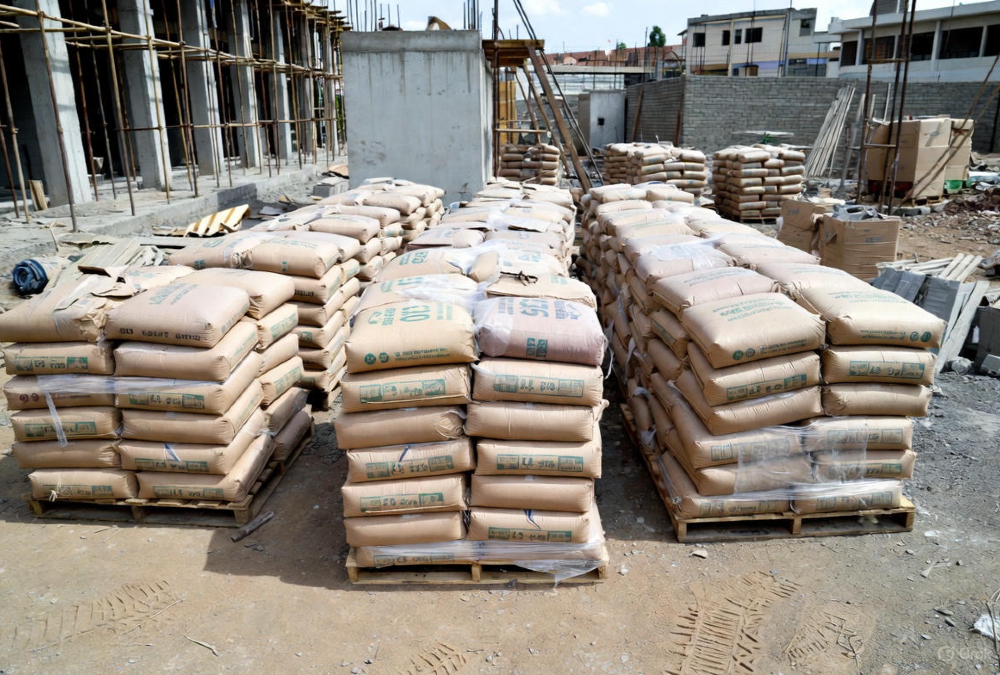
The 2024 Uganda Bureau of Statistics (UBOS) Statistical Abstract reveals a truth that Uganda’s industrial policymakers have studiously avoided confronting. The country’s cement output exceeds 5 million tons annually, yet recorded limestone production – the fundamental raw material for cement manufacturing – registers at under 1 million tons.
That same limestone supply must also serve other industrial sectors.
The mathematics here are uncomplicated, even if the politics are not. Uganda is substantially dependent on imported clinker, the high-value intermediate product that represents the true heart of cement production.
What the country celebrates as “local manufacturing” is often little more than the final bagging stage – the lowest-value segment of the production chain.
This reality is not, in itself, scandalous. International supply chains are a fact of modern industrial life. The genuine scandal emerges in how policymakers respond to this reality.
Protecting Inefficiency Over Citizens
The reflexive policy response has been predictable: tariffs, regulatory barriers, and nationalist rhetoric designed to shield domestic producers from competition. This protection racket comes with a profound cost, one that falls not on the cement manufacturers but on ordinary Ugandans.
When cement prices remain artificially high due to protected inefficiency, every Ugandan building a home pays the price. Every contractor preparing a bill of quantities must inflate their estimates.
Every district government attempting to construct a school confronts budget shortfalls. Every road project, every factory, every piece of infrastructure that might drive genuine development becomes incrementally more expensive and thus less feasible.
Infrastructure is the foundation of economic development. Cement is an input to that foundation, not an end in itself. It deserves no special reverence beyond its utility.
The Real Industrial Policy Challenge
If Uganda is serious about industrialization – the kind that creates jobs, builds productive capacity, and raises living standards – it must protect citizens, not corporate incompetence. The prescription is straightforward, if politically difficult:
Energy infrastructure must become reliable and affordable. No industrial sector can compete internationally while paying premium prices for intermittent power supply.
Transport and logistics require systematic overhaul. Port efficiency, road networks, and customs procedures remain bottlenecks that add cost to every manufactured good.
Standards enforcement must become non-negotiable. When a 50-kilogram bag of cement contains 45 kilograms, consumers lose and honest producers cannot compete.
Regulatory capture and weak enforcement create markets for fraud.
Investment incentives should reward genuine value addition – companies that invest in quality control, source local minerals where economically viable, and demonstrate real productivity gains. The current system too often rewards those who simply import semi-finished products, add minimal value, and deploy patriotic marketing.
Stop Funding Ghost Factories
Uganda’s industrial landscape is littered with the rusting hulks of failed manufacturing ventures – ambitious projects that attracted subsidies, produced glossy brochures, and ultimately could not survive contact with economic reality. These ghost factories represent not industrialization but its opposite: the destruction of capital that might have been deployed productively elsewhere.
A factory that cannot survive without permanent life support is not a development success. It is a future museum exhibit, a testament to the gap between industrial policy fantasy and economic fundamentals.
Subsidize Competence, Not Comfort
If public resources must be deployed to support industrialization – and they must – those resources should target the foundations of competitiveness, not the protection of established players.
Subsidize the infrastructure that allows all manufacturers to compete: reliable energy grids, efficient ports, quality road networks, functioning regulatory institutions. Create conditions where honest production becomes viable and competitive.
Once those foundations exist, market dynamics will allocate resources more efficiently than any ministry. Companies that genuinely add value will thrive.
Those that merely assemble imported components while demanding protection will face the discipline they have long evaded.
The Choice Before Uganda
Uganda stands at a familiar crossroads that has confronted every developing economy. One path leads toward genuine industrialization – difficult, requiring substantial public investment in infrastructure and institutions, but ultimately capable of delivering broad-based prosperity.
The other path leads to industrial theater: protected oligopolies, expensive inputs, and the appearance of manufacturing without its substance.
The cement sector is merely one illustration of a broader policy challenge. The same dynamics appear across Uganda’s industrial landscape, from steel to sugar to pharmaceuticals.
In each case, the fundamental question remains identical: are we building industrial policy for the benefit of citizens or for the comfort of a protected few?
The 2024 Statistical Abstract has provided yet another data point in this ongoing debate. The question is whether policymakers will finally read it honestly.
Apollo Buregyeya, Ph.D., is a civil engineer and entrepreneur focused on developing sustainable African industries that leverage local mineral resources to improve living standards. He is the founder and CEO of Eco Concrete Ltd, a construction company specializing in innovative solutions tailored to the African environment. Committed to resource ownership and appropriate technology for value creation, he also teaches at Makerere University in Kampala, Uganda.
