
Opinion
Ibrahim Traoré and the Quiet Revolution in Burkina Faso

By Dishant Shah
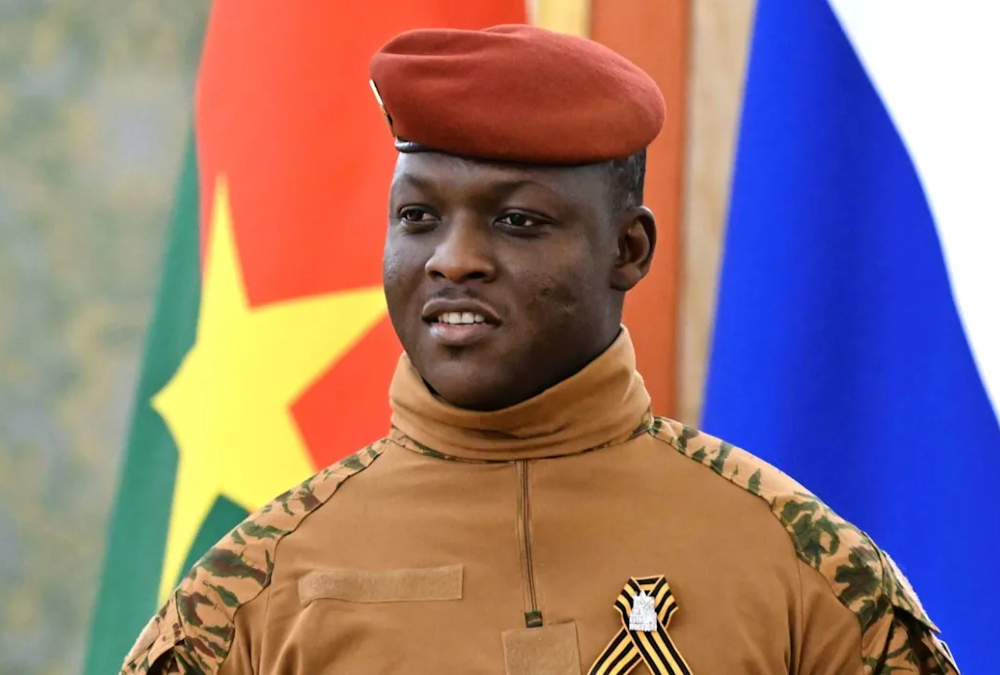
In an era when African leadership is often scrutinized through the lens of longevity, dynastic politics, or Western approval, one figure has emerged not with fanfare, but with quiet determination: Ibrahim Traoré, Burkina Faso’s 38-year-old head of state.
A career military officer who seized power in a September 2022 coup, Traoré replaced interim President Paul-Henri Sandaogo Damiba amid a worsening security crisis. At the time, many dismissed the move as just another military takeover in a region plagued by instability.
But nearly two years later, a different narrative is unfolding – one that challenges conventional wisdom about governance, legitimacy, and national renewal in the Sahel.
A New Kind of Leadership in the Sahel
Traoré is not a product of political aristocracy. He rose through the ranks of the Burkinabé army, trained at the prestigious Kofi Annan International Peacekeeping Training Centre (KAIPTC), and built his reputation on operational discipline and frontline leadership.
His ascent reflects a broader shift across parts of West Africa, where citizens increasingly look to leaders who embody service over spectacle.
And the challenges he inherited were immense.
Burkina Faso – home to more than 20 million people – is a landlocked nation with vast mineral wealth, including gold and manganese, and a population that’s among the youngest in the world, with a median age of just 18. Yet for years, it has been overshadowed by a brutal jihadist insurgency that has displaced nearly 2 million people, crippled economic activity, and strained state institutions to the breaking point.
When Traoré took charge, the country was hemorrhaging stability. But rather than retreat into authoritarian isolation, his administration has pursued an unorthodox blend of military resolve and grassroots engagement – one that is now yielding measurable results.
Security with a Human Face
In key northern regions, government reports and independent conflict monitors have recorded a 30% decline in violent incidents over the past year – a significant shift in a conflict where momentum has long favored insurgents. But Traoré’s strategy goes beyond troop deployments.
He has institutionalized community liaison units, embedding soldiers not just as enforcers, but as partners in rebuilding trust. In villages once abandoned to fear, soldiers now arrive not only with rifles, but with food supplies, medical kits, and open forums for dialogue.
One resident from the conflict-affected Yagha province recently told a local radio station: “Before, soldiers would bark orders and leave. Now, they ask how we are doing. They listen.“
This subtle but profound shift – from coercion to connection – is reshaping civil-military relations in real time.
A Vision Beyond the Capital
Traoré is also reimagining governance. While many African leaders centralize power and resources in capital cities, his administration has launched a bold push for economic decentralization.
Regional towns are receiving direct budget allocations, digital infrastructure upgrades, and support for local entrepreneurship – efforts aimed at unlocking the potential of rural economies long neglected by Ouagadougou-centric policies.
Even more striking is his approach to public communication. Through regular nationwide town hall broadcasts, citizens can submit voice messages directly to the presidential office, asking questions and offering feedback.
In a region where leaders often govern from behind palace walls, this level of accessibility is rare – and revolutionary.
Reframing the Sahel Narrative
Internationally, Traoré is challenging the long-standing portrayal of the Sahel as a “failed region.” Once seen as a security liability, Burkina Faso is now being invited to the table as a potential stabilizer.
The United Nations, ECOWAS, and regional mediators have sought Traoré’s input on peace initiatives, recognizing that his government’s on-the-ground resilience offers a new model for conflict response.
The Sahel, he insists, is not a zone of despair – but one of untapped opportunity, where youth, resources, and renewed civic energy can drive transformation.
The Democratic Dilemma
None of this absolves the fundamental tension at the heart of his rule: Burkina Faso remains under military governance. Critics rightly emphasize that coups, however well-intentioned, cannot substitute for democratic institutions.
Civilian rule, constitutional order, and free elections remain essential benchmarks for sustainable legitimacy.
Traoré has pledged a return to constitutional governance, though timelines remain fluid. The path back to democracy will be complex, requiring reconciliation, institutional reform, and inclusive dialogue.
Yet, in a moment of national crisis, Traoré represents something rare: a leader who has traded political theater for practical results, who measures success not in diplomatic photo-ops but in reclaimed farmland, reopened schools, and restored community trust.
A Different Kind of Leadership
This is not a story crafted by spin doctors or foreign consultants. It is unfolding in dusty marketplaces, in village assemblies, and in the cautious optimism of parents sending their children back to school in areas once deemed too dangerous.
And perhaps that is the truest test of leadership: when ordinary people, after years of disappointment, pause and say, “This feels different.”
Ibrahim Traoré’s journey is far from over. But in a region weary of broken promises, his quiet revolution offers a compelling question: What if effective leadership isn’t about how you come to power – but what you do with it?
Dishant Shah is a partner at Legion Exim, a company specializing in facilitating the export of high-quality engineering products directly sourced from manufacturers in India to Africa. His areas of expertise include new business development and business management.
