
Opinion
How can Africa capitalize on the current geopolitical changes?
The EU-Africa partnership over the last decade has evolved under framework of the Joint Africa-EU Strategy from one that was criticized for being an unbalanced donor-recipient relationship to one that promised a profound change in its approach to Africa.
In 2007, the Joint Africa-EU Strategy was premised on principles of equal participation and representation, as well as to treat Africa as one. However, development and political cooperation between the two continents has not resulted in any fundamental transformation; instead the gap has only become wider. This is attributable to factors such as dwindling development budgets that have been impacted by the Euro zone’s sovereign debt crisis; in turn the financial expectations under the joint strategy have not been delivered.
The emergence of new economies, rivals Europe’s historic role and style of development aid cooperation in Africa. Several partnership agreements have also mushroomed since such as the Cotonou Agreement, fragmenting the strategy.
The 4th Africa – EU summit therefore comes at an opportune time for both continents to develop consensus on what they want and how to transform the Africa –EU relationship. In the new landscape of multi-polar partnerships, Africa needs a coherent strategy so that its development is not compromised by competition amongst potential partners. In doing so, mutual accountability, mechanisms of enforcement, mechanisms that foster compliance of multinational firms to international norms and standards should be indispensable features for the future partnerships. It is time for Africa to capitalize on the geopolitical changes but by driving and owning the process.
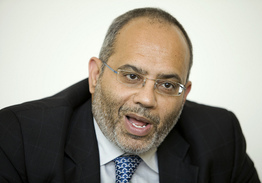
Carlos Lopes is executive secretary of the United Nations Economic Commission for Africa (UNECA).
