
Opinion
How can Africa capitalize on the current geopolitical changes?
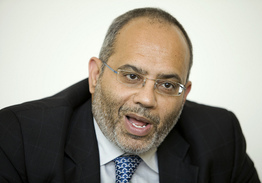
By Carlos Lopes
This year Africa celebrates fifty years since the founding of the Organization of African Unity (OAU); never before has the continent been so poised to reap the benefit of its enormous resources. Sweeping political and economic changes over half a century have reformed global power structures, reconfigured international relations and led to serious rethinking of development paradigms.
It is only befitting to recognize the significance of the African Union’s role in this transition. The OAU established in 1963, laid the foundation for the unity of the African continent. It aimed to rid the continent of remnants of colonialism and restore Africa’s dignity and pride after centuries under domination; promote the integration of the continent; and defend its interest in a Cold War arena.
As the continent evolved, the OAU, heralded as the most notable result of Pan-Africanism, was replaced by the Africa Union in 2002. The African Union symbolized a new era for the continent aiming at accelerating the process of economic integration, resolving socio-political problems and intensifying continental unity, to enable Africa to play a more meaningful role in the global economy. In just over a decade, Africa has experienced growth from only 2.1 percent in the 1990’s to 5 percent in the past decade.
The future outlook remains promising as Africa’s economy is projected to continue growing, despite global financial market turmoil. Investor confidence has also been revived, brought about by drivers such as an increased prevalence of peace, democratic elections and improved governance. As a result, Africa has attracted more foreign direct investment (FDI). Africa has been experiencing an upward FDI trend, with US$47 billion mark in 2011. In 2012, this upward trend has continued, with FDI registered at US$50 billion. Outward FDI flows from Africa nearly tripled in 2012, from US$5 billion in the previous year to an estimated US$14 billion.
How then can Africa capitalize on the current trends?
Africans can take control of their natural resources. Africa’s industrial potential had been stifled by the legacies of Africa’s colonialism which left behind weak institutions and an infrastructure designed to enhance extraction of its resources.
Structural Adjustment Programs had particularly negative effects on technological accumulation, human capital development and export performance. However, Africa’s resources wealth, account for approximately three quarters of the world’s platinum supply; half of its diamonds and chromium; one fifth of gold and uranium supplies; just over half of the world’s uncultivated arable land, with the potential to become the breadbasket for the world; and it is home to gas and oil production in over thirty countries.
