
Opinion
Ghana’s Grain Crisis: It’s Not Scarcity, It’s Strategy

By Curtis Akunfu
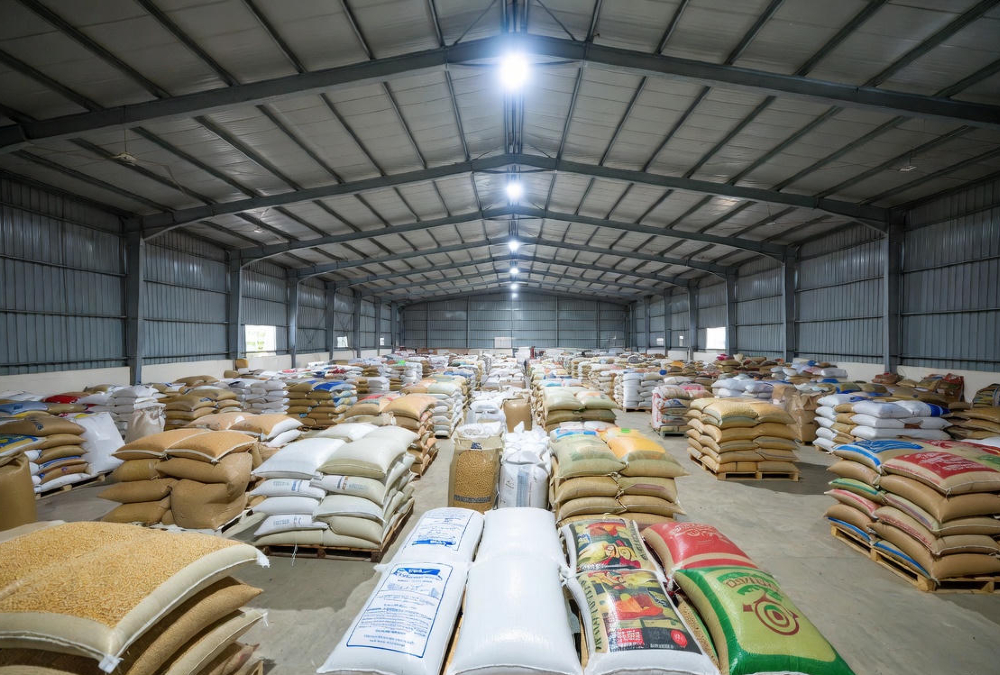
Right now in Ghana, farmers are sitting on surplus while households struggle to eat. Rice, maize, and soybeans are piling up in warehouses and homes across the north and middle belt.
At the same time, food insecurity is rising, farm-gate prices are collapsing, and farmers are quietly planning to scale back production next season.
This is not theory. This is what’s happening on the ground.
According to farmer groups and market reports circulating in late 2025, over one million metric tons of grain – largely paddy rice, maize, and soybeans – remain unsold. Estimates put the value of unsold paddy rice alone at over GHS 5 billion (US$466 million).
Yet, per the AGRA Food Security Monitor (November 2025), nearly 24 percent of Ghanaians, about 8 million people, are experiencing insufficient food consumption. Even more alarming: food insecurity indicators have worsened sharply since 2023, despite increased national production.
So what’s broken? Let’s be specific.
Export Bans Are Trapping Surplus and Crushing Prices
Soybeans and rice are key examples. Export restrictions and informal bans, introduced to protect local supply, have had a predictable effect: they flood the domestic market with surplus, collapse prices, and leave farmers with no exit.
For soybeans in particular, the export ban has cut off regional demand from Burkina Faso, Togo, and Nigeria; forced farmers to sell into thin local markets; and pushed prices below cost in some production zones. The result? Food is available – but farmers are insolvent.
Food security does not come from locking grain inside borders. It comes from keeping producers viable enough to plant again.
Cheap Imports Undercutting Local Grain
While local farmers are stuck with surplus, imported rice continues to enter the market, often heavily subsidized in origin countries, dumped at prices local producers cannot match, and, in some cases, smuggled through porous borders.
This isn’t free trade. It’s asymmetric competition.
The outcome is brutal: local paddy prices crash at harvest, processors delay purchases, and farmers sell in distress – or not at all.
Pricing Is Panic-Driven, Not Structured
Most grain pricing in Ghana remains spot-based, cash-and-carry, and disconnected from storage, processing, or forward demand. Without warehouse receipt systems at scale, processor-led offtake contracts, or structured price floors, farmers are forced to sell immediately after harvest, exactly when prices are lowest.
Surplus without structure becomes a punishment.
The Real Failure: We Export Raw Effort, Not Finished Value
Here’s the uncomfortable truth: Ghana does not have a grain production problem. It has a value-addition deficit.
Rice leaves farms as paddy instead of being milled, fortified, branded, and packaged. Maize is sold raw instead of becoming animal feed, industrial starch, or food ingredients.
Soybeans are blocked at the border instead of being processed into oil, protein meal, and exportable inputs. So surplus piles up locally, while finished products – the real money – are imported.
What Happens If We Fix the Structure?
If export bans are refined (not reckless, but smart and targeted). If cheap imports are checked through standards and enforcement.
If pricing is anchored to storage and processing. If value addition is treated as infrastructure, not an afterthought.
Then surplus stops being a crisis. It becomes feedstock for industry, jobs for youth, foreign exchange through finished exports, and stability for farmers.
Warehouses empty, not into distress sales, but into factories.
The Real Risk Isn’t Surplus – It’s What Farmers Do Next
Faced with losses, many farmers are already planning to cut acreage next season. That’s how today’s surplus quietly becomes tomorrow’s shortage.
And when that happens, we will panic again.
Ghana doesn’t need to grow less food. It needs to process more, price better, and export smarter.
Surplus is not the enemy. Wasted value is.
Curtis Akunfu is the Managing Director of Duapa Agri, a vertically integrated agribusiness operating across West and East Africa. With nearly 20 years of leadership in Africa’s agri-commodities sector, he also serves as a Global Council Member and Chair of the Agricultural Finance and Investment Working Group at the World Agriculture Forum.
