
Opinion
Ghana’s Credit Rating Downgrades and so called ‘Debt Crisis’ – What’s Missing?
How real are these debt crisis claims? Is Ghana really in a debt crisis?
By Jade Scarfe
Ghana’s finance ministry officials have been facing a difficult and frustrating few weeks after credit rating downgrades by both Fitch (from B to B-) and Moody’s (B3 to Caa1), following increases in Ghana’s debt-to-GDP. Such actions have caused debt crisis narratives to bubble to the surface once more. Only a couple of weeks ago, the Ministry was challenging ‘debt crisis’ claims by Bloomberg with the ministry stressing that debt levels were still stable. Of course, these narratives by outlets like Bloomberg have gone on for years, but nevertheless, Fitch’s and Moody’s rating drop will surely add fuel to the fire.
So why are these rating changes significant?
Well, that added ‘minus’ has several implications for Ghana’s access to finance. This means not only that Ghana is now locked out of the international capital market, but also when credit rating agencies (CRA) downgrades a country’s rating, interest payments to commercial lenders goes up – creating further financial constraints on the borrowing country, as well as discouraging investors – definitely not what is needed during a global pandemic and constrained liquidity!
But how real are these debt crisis claims? Is Ghana really in a debt crisis?
I believe there are three key issues at play here.
The first issue is the inherent bias. These headlines and ratings are not impartial – they come with a constrained narrative that views African countries as inherently ‘risky’ destinations – resulting in an ‘African risk premium’. A 2015 study by Michael Olabisi and Howard Stein found that this premium saw African countries paying 2.9 percent higher on bonds than the rest of the world!
This bias is also evident in health, with African countries consistently ranked at the top of global health risk scales. However, as COVID-19 has shown, African governments act swiftly and accordingly in response to health threats. At Development Reimagined, the International Development consulting firm I work for, we found that 37 African countries – Ghana included – implemented some degree of social distancing measures before recording 10 cases. These early response measures have meant that Ghana has fared relatively well throughout COVID, with 1,357 deaths and 155,496 cases. It should come as no surprise that debt-to-GDP has jumped slightly during this time when such measures are needed. Additionally, many other countries have developed with significantly higher debt-to-GDPs than Ghana’s, so it’s not unusual to have “debt”.
The Ministry explicitly recognized this bias in rebutting Moody’s downgrade, stressing that “there is ample evidence that Sovereigns on the African continent in particular have suffered more adverse rating actions than any other continent since the pandemic”.
Beyond this bias, the second issue is that CRA – as well as the IMF’s and World Bank’s Debt Sustainability Analysis (DSA) which ranks poorer countries as in ‘low’, ‘moderate’ or ‘high’ debt distress – takes debt as the starting point, and consequently, views debt as inherently ‘bad’.
The key here is that when looking at a country’s debt level, we must also start by examining the financing gap that this debt is aiming to serve. Ghana needs finance. Ghana currently has a US$44 billion investment gap. This can be broken down into sectors – including a US$26 billion gap in road infrastructure, US$2.6 billion in telecoms, US$2.3 billion in energy and US$1 billion in water. These gaps are reflected in the fact that 16.5 percent of Ghanaians do not have any electricity or that 59 percent of Ghanaians do not have access to safely managed drinking water services.
Now, to many, the notion of ‘good debt’ may seem like an oxymoron – but debt is not always bad. Debt can create assets essential to a country’s development. As we emphasize in our recent report, debt quality is more important than looking solely at debt quantity. If debt is used to finance much-needed productive investments such as energy, road, railways and other critical infrastructure, this can produce economic growth significantly larger than the initial investment made and create spinoff effects beyond just profitability.
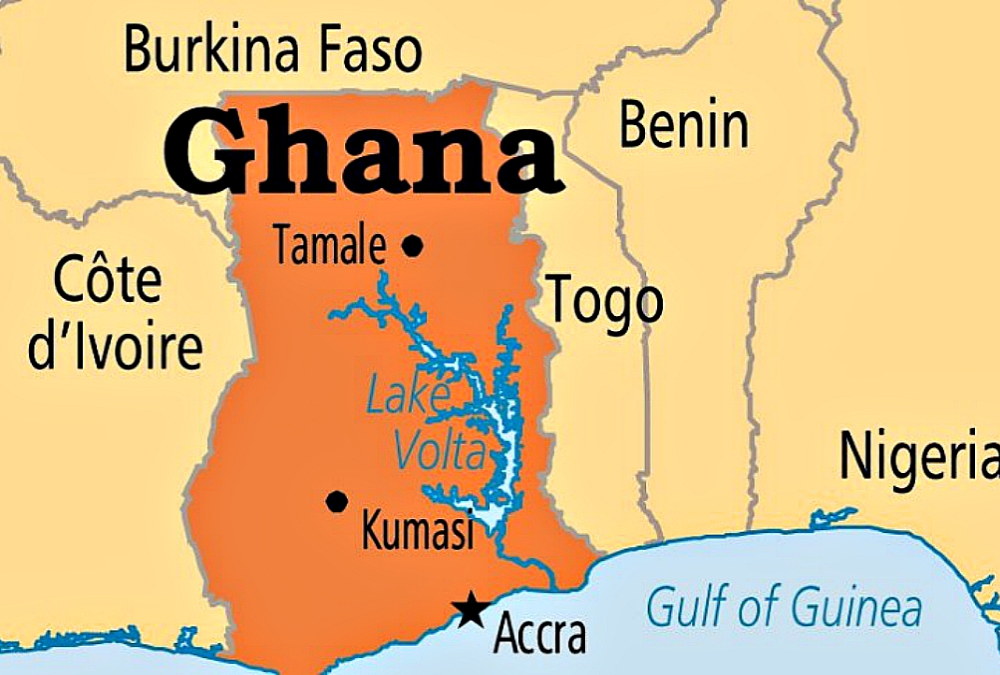
Take the Eastern Corridor Road project. Ghana’s government secured an US$81.67 million loan from the African Development Bank to link the Northern part of the country to Accra, which in turn will create jobs, increase trade, enhance the supply chain and people-to-people flows. It is these types of positive aspects that are not captured in the ‘high risk’ DSA rating or the ‘B-’ stamp.
Indeed, in the Ministry’s response to Moody’s downgrade, they stressed the “contradictory” nature, as the rating changed to a stable outlook from a negative outlook. Moody’s even acknowledging Ghana’s institutional strength and strong economic growth predicted for 2022-2025 of 5 percent – in contrast to Moody’s and Fitch, S&P decided to maintain its B- rating with stable outlook, based on precisely these factors. Ghana’s Finance Ministry issued a statement on this decision, emphasizing that “[S&Ps] assessment on Ghana reflects the resilience of the Ghanaian economy and appreciation of the decisive policies that have been instituted to drive the recovery process”. Ghana’s government is now formally appealing Moody’s downgrade, with the African Union African Peer Review Mechanisms (AU-APRM) backing this decision, and rightly so in our opinion at Development Reimagined.
Finally, whilst COVID-19 may be an unprecedented event – the underlying issues embedded in the financial system have been prevalent for decades. During the 1980s oil crisis, key stakeholders in the international financial system allowed interest rates to rise without protecting developing country debt. Debt rose due to no fault of their own, creating a debt crisis. We witnessed the consequences of this debt crisis, with mass privatizations of developing country’s assets and poverty levels rising. Recently, reports of the Federal Reserve raising interest rates in the next few months have begun to roll in. We have seen what happens – and the world must avoid it happening again.
Jade Scarfe is a Project Manager for Development Reimagined’s Africa Unconstrained project which focuses on financing needs and debt vulnerabilities of African countries.
