
Opinion
Elite Complicity: How Africa’s Educated Class Learned to Bow

By Wavinya Makai
Africa is not short of intelligence. It is short of courage at the top.
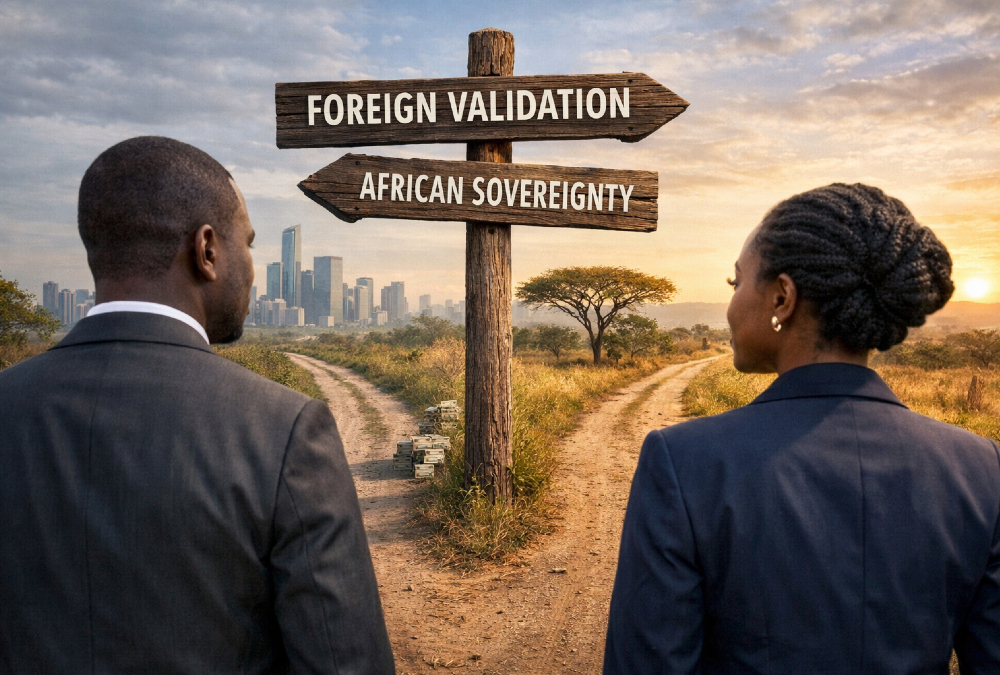
The crisis defining contemporary Africa is not one of ignorance but of orchestration – a meticulously cultivated elite class fluent in foreign languages, conversant in external frameworks, and conditioned to seek validation from abroad, yet functionally illiterate in the language of African accountability.
Their credentials sparkle. Their résumés traverse continents.
Their accents, honed in the corridors of global power, open doors from Geneva to Washington. Yet beneath this veneer of cosmopolitan achievement, sovereignty remains theatrical while subordination endures as structural reality.
This is how modern empire perpetuates itself without deploying a single soldier: through homegrown excellence trained to revere foreign authority above African consequence, through professionals who mistake access for agency, proximity for power, and invitations for genuine influence.
These elites convene on panels discussing Africa’s future – panels underwritten by the very institutions that profit handsomely from Africa’s present disorder. They administer decline with impeccable syntax and flawless presentations.
The Architecture of Intellectual Dependency
Kwame Nkrumah issued a prescient warning: political independence divorced from economic and intellectual sovereignty would leave Africa nominally self-governing but substantively controlled.
Frantz Fanon characterized this emerging class with surgical precision – ambitious without imagination, powerful without purpose, revolutionary in rhetoric yet conservative in practice.
Contemporary elite subordination does not manifest in chains but in bespoke tailoring. It does not broadcast commands but circulates policy briefs and strategic recommendations.
It speaks the technocratic language of “stakeholder engagement,” “capacity building,” and “sustainable development” while systematically prioritizing external interests over internal transformation.
The mechanisms are subtle but devastating. Africa’s brightest minds are recruited into global institutions where they learn to frame African problems through non-African lenses.
They return home armed with degrees from prestigious universities, fluent in the dialect of international development, and thoroughly socialized into believing that legitimacy flows from external validation rather than domestic accountability.
They become what the Kenyan scholar Ngũgĩ wa Thiong’o termed “comprador intellectuals” – intermediaries who facilitate the extraction of wealth and sovereignty while enjoying personal advancement.
The Spell Begins to Break
Yet something fundamental is shifting. A growing number of Africans – particularly younger generations with access to alternative information networks – are beginning to decode the euphemisms.
They recognize that “global best practice” frequently translates to “optimal conditions for global capital extraction.” They observe that brilliance among African professionals is too often rewarded for compliance rather than critical independence, for adaptation rather than innovation, for managing expectations downward rather than expanding possibilities.
This awakening is not anti-intellectual or isolationist. It represents a maturation of consciousness, a recognition that Africa’s integration into global systems has been asymmetrical and exploitative.
The continent contributes immense natural wealth, human capital, and market opportunities while receiving in return conditional aid, structural adjustment programs that constrain policy autonomy, and “partnerships” that consistently favor the partner with greater bargaining power.
Reimagining Elite Responsibility
Africa does not suffer from an excess of educated, capable people. It suffers from a deficit of elite accountability – from a leadership class more responsive to international donors than domestic constituencies, more concerned with maintaining their position within global networks than with transforming local realities.
What Africa requires is not fewer elites but a fundamentally different ethic of elite responsibility: one anchored in African outcomes rather than foreign approbation, one that measures success by domestic transformation rather than international recognition, one willing to risk comfortable positions for consequential change.
This reconstruction demands difficult choices. It means African economists must be willing to challenge the Washington Consensus even when doing so jeopardizes their standing with the IMF and World Bank.
It means African policymakers must prioritize long-term industrial development over short-term debt relief that comes packaged with sovereignty-eroding conditions. It means African intellectuals must produce knowledge that speaks first to African realities, even when such work garners less citation in prestigious Western journals.
The Stakes of This Moment
The trajectory of the coming decades will not be determined by those who have perfected the art of graceful deference. It will be shaped by those who possess both the competence to engage global systems and the conviction to prioritize African interests within those engagements – professionals who can navigate international institutions without being captured by them, who understand global dynamics without being subordinated to them.
This is not a call for crude nationalism or xenophobic isolation. It is a demand for reciprocal dignity in Africa’s engagement with the world, for relationships characterized by mutual respect rather than structural dependency, for an educated class that sees its primary obligation as being to African flourishing rather than to maintaining access to elite global networks.
The intellectual and political work ahead is formidable. It requires building institutions that can compete with the prestige and resources of Western universities and think tanks.
It demands creating career pathways that reward African-centered excellence as richly as Western-approved credentials. It necessitates fostering intellectual communities where rigorous critique of prevailing orthodoxies is celebrated rather than penalized.
Choosing Clarity Over Comfort
Africa stands at an inflection point. The old arrangements – wherein nominal independence coexists with substantive subordination – are increasingly untenable.
The question is not whether this system will evolve but whether its transformation will be managed by Africans in African interests or imposed by external forces pursuing their own agendas.
The educated class faces a choice: continue serving as sophisticated administrators of decline, or risk comfort and status to become architects of genuine transformation. History will judge harshly those who possessed the tools for liberation but lacked the courage to wield them.
The future belongs not to those who have mastered the performance of deference but to those who can stand with dignity and, in that moment of freedom, consciously choose Africa. This choice – repeated daily in small decisions and consequential moments – is how sovereignty becomes real rather than rhetorical, how independence becomes substantive rather than symbolic.
Wavinya Makai is a Kenyan author, development strategist, and Pan-African scholar specializing in African economic sovereignty. Her work focuses on youth development, unemployment, and education reforms that cultivate innovators. She is the author of Capital Violence: The Economic War on African Dignity and holds a Master of Philosophy in Development Studies from the University of Cambridge. Makai has been featured as a development analyst on Citizen TV Kenya and is a frequent speaker on leadership and human rights.
