
Opinion
Country Spotlight: Angola – A Strategic Powerhouse Poised for Growth

By John Kourkoutas
Often overlooked in global investment conversations, Angola is emerging as one of Sub-Saharan Africa’s most compelling economic frontiers. With vast natural resources, a strategic Atlantic coastline, and a government committed to economic transformation, the country is quietly laying the foundation for its next chapter – one defined not by oil alone, but by diversification, infrastructure development, and regional integration.
Once synonymous with decades of conflict and oil dependency, Angola is now rewriting its narrative. After years of post-war reconstruction and structural reforms, the nation is attracting growing attention from international investors and multinational enterprises seeking scalable opportunities in Central and Southern Africa.
From Oil Dependence to Economic Diversification
For decades, Angola’s economy has been anchored in hydrocarbons – ranking among Africa’s top oil producers. Yet today, a strategic pivot is underway.
The government’s Angola 2023–2027 Strategic Plan places strong emphasis on reducing reliance on oil, boosting non-oil exports, and stimulating private sector growth.
This shift is opening doors across multiple high-potential sectors:
- Agriculture and Agribusiness: With over 35 million hectares of arable land, Angola has the potential to become a regional food basket. Investments in mechanization, cold chain logistics, and food processing are in high demand.
- Fast-Moving Consumer Goods (FMCG): A growing urban middle class is fueling demand for packaged foods, personal care products, and household essentials – particularly in Luanda, Huambo, and Lubango.
- Healthcare and Diagnostics: Chronic underinvestment has created urgent needs for medical equipment, pharmaceuticals, and digital health solutions.
- Renewable Energy: With less than 50 percent of the population connected to the national grid, off-grid solar, mini-grids, and hybrid power systems offer transformative potential.
- Industrial Equipment and Construction: Major infrastructure projects are driving demand for machinery, building materials, and smart urban technologies.
Strategic Geography: The Gateway to Central and Southern Africa
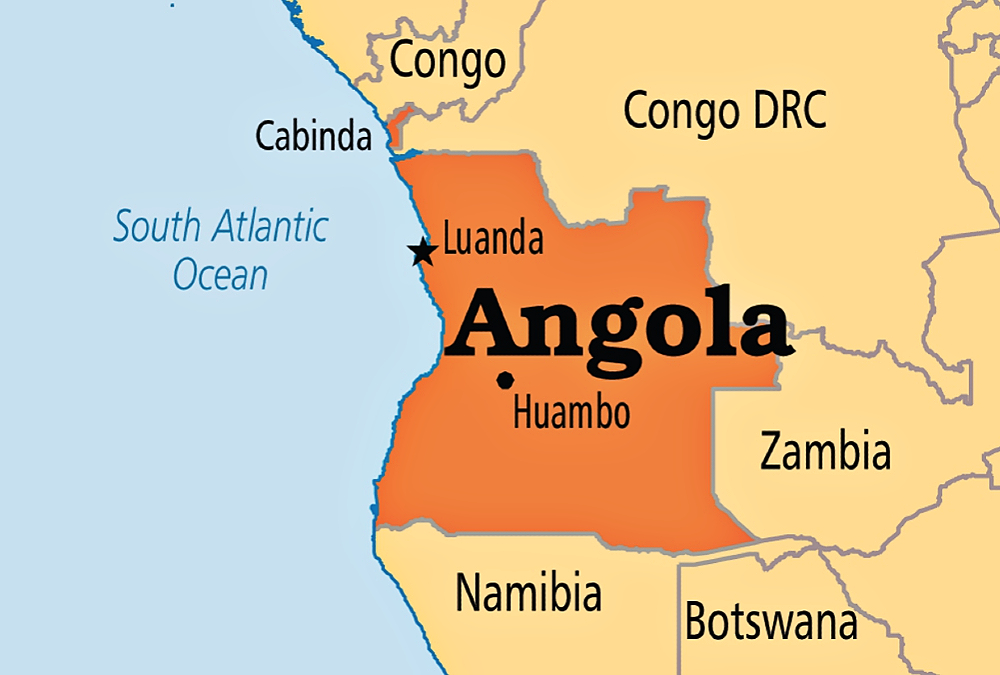
Angola’s 1,600-kilometer (1,000-mile) Atlantic coastline positions it as a critical trade and logistics hub. The modernized Port of Luanda, one of the busiest in West-Central Africa, serves as a vital entry point for goods destined not only for domestic markets but also for landlocked neighbors like the Democratic Republic of Congo and Zambia.
Expanding road and rail corridors – including the revitalized Benguela Railway – are re-establishing historic trade routes that link the Atlantic to the Indian Ocean, reinforcing Angola’s role as a continental logistics bridge.
Rebuilding a Nation: Infrastructure as a Catalyst
Since the end of its civil war in 2002, Angola has invested heavily in rebuilding its infrastructure. Billions have been allocated to national programs focused on housing, electricity, water access, and transportation networks.
These efforts are now maturing into tangible opportunities for foreign contractors, engineering firms, and technology providers.
Urban centers are embracing smart city initiatives, while rural electrification projects are creating demand for scalable, sustainable energy solutions.
Navigating the Business Environment
While Angola has made significant strides in improving its business climate – slashing red tape, digitizing customs, and launching investment incentives – success still hinges on local insight.
Portuguese is the official language, and business culture remains formal, hierarchical, and deeply relationship-oriented. Trust is built over time, and partnerships with reliable local agents or advisors can dramatically accelerate market entry.
Recent reforms by the Agência Nacional para o Investimento e Exportações de Angola (ANIE) have streamlined licensing and improved transparency. Still, due diligence, cultural fluency, and patient engagement remain essential for long-term success.
Why Global Businesses Should Pay Attention
Angola is not a “frontier market” in the speculative sense – it is a country with structure, scale, and sustained demand. With a population of over 35 million and a GDP rebounding from recent stabilization efforts, it offers a rare combination of untapped potential and growing institutional maturity.
For companies eyeing regional expansion in Africa, Angola represents more than opportunity – it represents strategic positioning. Whether you are in agribusiness, renewable energy, healthcare, or industrial technology, the country’s transformation is creating a window for early movers who are willing to engage with patience and purpose.
Final Thoughts
The story of Angola is no longer one of recovery – it is one of reinvention. As the country diversifies its economy, strengthens regional trade ties, and invests in human capital, it is emerging as a cornerstone of Africa’s next growth phase.
For forward-thinking businesses, the message is clear: Angola deserves more than a glance. It deserves a strategy.
John Kourkoutas is business development expert that specializes in helping companies, export teams, and business leaders succeed in Africa’s dynamic and emerging markets.
